

How to Save LPG: 5 Simple Ways to Reduce Consumption
Rising cooking gas prices have made LPG conservation a household priority across India. With the average family spending ₹800-1,200 monthly on LPG cylinders, even small efficiency improvements can translate to significant annual savings. The good news? Reducing LPG consumption doesn't require expensive equipment or drastic lifestyle changes. Simple adjustments to your cooking habits, proper burner maintenance, and strategic meal planning can cut your gas usage by 20-30%. Beyond the financial benefits, efficient LPG use reduces your carbon footprint and extends cylinder life. Whether you're cooking for two or feeding a large family, these proven strategies will help you maximize every rupee spent on cooking gas while maintaining the quality and flavor of your favorite dishes.
LPG prices have increased steadily over the past year, making conservation both an environmental and economic necessity. The average Indian household consumes 8-12 cylinders annually, spending approximately ₹9,600-14,400 on cooking gas alone. This represents a significant portion of monthly household expenses for most families.
Beyond cost savings, efficient LPG use reduces greenhouse gas emissions. Each cylinder saved prevents approximately 45 kg of CO2 from entering the atmosphere. With millions of LPG connections nationwide, collective conservation efforts can create substantial environmental impact.
Modern cooking appliances play a crucial role in consumption patterns. High-efficiency burners can reduce gas usage by up to 25% compared to traditional models, while proper flame adjustment and cookware selection further optimize fuel efficiency. Smart cooking techniques combined with quality equipment create the foundation for sustainable LPG savings.
The foundation of LPG conservation starts with selecting appropriate cookware that maximizes heat transfer and minimizes waste. Heavy-bottomed vessels with flat bases ensure optimal contact with burner flames, reducing cooking time by 15-20%. The material, size, and design of your cookware directly impact how efficiently gas converts to usable heat.
Stainless steel and aluminum cookware offer superior heat conductivity compared to traditional brass or iron vessels. Copper-bottomed pans provide exceptional heat distribution, though they require higher initial investment. Cast iron retains heat longest, making it ideal for slow-cooking dishes that benefit from residual heat cooking.
Using appropriately sized vessels prevents flame spillage around pot edges. A 2-inch gap between pot diameter and burner ring ensures maximum heat capture. Oversized vessels waste gas through flame escape, while undersized pots create uneven heating patterns that require longer cooking times.
Covering pots during cooking reduces heat loss by up to 65%. Transparent glass lids allow monitoring without lifting, maintaining consistent internal temperature. This simple practice can cut cooking times in half for rice, dal, and vegetable preparations, directly translating to lower cooking gas bills.
These five proven methods form the core of any effective LPG saving strategy. Each technique addresses a specific aspect of cooking efficiency, from flame management to meal planning. When combined, these approaches can reduce your monthly gas consumption by 25-40%.
Proper flame adjustment is the most immediate way to save LPG. High flames should only be used for initial heating or boiling water. Once desired temperature is reached, reduce to medium or low heat for simmering and slow cooking. This technique alone can reduce gas consumption by 20-25%. Blue flames indicate complete combustion and maximum efficiency, while yellow or orange flames suggest incomplete burning that wastes gas.
Cooking multiple items simultaneously maximizes burner efficiency. Prepare large quantities of staples like rice, dal, or curry bases that can be portioned and stored. This approach reduces the frequency of burner ignition and takes advantage of residual heat. Plan weekly menus to minimize cooking time and gas usage by grouping similar cooking methods together.
Pressure cookers reduce cooking time by 50-70% for most dishes, making them invaluable for LPG conservation. Rice that typically takes 20 minutes cooks in 6 minutes under pressure. Dal preparation drops from 30 minutes to 8-10 minutes. The initial steam buildup requires high heat, but subsequent cooking occurs on low flame, maximizing efficiency while delivering perfectly cooked results.
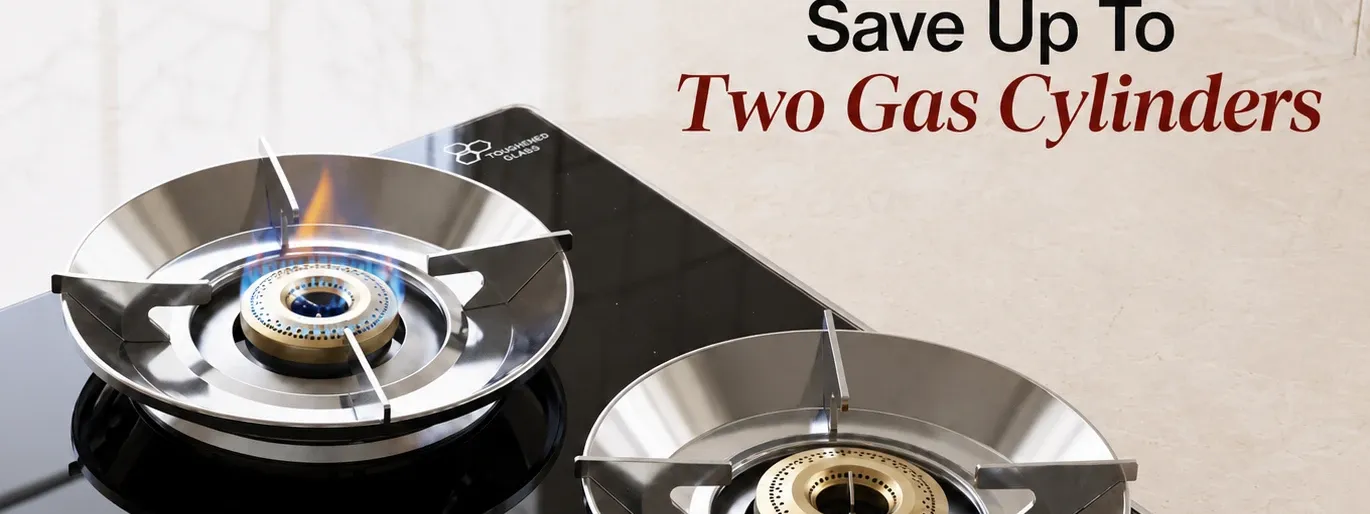
Small changes in your kitchen can lead to significant long-term savings. The Beyond Quantum Gas Saver Stove is engineered with HEXA Technology to maximize heat utilization and minimize gas wastage, helping households save up to 2 LPG cylinders every year without changing their cooking habits.
Clogged burner ports reduce flame efficiency and increase gas consumption. Weekly cleaning with thin wire or specialized cleaning tools ensures proper gas flow. Remove food debris and grease buildup that can obstruct flame patterns. Clean burner caps and rings monthly using warm soapy water, ensuring all components are completely dry before reassembly.
Implementing comprehensive LPG conservation strategies can reduce monthly consumption by 25-40%, translating to substantial annual savings. A family using 10 cylinders yearly can potentially reduce usage to 6-7 cylinders, saving ₹3,600-4,800 annually based on current pricing.
Conservative estimates show specific savings potential:
Proper flame adjustment: 15-20% savings (₹1,440-1,920 yearly)
Efficient cookware usage: 10-15% savings (₹960-1,440 yearly)
Pressure cooking adoption: 20-25% savings (₹1,920-2,400 yearly)
Combined strategies: 30-40% savings (₹2,880-3,840 yearly)
Quantum Gas Saver Stove: 77% Energy Efficient
These calculations assume current LPG prices of ₹800-900 per cylinder. As prices continue rising, percentage savings translate to increasingly significant rupee amounts, making conservation efforts even more valuable for household budgets.
Older gas stoves often lack modern efficiency features, consuming 15-30% more LPG than contemporary models. Stoves over 8-10 years old may have worn burner components that create incomplete combustion and waste gas. Recognizing replacement timing can significantly impact your long-term LPG savings.
Signs indicating replacement necessity include inconsistent flame patterns or yellow flames despite cleaning, difficulty achieving high heat output, frequent burner clogging requiring constant maintenance, and visible corrosion or damage to burner rings. Modern high-efficiency gas stoves feature brass burners that provide superior heat output while consuming less gas, maintaining consistent flame patterns and resisting corrosion better than traditional alternatives.
Advanced cooking strategies go beyond basic flame management to optimize every aspect of meal preparation. These techniques focus on understanding heat transfer, ingredient preparation, and cooking sequences that minimize total gas consumption while maintaining food quality.
Understanding optimal cooking temperatures for various ingredients prevents overcooking and gas waste. Vegetables require medium heat for proper nutrient retention, while proteins benefit from initial high heat followed by reduced flame cooking. Soaking grains and legumes overnight reduces cooking time by 30-40%, significantly decreasing gas consumption for daily staples.
Plan cooking sequences to utilize residual heat effectively. Start with items requiring highest heat, then progress to dishes needing lower temperatures. Use the same pan for multiple preparations when possible, building flavors while reducing both cleanup time and gas usage. This approach maintains burner efficiency while minimizing total cooking time.
Many households unknowingly waste significant amounts of LPG through preventable mistakes. Leaving burners on high heat throughout cooking processes wastes 25-30% more gas than necessary, as most cooking tasks require high heat only for initial stages. Using wet cookware directly on flames forces gas to first evaporate surface moisture before heating food, increasing cooking time by 10-15%.
Overcrowding burners with multiple small pots reduces efficiency for all items. Each burner works optimally with single, appropriately-sized vessels that allow proper flame contact and heat circulation. Poor burner maintenance creates incomplete combustion, wasting gas while producing potentially harmful emissions. Regular cleaning and proper flame adjustment eliminate these common efficiency problems.
Traditional Indian cooking methods often incorporate natural efficiency principles that modern households can adapt for LPG conservation. These time-tested approaches maximize nutrition while minimizing fuel consumption through strategic ingredient preparation and cooking techniques.
Steaming allows cooking multiple food items simultaneously using single burner energy. Stack steamers enable preparation of rice, vegetables, and proteins together, maximizing gas efficiency while preserving nutritional content. Traditional idli steamers exemplify this principle perfectly, producing large quantities with minimal gas consumption compared to individual preparation methods.
Develop recipes that combine proteins, vegetables, and grains in single vessels. These complete meal preparations reduce total cooking time and eliminate the need for multiple burners operating simultaneously. Khichdi, biryani, and various regional one-pot dishes demonstrate how traditional cooking naturally incorporates efficiency principles that reduce LPG consumption.
Contemporary gas stove technology incorporates several features specifically designed for fuel efficiency. High-efficiency brass burners provide superior heat output while consuming less gas than traditional alternatives. These burners maintain consistent flame patterns and resist corrosion, ensuring long-term performance that sustains LPG savings over years of use.
Automatic ignition systems eliminate the need for pilot lights or external ignition sources, reducing gas waste during startup. Flame Failure Devices automatically cut gas supply if flames extinguish accidentally, preventing dangerous gas leaks and waste. Toughened glass tops provide easy cleaning and maintenance, ensuring optimal burner performance through reduced maintenance requirements and better heat reflection.
Regular maintenance directly impacts LPG consumption and cooking performance. Weekly burner cleaning prevents port blockages that create inefficient flame patterns. Use thin wire or specialized cleaning tools to clear individual burner holes, ensuring proper gas flow and complete combustion.
Monthly deep cleaning should include removing and washing burner caps, rings, and drip trays. Grease accumulation reduces heat transfer efficiency and can create fire hazards. Ensure all components are completely dry before reassembly to prevent corrosion. Annual professional servicing identifies worn components that may increase gas consumption, with technicians adjusting flame settings and replacing worn gaskets for optimal performance.
Diversifying cooking methods can significantly reduce LPG dependency without compromising meal quality. These alternatives work particularly well for specific cooking tasks, allowing households to reserve gas usage for applications where it provides the greatest advantage.
Solar cookers offer completely fuel-free cooking for appropriate dishes during sunny hours. Simple box-type solar cookers can reach temperatures sufficient for rice, dal, and vegetable preparations. Initial investment of ₹3,000-8,000 pays for itself within 6-12 months through LPG savings, providing 4-6 hours of cooking capability daily across most Indian climatic conditions.
Regular pressure cooker use can reduce LPG consumption by 20-30% for applicable dishes. Pressure cooking reduces cooking time by 50-70%, making it one of the most effective conservation methods. For a household using 10 cylinders annually, this translates to saving 2-3 cylinders worth ₹1,600-2,400 yearly.
Yes. The Beyond Appliances Quantum Gas Saver Stove is engineered with HEXA Technology, a combination of innovations that work together to improve cooking efficiency. Its Aero Sensitive Vent optimizes air-fuel mixing for better combustion, the Thermo Shield minimizes heat loss by directing more heat to the cookware, and the Smart Flame Design ensures even heat distribution across the vessel. Together, these technologies help save up to 2 LPG cylinders every year while delivering faster, more efficient cooking. The stove also features LERC-certified full brass burners, a Flame Failure Device for enhanced safety, and a 10-year warranty for long-lasting performance.
High flames should only be used for boiling water or initial heating. Medium flames work best for sautéing and frying, while low flames are ideal for simmering, slow cooking, and maintaining temperature. The flame should never extend beyond the bottom of your cookware, as this indicates wasted gas and inefficient heating.
Clean burner ports weekly using thin wire to prevent blockages. Monthly deep cleaning should include washing burner caps and rings with warm soapy water. Annual professional servicing ensures optimal performance and identifies any worn components that might increase gas consumption.
Implementing these LPG conservation strategies can reduce your cooking gas consumption by 25-40%, translating to annual savings of ₹2,880-3,840 for average households. The combination of proper cooking techniques, efficient appliances, and regular maintenance creates sustainable long-term benefits that compound over time.
Modern gas stoves with high-efficiency brass burners maximize heat output while minimizing fuel consumption. High-efficiency brass burners for maximum heat and gas savings, paired with shatter-resistant, easy-clean toughened glass tops, ensure optimal performance through years of use. Seamless auto-ignition from knob to flame, backed by a Flame Failure Device that cuts gas supply if the flame goes out, provides both convenience and safety while preventing gas waste.
Success in LPG conservation requires consistent application of multiple strategies rather than relying on single solutions. Start with simple changes like proper flame adjustment and cookware selection, then gradually incorporate pressure cooking and batch preparation methods. These incremental improvements compound over time, creating substantial savings while maintaining cooking quality and convenience for modern Indian households.
