
Modern Hob Benefits: Your Complete Kitchen Guide
Cart
Your cart is empty
Modern kitchens demand appliances that combine efficiency, style, and advanced technology. Today's hobs represent a significant leap forward from traditional cooking methods, offering homemakers unprecedented control over their culinary experience. Whether you're renovating your kitchen or building a new home, understanding the benefits of modern hob technology can transform how you approach cooking. From energy-efficient induction systems to sleek ceramic surfaces and improved gas burners, modern hobs deliver superior performance while enhancing your kitchen's aesthetic appeal.
Modern hobs have revolutionized kitchen cooking through innovative technology and thoughtful design. Unlike conventional stovetops that relied on basic heating elements, today's hobs incorporate smart sensors, precise temperature controls, and energy-efficient systems that respond instantly to your cooking needs. The evolution from traditional cooking methods to hob cooking technology represents decades of engineering advancement. Modern hobs feature digital displays, touch controls, and programmable settings that make cooking more intuitive and enjoyable. These appliances integrate seamlessly with contemporary kitchen designs while delivering consistent, reliable performance that busy households depend on. Key technological improvements include faster heating times, better heat distribution, and enhanced safety features. Modern hobs also offer superior energy efficiency, reducing both cooking time and utility costs. The combination of functionality and style makes these appliances essential for anyone seeking to upgrade their kitchen experience.
Induction technology represents the pinnacle of cooking efficiency, using electromagnetic fields to heat cookware directly rather than heating the surface first. This revolutionary approach delivers induction hob advantages that traditional cooking methods simply cannot match.
Induction hobs heat cookware up to 50% faster than gas burners, bringing water to boil in minutes rather than the extended time required by conventional methods. The electromagnetic technology provides instant heat adjustment, allowing you to switch from high heat to gentle simmering with immediate response.
The energy efficient hob design of induction systems converts 85-90% of electrical energy directly into heat, compared to just 40-55% efficiency from gas hobs. This remarkable efficiency translates into lower electricity bills and reduced environmental impact, making induction an excellent choice for eco-conscious homemakers.
Induction surfaces remain cool to touch during cooking, significantly reducing burn risks. The technology only activates when compatible cookware is detected, preventing accidental activation and ensuring child safety in busy kitchens.
Ceramic hobs combine elegant aesthetics with reliable cooking performance, featuring smooth glass surfaces that complement modern kitchen designs. These appliances offer excellent value for homemakers seeking style and functionality without the higher cost of induction technology.
The flat, seamless surface of ceramic hobs makes cleaning incredibly simple. Spills and splatters wipe away easily with a damp cloth, while the easy clean hob design eliminates the crevices and grates that trap food particles in traditional gas burners.
Ceramic heating elements provide consistent temperature across the entire cooking surface, ensuring even cooking results. This uniform heat distribution prevents hot spots that can burn food or create uneven cooking patterns.
Built-in indicators show when cooking zones remain hot after use, preventing accidental burns and helping you utilize residual heat for gentle warming or keeping food at serving temperature.
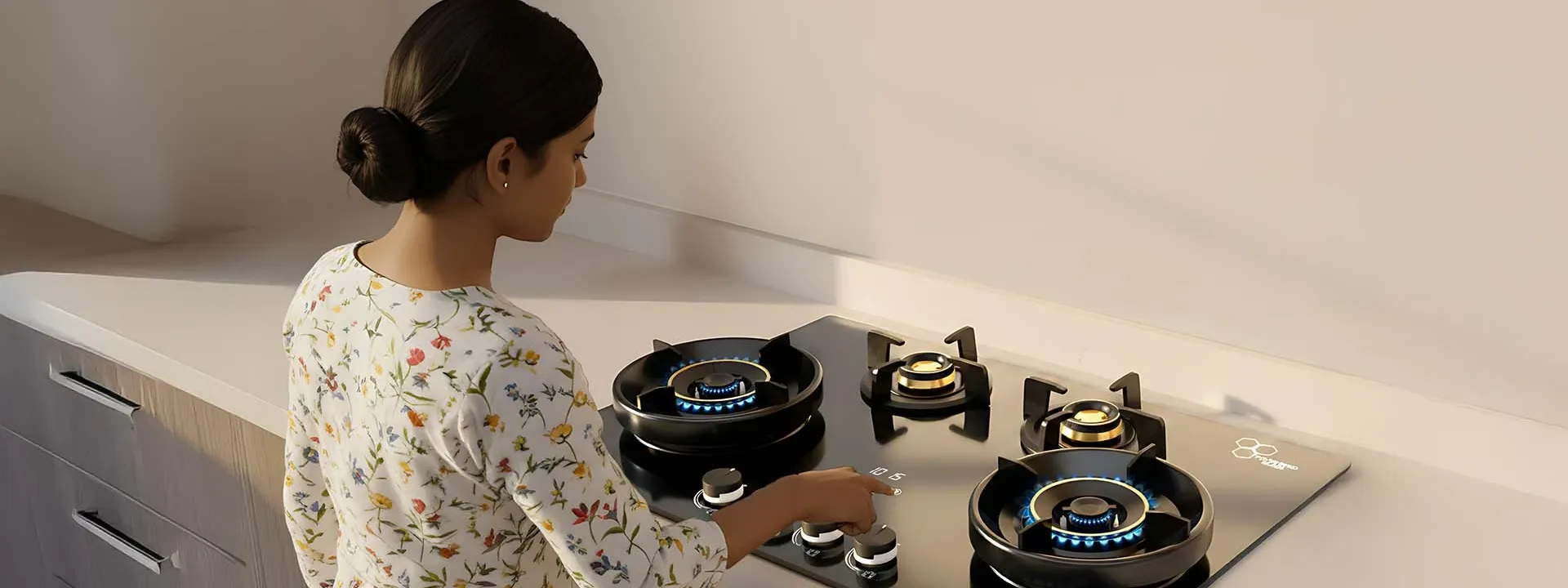
Modern gas hobs retain the immediate heat control that professional chefs prefer while incorporating safety features and efficiency improvements that make them ideal for contemporary kitchens. These appliances excel at high-heat cooking techniques essential for Indian cuisine.
Gas burners provide immediate visual feedback through flame size and color, allowing experienced cooks to adjust heat levels instinctively. This instant response makes gas hobs particularly suitable for techniques like stir-frying and rapid temperature changes.
Gas hob efficiency shines in Indian kitchens where high-heat cooking methods like tadka, deep frying, and rapid sautéing are essential. The intense, controllable flame provides the heat levels needed for authentic flavors and proper cooking techniques.
Gas remains one of the most economical cooking fuels, especially in areas where natural gas is readily available. Modern gas hobs feature improved burner designs that maximize fuel efficiency while maintaining the powerful heat output that gas cooking is known for.
Urban living often means working with limited kitchen space, making compact hob design essential for maximizing functionality without sacrificing cooking capability. Modern hobs offer flexible solutions that adapt to various kitchen layouts and size constraints.
Built-in hobs create seamless integration with countertops, maximizing usable surface area while providing a clean, professional appearance. These installations work particularly well in small kitchens where every inch of counter space matters.
Modern compact hobs feature multiple cooking zones in space-efficient configurations. Two, three, or four-burner arrangements allow simultaneous cooking of multiple dishes while fitting into surprisingly small spaces.
Stylish hob options include flush-mount installations that create uninterrupted counter surfaces, making small kitchens appear larger and more organized. This integration also simplifies cleaning and maintenance routines.
Safety innovations in modern hobs provide multiple layers of protection, making these appliances suitable for families with children and elderly members. These features operate automatically, requiring no special knowledge or intervention from users.
Digital control panels include child lock functions that prevent accidental activation or setting changes. These hob safety features give parents confidence when children are present in the kitchen during cooking activities.
Built-in sensors monitor cooking temperatures and automatically shut off heating elements if dangerous conditions are detected. This protection prevents fires and equipment damage while providing peace of mind during busy cooking sessions.
Induction and ceramic hobs feature surfaces that remain relatively cool during operation, while clear indicators warn when areas retain heat after cooking. These features significantly reduce burn risks in active kitchens.
Built-in hobs require professional installation and have higher initial costs compared to freestanding units. However, these investments are offset by increased kitchen value, improved aesthetics, and better space utilization. Installation complexity means repairs may require specialized service, but quality units typically provide years of reliable operation.
Induction hobs are the most efficient option, converting 85-90% of electrical energy directly into heat for cooking. Gas hobs achieve 40-55% efficiency, while ceramic electric hobs fall between these ranges. Induction's superior efficiency translates into faster cooking times and lower energy costs over the appliance's lifetime.
Modern hobs excel at Indian cooking techniques, with gas hobs providing the high heat needed for tadka and rapid cooking, while induction offers precise temperature control for delicate preparations. The even heat distribution and responsive controls make both types suitable for the diverse cooking methods used in Indian cuisine.
Modern hobs offer energy efficiency, enhanced safety features, easier cleaning, precise temperature control, and improved kitchen aesthetics. They cook food faster, reduce energy costs, and provide better cooking results while integrating seamlessly with contemporary kitchen designs.
Induction hobs heat cookware 50% faster than gas burners, making them ideal for quick meal preparation. Gas provides instant visual heat control and immediate response to adjustments. Ceramic hobs heat more slowly but maintain consistent temperatures well, making them suitable for longer cooking processes.
Induction hobs require magnetic cookware like cast iron or stainless steel with magnetic bases. Gas hobs work with any heat-resistant cookware material. Ceramic hobs accommodate most cookware types but perform best with flat-bottomed pans that make full contact with the heating surface.
Operating costs vary by local fuel prices, but gas typically costs INR 2-4 per hour of cooking, while induction costs INR 3-6 per hour depending on electricity rates. Induction's higher efficiency often results in shorter cooking times, potentially offsetting the higher per-unit energy cost.
Modern hobs require minimal maintenance beyond regular cleaning. Ceramic and induction surfaces need gentle cleaning with appropriate products to avoid scratches. Gas hobs require periodic cleaning of burner components and checking gas connections. All types benefit from professional servicing annually to ensure optimal performance.
The benefits of modern hob technology extend far beyond simple cooking convenience. These appliances represent a smart investment in your kitchen's functionality, safety, and aesthetic appeal. Whether you choose the lightning-fast efficiency of induction, the sleek practicality of ceramic, or the responsive control of modern gas systems, upgrading to a contemporary hob will transform your daily cooking experience. Consider your cooking style, kitchen layout, and long-term needs when selecting the perfect hob for your home. With proper selection and installation, a modern hob will serve your family reliably for years while adding value to your kitchen investment.
