

Essential Checklist: Modular Kitchen Chimney Guide
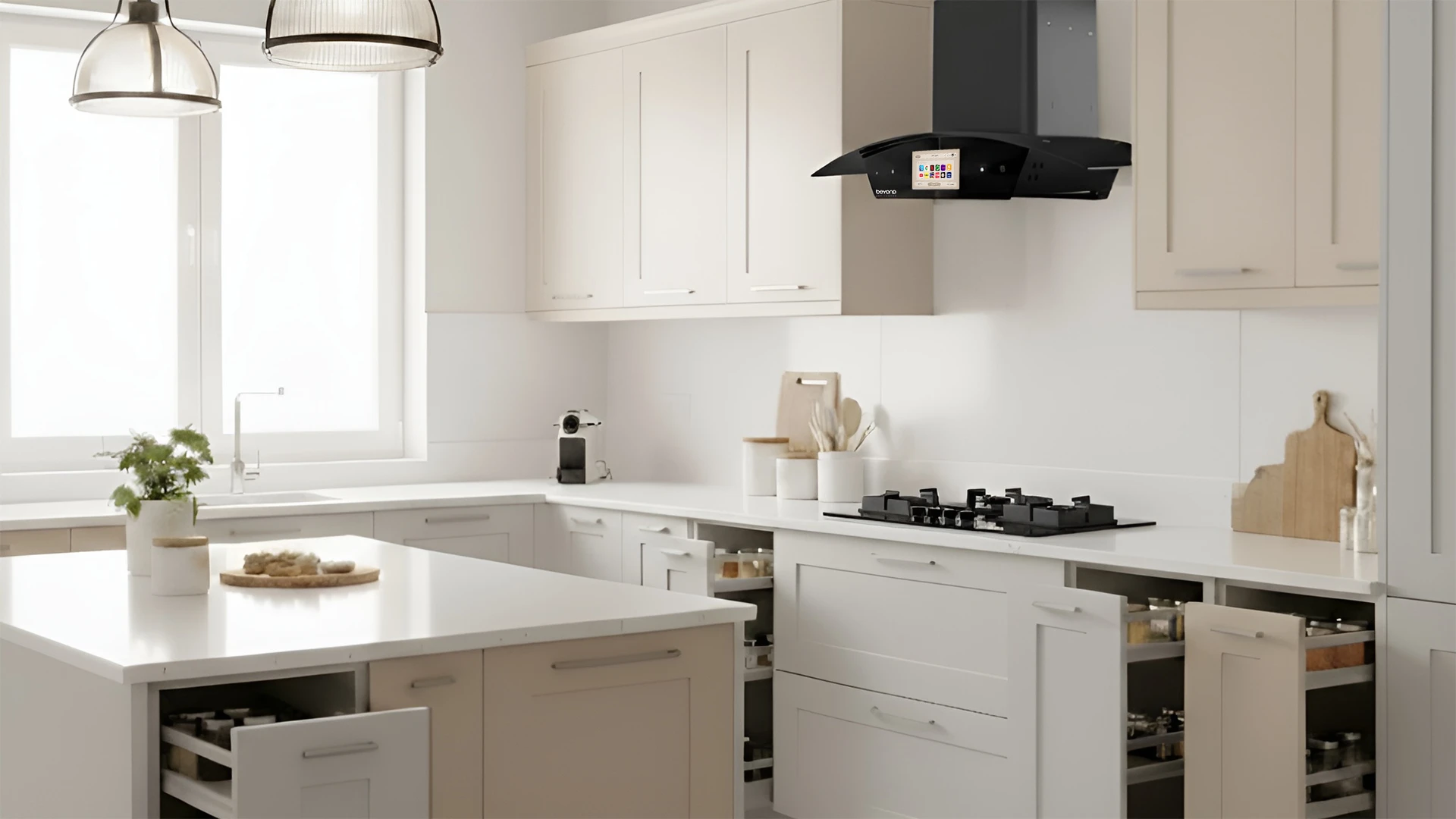
Choosing between a modular kitchen with chimney vs without is one of the most crucial decisions for Indian homeowners. Modern cooking demands effective ventilation solutions, especially with our spice-heavy cuisine and frequent oil-based preparations. The right choice impacts everything from air quality to kitchen aesthetics, maintenance costs, and even your family's health. This comprehensive guide examines both options, helping you make an informed decision that suits your cooking style, budget, and space constraints.
Indian cooking presents unique challenges that make proper modular kitchen ventilation essential. Our traditional cooking methods involve heavy use of spices, deep frying, and high-heat preparations that generate significant smoke and odors. Without adequate ventilation, these cooking byproducts settle on surfaces, creating sticky residues that damage cabinets and walls over time. Poor ventilation in compact modular kitchens creates a cascade of problems. Grease particles accumulate on cabinet surfaces, requiring frequent cleaning and eventual refinishing. The trapped heat and humidity can warp wooden components and affect electronic appliances. Most importantly, inadequate air circulation poses health risks, particularly for family members with respiratory sensitivities.
Without proper ventilation, oil particles and smoke residue coat every surface in your modular kitchen. This buildup is particularly problematic for glossy finishes and light-colored cabinets that show stains easily.
Continuous exposure to cooking fumes and smoke can trigger respiratory issues, especially in children and elderly family members. Proper kitchen design with chimney systems helps maintain healthier indoor air quality.
A modular kitchen chimney offers numerous advantages that extend beyond basic smoke removal. These systems are specifically designed to handle the demands of Indian cooking, providing powerful suction that captures grease, smoke, and odors at their source. Kitchen chimney benefits include immediate smoke elimination, which is crucial when preparing dishes with strong spices or when frying foods. The powerful suction prevents cooking odors from spreading throughout your home, maintaining a pleasant living environment even during extensive meal preparation.
Chimneys significantly reduce the cleaning burden on your modular kitchen. By capturing grease and smoke before they settle on surfaces, you'll spend less time scrubbing cabinets and walls.
Effective ventilation helps maintain comfortable temperatures in your kitchen, especially important in compact spaces where heat can quickly become overwhelming during cooking sessions.
Modern buyers expect well-ventilated kitchens. A properly installed chimney system adds significant value to your property and appeals to potential buyers who understand the importance of quality ventilation.
While chimney vs no chimney kitchen debates often favor chimney installation, there are specific scenarios where kitchens can function without them. Understanding these situations helps you make an informed decision based on your actual cooking patterns and space constraints. Kitchens without chimneys work best when cooking is minimal, primarily involving reheating or simple preparations. If your kitchen has excellent natural cross-ventilation with multiple windows and you rarely engage in heavy cooking, alternative kitchen ventilation options might suffice.
Exhaust fans can provide basic air circulation, though they're less effective than chimneys for capturing grease and smoke directly above cooking surfaces. Strategic window placement can create natural airflow patterns.
Skipping chimney installation reduces initial kitchen costs significantly. However, this decision often leads to higher long-term maintenance expenses due to increased cleaning requirements and potential surface damage.
Kitchens without proper ventilation typically require more frequent repainting, cabinet refinishing, and deep cleaning. The accumulated costs often exceed the initial chimney investment over time.
Modern types of kitchen chimneys offer various solutions to match different kitchen layouts and design preferences. Understanding these options helps you select the most suitable system for your specific needs and space constraints. Compact kitchen chimney models are specifically designed for smaller Indian kitchens, offering powerful performance without overwhelming the space. These units typically feature sleek profiles that integrate seamlessly with modular kitchen designs.
Wall-mounted chimneys work perfectly for straight kitchen layouts where the cooking area is positioned against a wall. These models offer excellent suction power and are generally more affordable than other types.
Modern kitchen chimney designs increasingly focus on seamless integration with cabinetry. Built-in models hide within the cabinet structure, maintaining clean lines and uninterrupted visual flow.
For kitchens with central cooking islands, ceiling-mounted chimneys provide effective ventilation while serving as striking design elements that enhance the overall kitchen aesthetics.
Choosing the best kitchen chimney requires careful consideration of several technical and practical factors. The suction power, measured in cubic meters per hour, should match your cooking intensity and kitchen size for optimal performance. For Indian cooking, chimneys with suction capacity between 400-1000 cubic meters per hour typically provide adequate performance. Higher capacity units are necessary for larger kitchens or heavy cooking patterns involving frequent frying and spice-heavy preparations.
Baffle filters offer superior grease separation and are easier to clean than traditional cassette filters. Filterless technology eliminates maintenance requirements but may require higher initial investment.
Modern chimneys operate at noise levels between 35-58 decibels. For open-plan living spaces, prioritize quieter models that won't disrupt family activities or conversations during cooking.
Chimney width should match or exceed your cooktop width for effective smoke capture. Standard sizes range from 60cm to 90cm, with custom options available for unique kitchen layouts.
Kitchen design with chimney planning should begin during the initial modular kitchen design phase. Proper planning ensures adequate space allocation, appropriate electrical connections, and seamless aesthetic integration. Ductwork planning is crucial for optimal performance. Straight duct runs provide better suction than configurations with multiple bends. External venting typically offers superior performance compared to recirculation systems, especially for heavy Indian cooking.
Chimneys require dedicated electrical circuits with appropriate amperage ratings. Professional installation ensures proper grounding and safety compliance with local electrical codes.
Design your modular kitchen layout to provide easy access for chimney cleaning and filter maintenance. Consider removable cabinet panels or adequate clearance for service access.
For Indian cooking styles involving heavy spices and oil-based preparations, chimneys are highly recommended. They protect your kitchen surfaces, improve air quality, and enhance overall cooking comfort. While not legally mandatory, they're practically essential for maintaining a clean, healthy kitchen environment.
Most modular kitchen packages offer chimneys as optional add-ons rather than standard inclusions. Some premium packages may include basic chimney models, but upgrading to higher-capacity units typically involves additional costs. Always clarify chimney inclusions when comparing modular kitchen quotes.
Chimney disadvantages include initial installation costs ranging from INR 15,000 to INR 80,000, ongoing maintenance requirements, and potential noise during operation. Some models require regular filter cleaning or replacement, adding to operational costs. However, these drawbacks are generally outweighed by the benefits for most Indian households.
Small kitchens benefit significantly from compact chimney solutions that provide powerful ventilation without overwhelming the space. Modern slim-profile chimneys offer excellent performance while maintaining the clean aesthetics essential in compact kitchen designs.
The decision between a modular kitchen with chimney vs without ultimately depends on your cooking patterns, budget, and long-term maintenance preferences. For most Indian households, investing in a quality chimney system provides substantial benefits that justify the initial cost through improved air quality, reduced cleaning requirements, and enhanced kitchen longevity. Consider your specific needs, kitchen layout, and cooking intensity when making this important decision for your home.
