

Voice vs Touch Chimneys: Which Wins in Smart Kitchens?
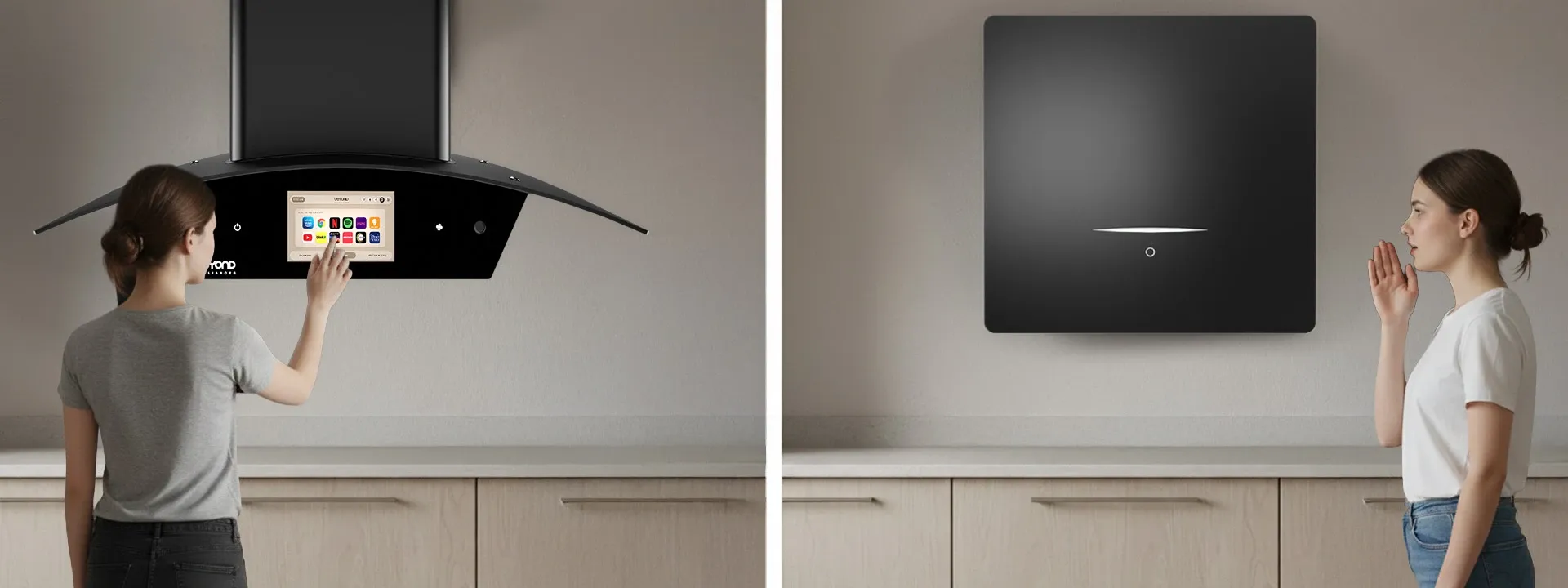
Modern kitchens are transforming rapidly with smart technology integration. The choice between voice-enabled chimney vs touch control chimney has become a crucial decision for homeowners seeking efficient kitchen ventilation. Both technologies offer unique advantages for hands-free cooking and kitchen automation. Understanding their differences helps you make an informed choice for your smart chimney investment. This comparison explores performance, convenience, and value to determine which technology truly wins in today's modern kitchen appliances landscape.
Voice control kitchen technology represents the latest evolution in smart chimney design. These systems integrate seamlessly with your existing smart home ecosystem, offering unprecedented convenience during cooking sessions.
Voice-enabled chimneys connect through Wi-Fi networks and integrate with popular voice assistants like Alexa and Google Assistant. Simple commands like "turn on kitchen chimney" or "set chimney to high speed" activate the system instantly. The technology uses advanced microphones that filter kitchen noise, ensuring accurate voice recognition even during busy cooking sessions.
Modern voice assistant cooking systems offer multi-mode operation combining voice, motion, and traditional touch controls. App-based remote control allows you to monitor and adjust settings from anywhere in your home. Smart scheduling features enable automatic operation based on cooking patterns, while integration capabilities connect with other kitchen automation systems for seamless hands-free cooking experiences.
Voice-enabled systems require stable Wi-Fi connectivity with minimum 2.4GHz network support. Initial configuration involves downloading manufacturer apps and linking voice assistant accounts. Professional installation ensures proper network connectivity and optimal microphone positioning for reliable voice recognition performance.
Touch control appliances have revolutionized kitchen interactions through intuitive digital interfaces. These systems provide precise control and immediate feedback, making them popular choices for modern kitchen appliances.
Capacitive touch interfaces respond to light finger pressure, offering smooth operation and elegant aesthetics. Digital displays show real-time information including speed settings, timer controls, and filter status indicators. The user interface design prioritizes simplicity while providing comprehensive control over all chimney functions.
Touch controls offer precise speed adjustments and accurate timer settings for optimal kitchen ventilation. The smooth glass surfaces resist stains and clean easily with standard kitchen cleaners. Immediate visual feedback confirms every command, ensuring reliable operation during intensive cooking sessions.
Touch panels withstand kitchen heat, humidity, and cooking vapors effectively. Quality systems maintain responsiveness despite exposure to oil particles and steam. Long-term performance remains consistent with minimal maintenance requirements, making them reliable choices for busy Indian kitchens.
The battle between voice and touch technology centers on convenience, performance, and practical kitchen applications. Each system offers distinct advantages depending on cooking habits and kitchen design preferences.
Voice control excels during hands-free cooking when your hands are occupied with food preparation. Multi-tasking becomes effortless as you adjust ventilation without interrupting cooking flow. Touch controls provide immediate visual confirmation and precise adjustments, though they require clean hands for optimal operation.
Both technologies deliver identical suction performance when paired with quality motors rated at 1600 m³/hr or higher. Voice systems may have slight response delays due to processing time, while touch controls offer instantaneous activation. Energy consumption patterns remain similar across both control methods.
Voice-enabled systems typically cost INR 5,000-15,000 more than equivalent touch control models. Installation costs increase slightly due to network setup requirements. However, long-term maintenance expenses remain comparable, with both systems offering similar durability and service life expectations.
Advanced chimney features extend beyond control methods to include comprehensive smart functionality. These capabilities enhance overall kitchen ventilation effectiveness and user experience.
High-capacity motors delivering 1600 m³/hr suction power handle intensive Indian cooking effectively. Auto-clean mechanisms reduce maintenance requirements through self-cleaning cycles. Advanced noise reduction technologies maintain quiet operation even at maximum speeds, ensuring comfortable kitchen environments.
IoT capabilities enable seamless integration with smart home ecosystems and kitchen automation systems. Mobile apps provide remote monitoring, scheduling, and diagnostic information. Smart connectivity allows coordination with other appliances for optimized kitchen performance.
Auto shut-off protocols prevent overheating and ensure safe operation. Filter replacement indicators notify users when maintenance is required. Self-diagnostic capabilities identify potential issues before they affect performance, reducing unexpected breakdowns.
Selecting between voice and touch control depends on your specific cooking habits, kitchen design, and technology preferences. Consider these factors to make an informed decision.
Evaluate your cooking frequency and style preferences. Heavy cooking requires robust suction regardless of control method. Budget considerations should include initial costs plus long-term maintenance expenses. Future-proofing involves choosing systems that integrate with evolving smart home technologies.
Proper ducting ensures optimal performance for both control types. Electrical requirements include dedicated circuits for high-power motors. Network infrastructure planning becomes crucial for voice-enabled systems requiring reliable Wi-Fi connectivity.
Both voice and touch control chimneys offer excellent performance. Voice control provides hands-free convenience, while touch control offers precise immediate control. Choose based on your cooking style and smart home preferences.
Smart chimneys require stable internet connectivity and may have higher initial costs. Technical issues can affect smart features, though basic operation typically continues working normally.
Voice-enabled models typically cost INR 5,000-15,000 more than touch control versions. However, prices vary significantly based on brand, features, and suction capacity.
Most voice chimneys retain basic functionality without internet but lose smart features like remote control and voice commands. Touch controls and manual operation continue working normally.
Quality touch controls withstand kitchen heat, humidity, and cooking vapors effectively. They maintain responsiveness despite exposure to oil particles and require minimal maintenance.
The choice between voice-enabled chimney vs touch control chimney ultimately depends on your specific needs and preferences. Voice control excels in hands-free convenience and smart home integration, making it ideal for tech-savvy households. Touch control offers reliable, immediate operation with lower costs and simpler installation. Both technologies deliver excellent kitchen ventilation when paired with quality motors and proper installation. Consider your cooking habits, budget, and smart home goals to make the best choice for your efficient chimney needs.
