
Types of Kitchen Chimneys: Complete Buyer's Guide
Cart
Your cart is empty
Choosing the right kitchen chimney can transform your cooking experience and keep your home fresh and clean. With so many types of kitchen chimneys available in the Indian market, finding the perfect fit for your home requires understanding different designs, technologies, and features. Modern Indian kitchens demand efficient kitchen ventilation systems that can handle heavy cooking, oil splatter, and strong aromas. Whether you're renovating your kitchen or building a new home, this guide will help you navigate through various chimney types and make an informed decision that suits your cooking style, kitchen layout, and budget.
A kitchen chimney is an essential appliance that removes smoke, grease, and cooking odors from your kitchen. These devices work by creating suction that pulls contaminated air through filters and either vents it outside or recirculates clean air back into the room. Indian cooking involves heavy use of spices, oil, and high-heat cooking methods that generate significant smoke and grease.
The right cooking chimney protects your kitchen walls, cabinets, and ceiling from oil deposits while maintaining air quality. Most modern chimneys operate on electricity and require suction power between 1000-1500 cubic meters per hour for effective Indian cooking needs. Understanding these basics helps you choose between different kitchen exhaust systems available in the market.
The mounting style determines how your chimney integrates with your kitchen design and affects both functionality and aesthetics. Each mounting type serves different kitchen layouts and cooking requirements.
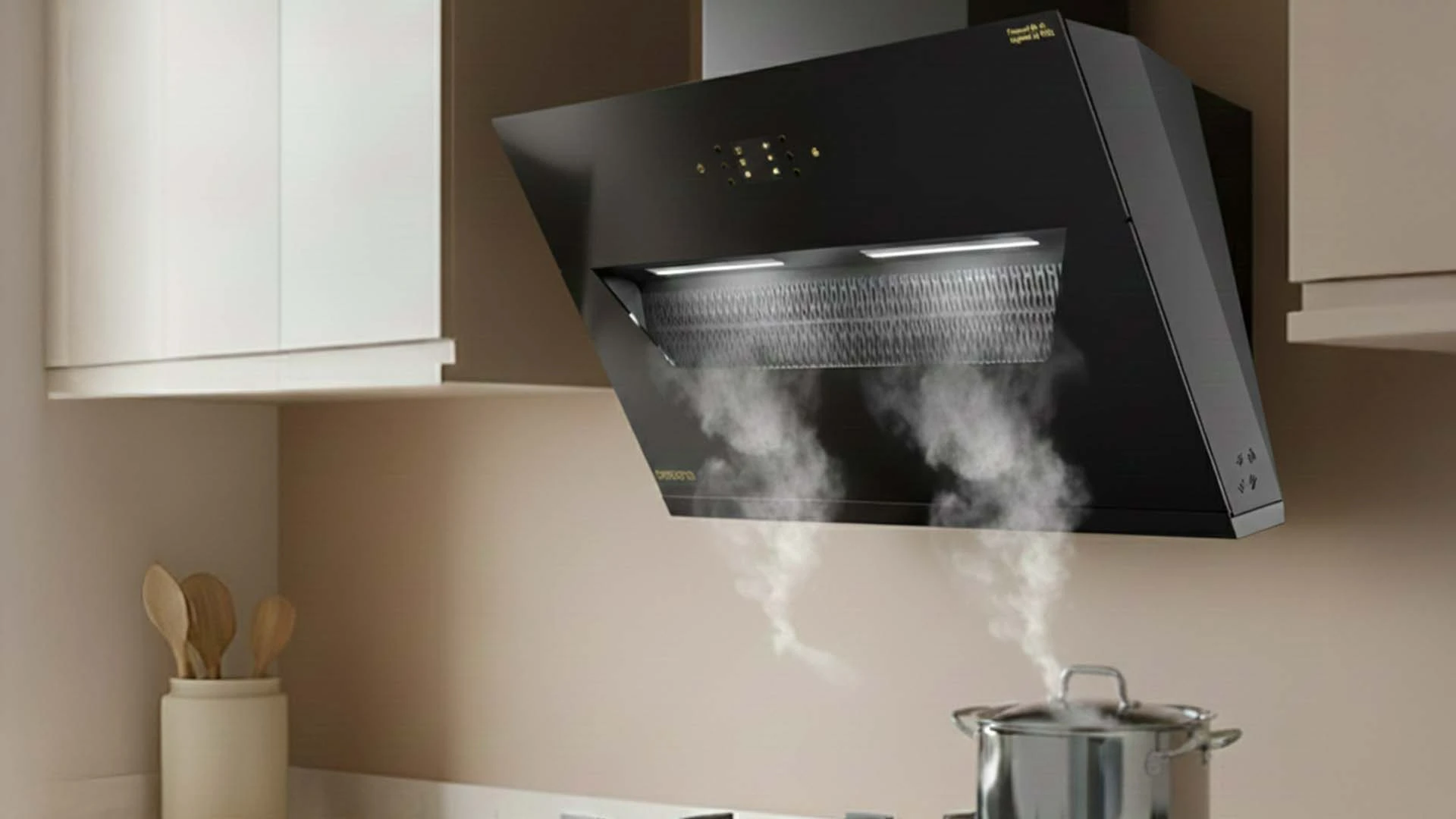
The wall mounted chimney is the most popular choice for Indian homes. These units attach directly to the wall above your cooktop and work well with standard kitchen layouts. They offer excellent suction power and are available in various designs from basic box types to premium curved models.
An island chimney hangs from the ceiling and suits open kitchen designs where the cooking area sits in the center. These chimneys require ceiling mounting and ductwork planning during kitchen construction. They create a modern look but need higher suction power due to air circulation from all sides.
Built-in models integrate seamlessly with modular kitchen cabinets. These chimneys hide within the cabinet structure, offering a clean, minimalist appearance. They work best when planned during kitchen design phase and require precise measurements.
Corner-mounted chimneys maximize space utilization in compact kitchens. These specialized units fit into kitchen corners and provide adequate ventilation while saving valuable wall space for other appliances or storage.
Beyond mounting styles, kitchen chimneys come in different design configurations that affect both performance and visual appeal. Each design offers unique advantages for different cooking needs and kitchen aesthetics.
Curved or hood-style chimneys feature a rounded design that provides excellent smoke capture. The curved shape creates better airflow patterns and often includes premium features like touch controls and LED lighting. These models suit modern kitchen designs and offer superior performance.
Slant chimneys feature an angled design that saves head space while cooking. The inclined surface prevents head bumps and makes cleaning easier. These models work well in kitchens with limited vertical space and provide good suction efficiency.
Box or straight-line chimneys offer basic functionality at budget-friendly prices. These rectangular units provide reliable performance without fancy features. They suit traditional kitchen designs and offer easy maintenance with removable filters.
Modern kitchen chimneys use different technologies to clean and manage air flow. Understanding these technologies helps you choose the right system for your cooking habits and maintenance preferences.
Ducted chimneys connect to external venting that removes contaminated air outside your home. These systems provide maximum efficiency for heavy cooking but require ductwork installation. Ductless chimney models recirculate filtered air back into the kitchen, offering installation flexibility without external venting requirements.
An auto clean chimney uses heat or oil collection mechanisms to reduce manual cleaning requirements. These systems either heat the filters to remove oil deposits or collect oil in removable containers. Auto-clean technology significantly reduces maintenance effort and keeps your chimney running efficiently.
Baffle filters use curved metal plates to separate grease from air and work best for heavy Indian cooking. Mesh filters use multiple layers of aluminum mesh but require frequent cleaning. Filterless chimneys use centrifugal force to separate grease and offer the lowest maintenance requirements.
Indian cooking styles demand specific chimney features to handle high heat, oil splatter, and strong spices effectively. Different cooking methods require different suction power and filter capabilities.
Heavy frying and tadka cooking need chimneys with 1200-1500 cubic meters per hour suction power and baffle filters. Grilling and roasting work best with ducted systems that can handle continuous smoke removal. Multi-cuisine cooking benefits from auto-clean chimneys with adjustable speed settings.
Compact kitchens benefit from slant chimneys or built-in models that save space while providing adequate ventilation. These designs maximize functionality without overwhelming small cooking areas.
Spacious kitchens can accommodate island chimneys or large wall-mounted units with powerful motors. These installations provide comprehensive coverage for multiple cooking zones.
Kitchen chimney prices vary significantly based on type, features, and brand positioning. Understanding price ranges helps you set realistic expectations and find the best value for your needs.
Basic box-type chimneys start from INR 8,000-15,000 and offer essential functionality. Mid-range slant and curved models cost INR 15,000-35,000 with better features and design. Premium auto-clean and island chimneys range from INR 35,000-80,000 with advanced technology and superior performance.
The best value often comes from mid-range models that balance features, performance, and price. These chimneys offer reliable operation without premium pricing while including useful features like LED lighting and multiple speed settings.
Higher-priced chimneys often include better warranties, energy-efficient motors, and durable construction. These factors reduce long-term operating costs and provide better return on investment over time.
Different chimney types have varying installation requirements that affect both initial setup costs and ongoing maintenance needs. Planning these factors helps avoid surprises and ensures optimal performance.
Wall-mounted chimneys require sturdy wall support and electrical connections. Island chimneys need ceiling reinforcement and ductwork planning. Built-in models require precise cabinet measurements and coordination with kitchen installation.
Filter-based chimneys need regular cleaning every 2-4 weeks depending on cooking frequency. Auto-clean models reduce this to monthly oil container emptying. Filterless chimneys require the least maintenance but may need professional servicing annually.
For Indian cooking, wall-mounted chimneys with baffle filters and 1200-1500 cubic meters per hour suction power work best. Auto-clean technology reduces maintenance, while curved or slant designs provide better smoke capture for heavy cooking with spices and oil.
Ducted chimneys vent contaminated air outside through pipes, providing maximum efficiency but requiring external ductwork. Ductless chimneys filter and recirculate air back into the kitchen, offering easier installation but slightly lower efficiency for heavy cooking.
Indian kitchens typically need 1000-1500 cubic meters per hour suction power. Heavy cooking with frequent frying requires 1200-1500 cubic meters per hour, while moderate cooking can work with 800-1200 cubic meters per hour.
Filterless chimneys require less maintenance and provide consistent suction power but cost more initially. Filter-based chimneys are more affordable and effective for grease removal but need regular cleaning. Auto-clean filter chimneys offer the best balance of performance and convenience.
Island chimneys work best in kitchens larger than 150 square feet with ceiling heights above 9 feet. Small kitchens benefit more from wall-mounted or slant chimneys that provide adequate ventilation without overwhelming the space.
A 4-burner gas stove typically requires a 90cm wide chimney with 1200-1500 cubic meters per hour suction power. The chimney should be 6-12 inches wider than your cooktop for optimal smoke capture and performance.
Selecting the right kitchen chimney depends on your cooking style, kitchen layout, and budget considerations. Wall-mounted chimneys suit most Indian homes, while island models work for open kitchen designs. Auto-clean technology reduces maintenance effort, and proper suction power ensures effective smoke removal. Consider installation requirements, ongoing maintenance, and long-term value when making your decision. The right chimney investment improves your cooking experience while protecting your kitchen and maintaining healthy indoor air quality.
