

Step-by-Step Guide to Easy Clean Cooktop Maintenance
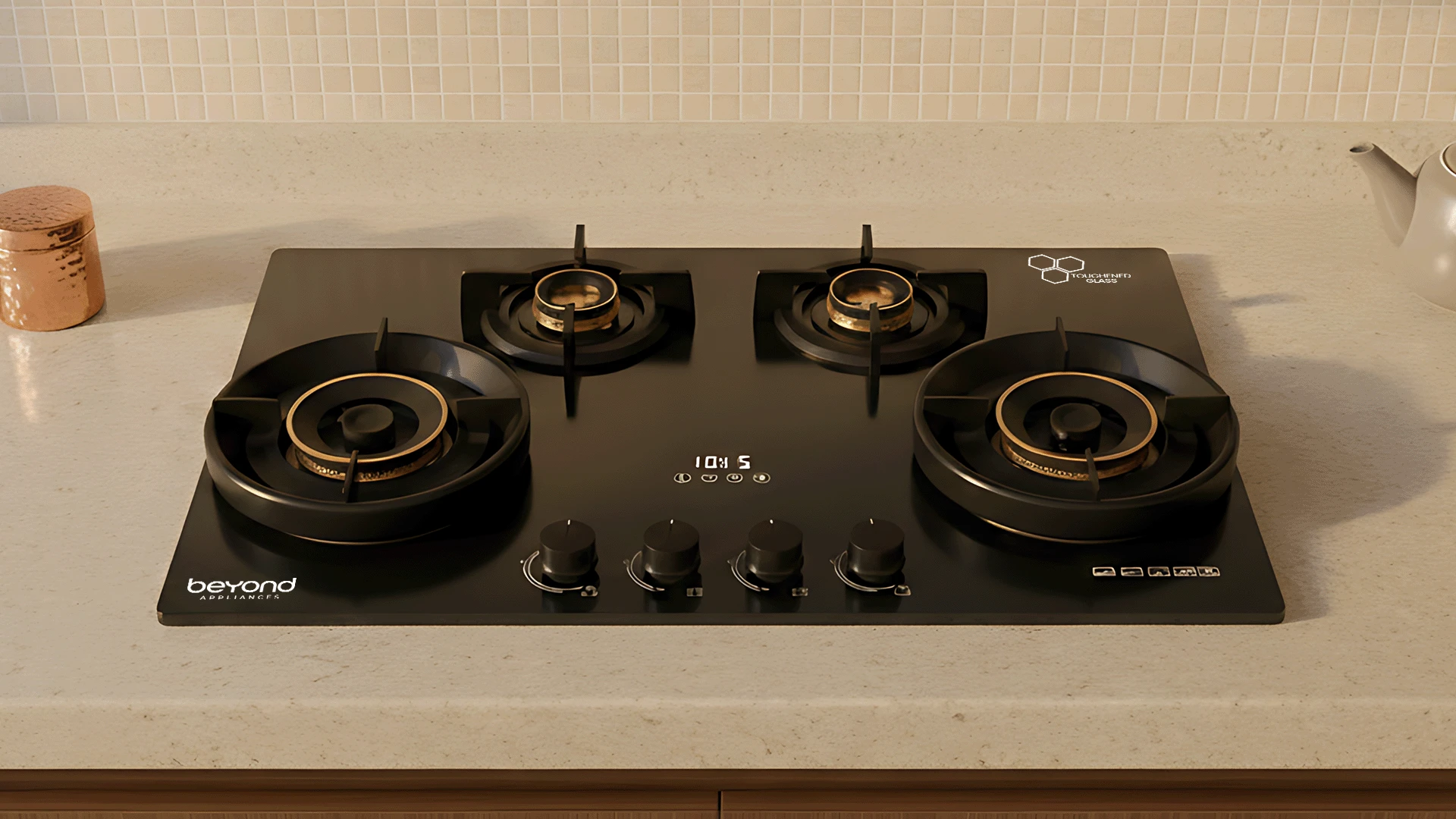
Indian cooking is hard on cooktops. Daily tempering, heavy oil, turmeric stains, and boil-overs leave behind residue that builds up fast if you skip even a few days of cleaning. The good news is that the right cooktop design — combined with a simple, consistent cleaning routine — can cut your maintenance time significantly. Gas hobs with toughened glass surfaces, full brass burners, and removable cast iron supports are built to handle this kind of cooking load without becoming a cleaning nightmare. Understanding how each component works helps you clean smarter, not harder. This guide walks you through a practical, step-by-step cooktop cleaning routine that works for gas hobs used in everyday Indian kitchens, including models from Beyond Appliances designed specifically for these conditions.
A consistent daily and weekly cleaning routine prevents grease and stain build-up on gas cooktops.
Removable cast iron supports, full brass burners, and toughened glass surfaces make cooktops for easy cleaning far more manageable.
Pairing a well-maintained hob with a high-suction chimney reduces the amount of grease that settles on your cooktop surface in the first place.
Not all cooktops are equally easy to maintain. The surface material, burner type, and support structure all determine how quickly grease accumulates and how simple it is to remove. A low maintenance stovetop is not just about the cleaning products you use — it starts with the design of the appliance itself.
Gas hobs with toughened glass tops are among the best cooktops for spills because the flat, smooth surface does not trap food particles the way older enamel or stainless steel tops do. Full brass burners resist corrosion and are easier to wipe down after heavy use. Removable cast iron supports allow you to lift them off and clean underneath without awkward maneuvering. The Beyond Appliances Dorado Gas Hob, for example, combines a toughened glass surface with removable cast iron supports and full brass burners in a partially concealed burner design — a combination that still simplifies cleaning considerably compared to fully exposed burner configurations, and directly reduces how much effort goes into routine maintenance.
Toughened glass is a stain resistant cooktop surface that does not absorb grease. Spills sit on top rather than soaking in, which means a quick wipe is often enough if you act promptly. Older enamel surfaces tend to stain more easily and require more scrubbing over time.
Gas hobs with toughened glass bases are comparable in cleaning ease to induction cooktop cleaning and ceramic cooktop maintenance routines — all three surface types benefit from prompt wiping and non-abrasive cleaners. The key difference lies in burner maintenance: gas hobs require periodic cleaning of burner caps, crowns, and ports, whereas induction and ceramic surfaces are entirely flat with no removable burner components. For households that cook with heavy oil and spices, a gas hob with a well-designed burner system offers the flexibility of open-flame cooking without significantly greater cleaning effort.
Full brass burners do not rust or corrode with repeated exposure to moisture and cleaning agents. Cast iron supports, when removable, can be soaked separately for deep cleaning without risking damage to the glass surface beneath them.
Daily cleaning does not need to be intensive. The goal is to prevent grease and food residue from hardening on the surface. A quick wipe-down after cooking takes less than five minutes and saves significant effort during weekly deep cleans.
Follow these steps every day after cooking:
Allow the cooktop to cool completely before touching any surface.
Remove the cast iron supports and set them aside.
Wipe the glass surface with a damp microfibre cloth to lift fresh grease and food particles.
For light stains, apply a small amount of dish soap to the cloth and wipe in circular motions.
Dry the surface with a clean, dry cloth to prevent water marks.
Wipe the cast iron supports with a damp cloth and dry them before placing them back.
This routine works well for an easy to wipe cooktop surface like toughened glass. The key is consistency — daily wiping prevents the kind of hardened grease that requires aggressive scrubbing later.
Once a week, spend additional time on the burners and cast iron supports. This is where grease from Indian cooking — especially from tempering and frying — tends to accumulate most heavily. A proper weekly clean keeps burner performance consistent and prevents blockages in the burner ports.
Remove the burner caps and crowns carefully. Soak them in warm water mixed with a few drops of dish soap for 15 to 20 minutes. Use a soft brush or an old toothbrush to clean the burner ports gently. Rinse thoroughly and allow them to dry completely before reassembling. Never use steel wool or abrasive pads on brass burners, as these can scratch the surface and affect performance over time.
Cast iron supports can be soaked in warm soapy water for 20 to 30 minutes to loosen baked-on grease. Scrub with a stiff brush, rinse well, and dry immediately to prevent rust. A light coat of cooking oil applied after drying helps maintain the cast iron and prevents corrosion.
For the smooth top stove cleaning step, use a cooktop-safe glass cleaner or a paste made from baking soda and water for stubborn stains. Apply the paste, leave it for five minutes, then wipe away with a damp cloth. Avoid using sharp scrapers on toughened glass unless the manufacturer specifically recommends a glass scraper tool. Always finish with a dry cloth to remove streaks.
The Beyond Appliances Altair Gas Hob is a four-burner premium model with a 10.4 kW total heat output, full brass burners, cast iron supports, and a Flame Failure Device (FFD) that automatically cuts gas supply if a flame goes out. It uses battery-powered auto-ignition, so keeping a spare battery on hand ensures uninterrupted use. Its toughened glass surface responds well to the daily and weekly cleaning routine described above. The FFD mechanism itself does not require regular cleaning but should be checked periodically to ensure the thermocouple sensor near each burner is free of grease build-up, which can affect its response time. A soft, dry cloth is sufficient for wiping around the sensor area.
Indian cooking generates more grease, smoke, and spatter than most cooktop cleaning guides account for. These practical cooktop cleaning tips are tailored to the specific demands of daily Indian cooking:
Clean spills immediately after the surface cools. Turmeric and masala stains set quickly on glass and become harder to remove once dry.
Use a splatter guard when deep frying or making tadka to reduce the amount of oil that reaches the cooktop surface.
Check burner ports monthly for blockages. Clogged ports cause uneven flames and reduce cooking efficiency.
Avoid placing wet utensils directly on the glass surface, as prolonged moisture contact can leave marks over time.
Do not use acidic cleaners like undiluted vinegar on brass burners, as these can damage the finish.
One factor that significantly affects how much grease settles on your cooktop is the performance of your kitchen chimney. A chimney with strong suction captures oil vapour, smoke, and grease particles before they can settle on surrounding surfaces — including the cooktop itself. This directly reduces how often you need to deep clean your hob.
Beyond Appliances chimneys like the Orion, with 1600 CMH 3D suction and filterless auto-clean technology, are designed to handle the heavy oil and spice loads typical of Indian cooking. The Eris chimney, available in 60 and 90 cm variants, delivers 1500 CMH suction at a noise level of 58 dB. For kitchens without external ducting, the Plug 'N' Play BLDC Chimney offers 1600 CMH suction with no core-cutting required — making it a practical option where traditional installation is not possible. Pairing any of these chimneys with a well-maintained gas hob creates a kitchen environment that is genuinely easier to keep clean day to day.
Gas hobs with toughened glass surfaces, removable cast iron supports, and full brass burners are among the easiest cooktops to maintain. Models like the Beyond Appliances Dorado and Altair Gas Hobs are designed with these features specifically to reduce cleaning effort in everyday Indian kitchens. Induction and ceramic surfaces are also easy to wipe down due to their flat profiles, but gas hobs with the right design offer comparable convenience with the added benefit of open-flame cooking.
The easiest approach is a consistent daily routine: once the cooktop has cooled, remove the cast iron supports, wipe the glass surface with a damp microfibre cloth, and dry it thoroughly. Addressing spills promptly — before they harden — means your weekly deep clean requires far less effort and keeps the hob performing well over time.
Once a week is sufficient for most Indian kitchens. If you cook multiple meals daily with heavy oil use, consider cleaning the burner caps and crowns every four to five days to prevent port blockages.
No. Steel scrubbers and abrasive pads can scratch toughened glass permanently. Use a soft microfibre cloth or a non-abrasive sponge. For stubborn stains, a baking soda paste applied gently is a safer option.
The FFD thermocouple sensor should be kept free of grease. Wipe around it gently with a dry cloth during your weekly clean. Avoid using water or liquid cleaners directly on the sensor. If the FFD response feels slow, contact Beyond Appliances service — their network covers approximately 20,000 locations with support typically available within 48 hours.
Act quickly. Fresh turmeric stains wipe away easily with a damp cloth. For dried stains, apply a small amount of baking soda paste, leave it for five minutes, then wipe with a damp microfibre cloth. Avoid bleach-based cleaners on glass hob surfaces.
Yes. A chimney with strong suction — 1400 CMH or above — captures grease vapour and smoke before it settles on nearby surfaces. This means less grease accumulates on your hob, countertop, and surrounding tiles, reducing the frequency and intensity of cleaning required.
Keeping a gas hob clean in an Indian kitchen is entirely manageable with the right routine and the right appliance design. Daily wiping, weekly burner soaks, and prompt spill removal are the three habits that make the biggest difference. Cooktops for easy cleaning are not just about surface material — they are about how the entire appliance is designed, from removable cast iron supports to corrosion-resistant brass burners and toughened glass tops that do not absorb grease.
Pairing a well-maintained hob with a high-suction chimney reduces the overall cleaning load in your kitchen. When the chimney captures grease at the source, less of it settles on your cooktop, walls, and countertops — making the kitchen genuinely easier to maintain in daily use.
