

Step-by-Step Guide to Cooktops for Fast Cooking
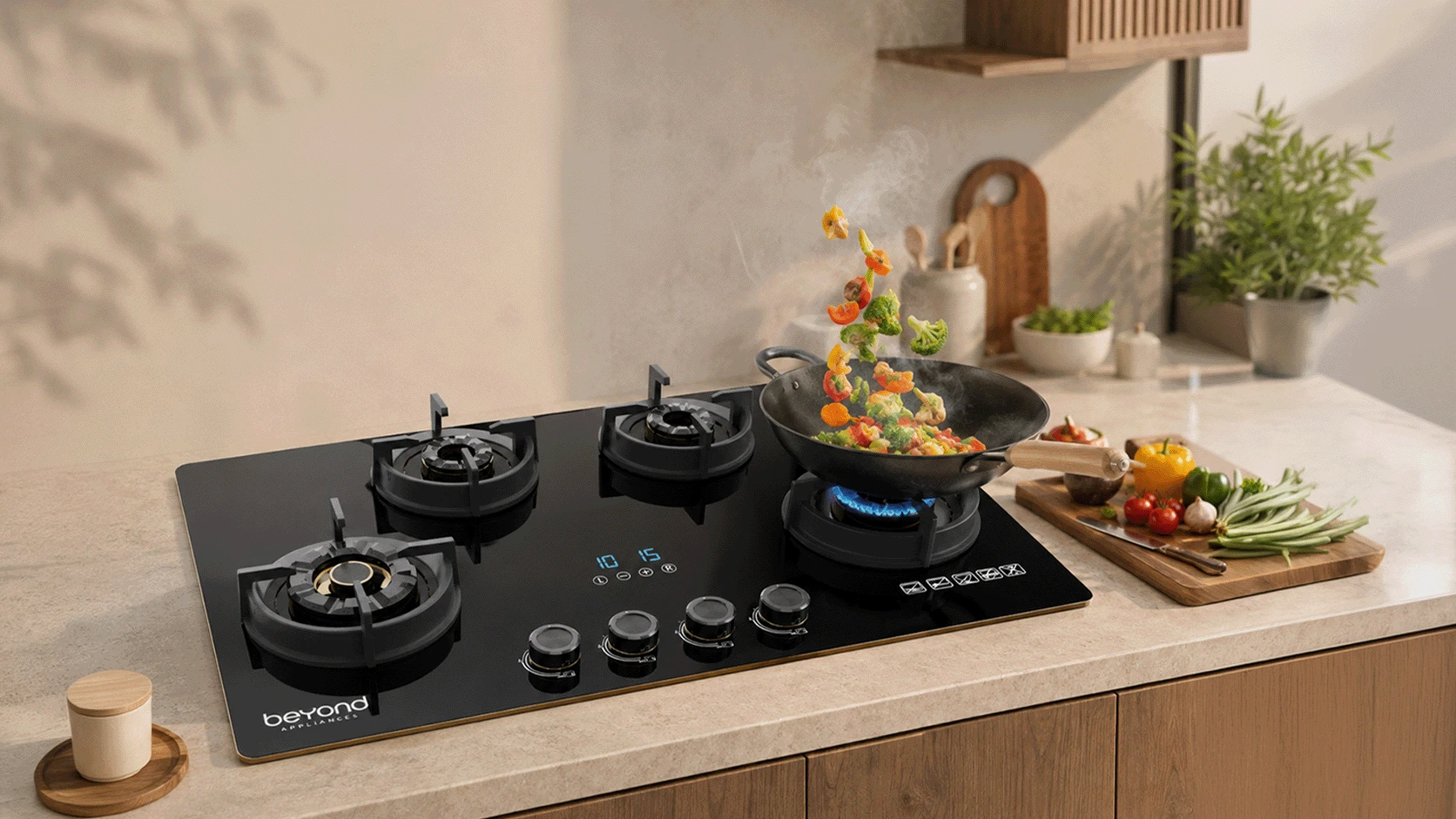
Every minute counts in a busy kitchen. Whether you are rushing through a weekday dinner or managing multiple dishes at once, the cooktop you use has a direct impact on how fast your meal comes together. Cooktops for fast cooking are not just about high heat — they are about the right combination of heat transfer, burner power, and smart features that work together to cut down your time at the stove. This guide walks you through everything you need to know: how different cooktop types compare on speed, what specifications actually matter, and how to choose the one that fits your kitchen and cooking style. For example, the Beyond Appliances Altair Gas Hob delivers a combined 10.4 kW output across four burners — a practical illustration of what high-performance gas cooking looks like in a real product.
Induction cooktops are the fastest and most energy-efficient option, boiling water up to 2x faster than gas in controlled testing conditions by heating cookware directly.
Gas cooktops with full brass burners and high heat output are the best choice for traditional Indian cooking, wok cooking, and large-vessel heating.
Choosing the right cooktop depends on your cooking style, kitchen infrastructure, burner count, and safety feature requirements — not just the Dorado Gas Hob.
Speed in a cooktop is not just about turning the knob to maximum. It comes down to how efficiently the appliance transfers heat to your cookware, how quickly it responds to temperature changes, and how well the burner layout supports cooking multiple dishes at once. Understanding these factors helps you make a smarter choice when selecting cooktops for fast cooking.
Heat transfer method is the single biggest factor in cooktop speed. Induction cooktops use electromagnetic fields to heat the cookware directly, with no energy lost to the surrounding air. Gas cooktops heat through an open flame, which is fast but loses some heat to the environment. Electric and ceramic cooktops use radiant elements beneath a glass surface, making them the slowest of the three. Induction reaches cooking temperature roughly 50% faster than a standard electric coil cooktop.
For gas cooktops, heat output is measured in kilowatts (kW) or BTU. A higher kW rating means a more powerful flame and faster cooking. For induction, wattage determines speed — look for 2,000W or more for rapid boil performance on fast heating stovetops. The table below gives a quick comparison across cooktop types.
Cooktop Type |
Heat-Up Speed |
Energy Efficiency |
Best For |
|---|---|---|---|
Induction |
Fastest |
Highest (~85–90%) |
Quick meals, boiling — instant heat cooking appliances |
Gas (High Output) |
Fast |
Moderate (~40–55%) |
High-heat cooking surfaces, wok cooking |
Electric/Ceramic |
Slowest |
Lower (~70–74%) |
Simmering, baking |
A 3-burner or 4-burner layout lets you cook multiple dishes at the same time, which reduces total meal preparation time significantly. Jumbo or large-diameter burners are especially useful for Indian cooking, where large vessels like pressure cookers and kadais need even, wide heat distribution. The more cooking zones you can use simultaneously, the faster your overall meal comes together.
Each cooktop type has a different approach to generating and delivering heat. Understanding how they differ helps you match the right technology to your actual cooking habits, rather than choosing based on appearance alone. In the Indian kitchen specifically, where cooking techniques range from high-heat tadka and wok-style stir-frying to slow-simmered dals and large-vessel pressure cooking, the choice between cooktop types carries more practical weight than in many other culinary contexts. Getting this decision right means faster meals, lower energy bills, and a cooktop that genuinely suits the way you cook every day.
Induction cooktops heat cookware directly using electromagnetic fields. The cooktop surface itself does not get hot — only the base of the pot or pan heats up. This makes induction cooktops for quick meals the most energy-efficient fast cooktops available, converting approximately 85–90% of electrical energy into usable heat. In controlled testing conditions, water boils up to 2x faster on induction compared to standard-output gas burners. The key requirement is magnetic-base cookware — cast iron and stainless steel work well, while aluminium and copper do not. Induction suits urban kitchens, smaller families, and anyone prioritising energy savings alongside speed.
Gas cooktops deliver instant heat the moment the flame ignites — there is no warm-up period. High-output burners make them excellent for searing, stir-frying, and wok cooking. They work with all cookware types without any compatibility restrictions. For Indian households, jumbo burners that accommodate large vessels are a practical advantage. Full brass burners resist corrosion and maintain a consistent, even flame over time. Gas cooktops are best suited for large families, traditional Indian cooking styles, and anyone who regularly cooks at high heat. Models like the Beyond Appliances Altair Gas Hob, with a combined heat output of 10.4 kW across four burners including a jumbo burner, are built specifically for this kind of high-demand cooking — though it is worth noting that the Altair uses battery ignition rather than electric auto-ignition, a trade-off against its premium output and 5-year burner warranty. For those seeking a more budget-friendly entry point, the Auriga Gas Cooktop offers a practical combination of auto-ignition, a digital timer, and a Flame Failure Device (FFD) at a more accessible price point, making it a strong option for cost-conscious households who still want reliable fast cooking performance.
Electric and ceramic cooktops use radiant heating elements beneath a glass-ceramic surface. They heat up and cool down more slowly than both induction and gas. The flat surface is easy to clean and provides uniform heat for simmering. However, they are not the recommended choice when cooking speed is the primary concern. They work best in rental kitchens without a gas connection or where aesthetics take priority over performance.
Follow these six steps to identify the fastest cooktop for your specific kitchen setup and cooking habits. Each step narrows down your options based on real, practical factors rather than marketing claims.
Step 1 — Identify your primary cooking style.
High-heat or wok cooking points toward gas with a high-output burner. Boiling, steaming, and quick weeknight meals point toward induction. Slow cooking and simmering suit electric or ceramic.
Step 2 — Check your kitchen infrastructure.
If you have a gas connection, both gas and induction are viable. Without a gas line, induction is the clear winner for fast cooking. Confirm your home has a stable 230V supply if you plan to use a high-wattage induction unit.
Step 3 — Evaluate burner count against your cooking volume.
A 2-burner cooktop suits 1–2 person households. A 3-burner layout works well for families of 3–4. A four-burner gas cooktop is best for larger families or multi-dish cooking. More burners reduce total meal time, not just individual dish time.
Step 4 — Match heat output to your speed needs.
For induction, look for 2,000W or more on the primary zone. For gas, look for at least one burner rated at 4 kW or higher. Check product specifications for rapid boil or power boost zones.
Step 5 — Verify cookware compatibility before purchasing.
For induction, run a simple magnet test — if a magnet sticks to the base of your pot, it is compatible. Gas cooktops work with all cookware. If switching to induction, factor in the cost of replacing incompatible cookware.
Step 6 — Compare safety features.
Look for a Flame Failure Device (FFD) on gas cooktops — this cuts the gas supply automatically if the flame goes out. Auto-ignition saves time and eliminates the need for a lighter. On induction, a residual heat indicator prevents accidental burns after cooking.
Yes — induction cooktops cook faster than gas and electric alternatives. Induction technology transfers heat directly to the cookware using electromagnetic fields, eliminating heat loss to the surrounding air. In controlled testing conditions, water boils up to 2x faster on induction compared to standard-output gas burners, and up to 3x faster than standard electric coil cooktops. The speed advantage is most noticeable during tasks like boiling water, heating oil for tempering, and bringing a pressure cooker up to pressure.
Boiling one litre of water takes approximately 2–3 minutes on a 2,000W+ induction unit, around 4–5 minutes on a standard 3–4 kW gas burner, and 6–8 minutes on a standard electric coil. These quick cooking kitchen appliances vary significantly in temperature responsiveness too — on induction, the moment you reduce the setting, the heat drops immediately. Gas responds quickly too, but there is a brief lag as the flame adjusts. Electric cooktops are the slowest to respond to temperature changes in both directions.
Modern induction cooktops support high-wattage power boost modes that handle pressure cooking, deep frying, and rapid tempering (tadka) effectively. Flat-base pressure cookers and kadais with magnetic bases are compatible. For urban Indian kitchens where electricity infrastructure is reliable and gas connections are not always available, induction is a practical and efficient choice. Long cooking sessions for dal or curries also benefit from induction's lower energy consumption.
Gas cooktops retain a clear advantage for charring rotis or vegetables directly on the flame, wok cooking that requires high and uneven heat distribution, and large-diameter vessels that exceed the size of an induction cooking zone. For these specific techniques, the open flame of a gas cooktop delivers results that induction cannot replicate.
Beyond Appliances raw heat output, certain features make a meaningful difference to how quickly and safely you can cook. These are the specifications worth checking before you decide.
A dedicated high-power zone — rated at 2,200W to 3,700W on induction, or a jumbo burner on gas — has the single biggest impact on cooking speed. This is the zone you use for boiling, pressure cooking, and high-heat frying. On gas cooktops, the Beyond Appliances Altair's jumbo burner is designed for exactly this purpose, delivering concentrated high heat for large vessels.
Auto-ignition on gas cooktops eliminates the need for a separate lighter and gets the flame going in one touch. A built-in smart timer lets you set cooking durations precisely, so you are not watching the clock while managing other tasks. Beyond Appliances Solaria and Dorado gas cooktops both include auto-ignition and a smart timer, which together reduce the small but cumulative time lost to manual ignition and guesswork.
A 4-burner cooktop layout with mixed heat output ratings — one jumbo burner, one medium, and two smaller — gives you the flexibility to run multiple dishes at different heat levels simultaneously. This is where overall meal speed improves most noticeably, especially for Indian households cooking rice, dal, a sabzi, and a side dish at the same time. When comparing a 3-burner and a four-burner gas cooktop, the additional zone makes a tangible difference for families who regularly prepare elaborate multi-dish meals.
Glass-ceramic surfaces on electric cooktops retain heat after the element is switched off. This residual heat can be used for passive cooking — keeping food warm without additional energy use. A residual heat indicator light tells you when the surface is still hot, combining safety with energy efficiency.
A clean cooktop maintains consistent heat output. Blocked burner ports on gas cooktops reduce flame intensity. Residue on an induction glass surface can affect heat sensor accuracy. Toughened glass tops wipe clean with a single cloth. The Beyond Appliances Solaria uses 8mm toughened glass, which is more resistant to thermal stress and easier to maintain than thinner glass surfaces.
A well-maintained cooktop performs at its rated output consistently. Neglecting basic upkeep leads to reduced flame intensity on gas models and slower heat-up times on induction. These maintenance habits take only a few minutes but make a real difference over time.
Clean burner caps and ports at least once a month. Blocked ports reduce flame intensity and create uneven heat distribution. Check for yellow or orange flame — a healthy gas flame should be blue. Yellow or orange indicates incomplete combustion, often caused by clogged jets. For brass burners, avoid abrasive cleaners that can damage the surface and affect flame consistency.
Wipe the glass surface after every use. Residue left on the surface can affect the accuracy of the heat sensor beneath the glass. Avoid dragging heavy cookware across the surface — scratches do not affect cooking speed but can damage the glass over time. Check that the ventilation slots on the underside of the unit are clear. Blocked vents reduce cooling efficiency and can trigger the auto-shutoff function.
On gas cooktops, a yellow or orange flame instead of a strong blue one signals reduced heat output. On induction, noticeably longer heat-up times may indicate sensor or coil degradation. On electric cooktops, uneven heating across the surface is a sign of element wear. In each case, addressing the issue early prevents further performance loss.
For fast cooking, induction cooktops are the top-performing option for everyday tasks, boiling water up to 2x faster than gas in controlled testing conditions and converting up to 85–90% of electrical energy into usable heat. Gas cooktops are the best fast-cooking alternative for high-heat techniques like stir-frying, charring, and wok cooking where open flame is essential.
Yes — when it comes to fast cooking, induction cooktops outperform gas for most everyday tasks. Induction heats cookware directly using electromagnetic fields, eliminating heat loss to the surrounding air. In controlled testing conditions, water boils up to 2x faster on induction compared to standard-output gas burners. Temperature adjustments are also near-instant, making induction the most responsive option for quick cooking tasks.
Among cooktops for fast cooking, induction models are the most energy-efficient, converting approximately 85–90% of electrical energy into heat. Gas cooktops convert around 40–55% of energy into usable heat, with the remainder lost to the surrounding air. Electric and ceramic cooktops fall between the two at roughly 70–74% efficiency.
The three main types of cooktops for fast cooking are: (1) Gas cooktops, which use an open flame from LPG or natural gas; (2) Induction cooktops, which use electromagnetic technology to heat cookware directly; and (3) Electric or ceramic cooktops, which use radiant heating elements beneath a glass-ceramic surface.
Beyond Appliances gas cooktops include features specifically designed to reduce cooking time and improve safety. Auto-ignition starts the flame in one touch. A Flame Failure Device (FFD) cuts the gas supply automatically if the flame goes out. Smart timers on models like the Solaria and Dorado let you set precise cooking durations. The Altair's 10.4 kW combined output across four burners — including a jumbo burner — supports high-heat Indian cooking at scale, though it uses battery ignition rather than electric auto-ignition.
For a family of 3–4, a 3-burner cooktop allows simultaneous cooking of multiple dishes, reducing total meal preparation time. A 4-burner cooktop is better suited for larger families or those who regularly cook elaborate multi-dish meals. More burners reduce overall meal time, not just the time for a single dish.
Choosing the right cooktop has a direct and measurable impact on how fast your meals come together. Induction cooktops lead on speed and energy efficiency, making them the practical choice for quick weeknight cooking and households focused on reducing energy consumption. Gas cooktops remain the stronger option for traditional Indian cooking, high-heat techniques, and large-vessel cooking where open flame delivers results that induction cannot match.
Your Priority |
Best Cooktop Type |
Key Feature to Look For |
|---|---|---|
Maximum speed |
Induction |
2,000W+ with power boost zone |
Traditional Indian cooking |
Gas |
High-output jumbo burner |
Multi-dish cooking |
Gas (4-burner) |
Mixed output burner layout |
Energy savings |
Induction |
Auto-shutoff and power management |
Budget-conscious |
Gas (3-burner) |
Auto-ignition and brass burners — see the Auriga Gas Cooktop |
Use the six-step checklist in this guide to match your cooking habits, kitchen setup, and household size to the right cooktop type. The best cooktops for fast cooking are the ones that align with how you actually cook — not just the ones with the highest heat rating on the specification sheet.
