

Step-by-Step Guide to Cooking Efficiency and Hob Types
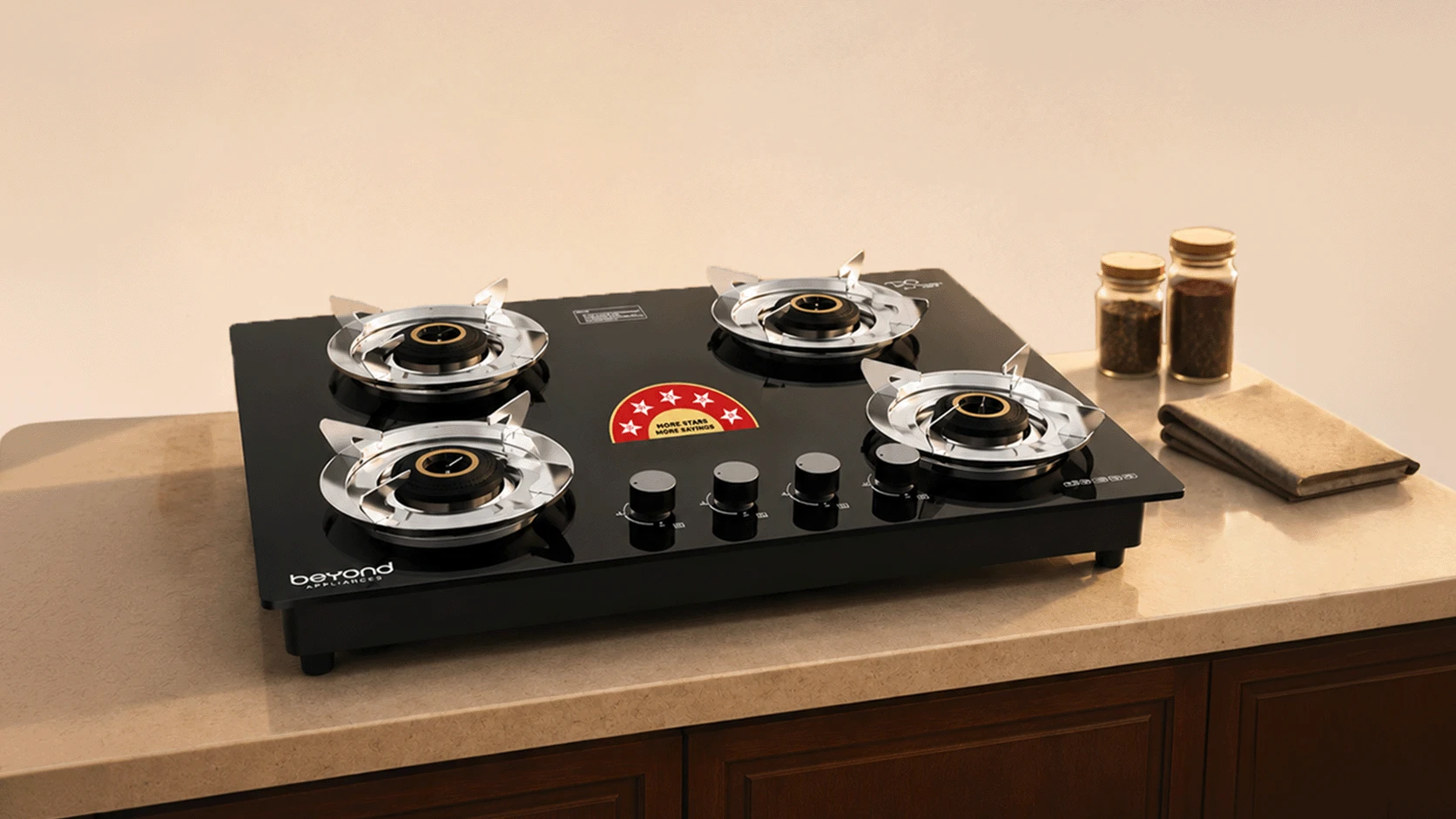
Choosing the wrong hob type can waste up to 60% of the energy you pay for every month. That is not a small number when you cook daily Indian meals — with tempering, slow simmering, and high-heat stir-frying all happening on the same cooktop. Understanding cooking efficiency and hob types helps you make a smarter choice, not just for your electricity or gas bill, but for how well your kitchen actually performs. This guide breaks down every major hob type, explains how efficiency is measured, and gives you a clear five-step framework — with Beyond Appliances gas hobs referenced as practical examples throughout.
Induction hobs are the most energy-efficient option at 85–90% thermal efficiency, followed by electric ceramic at 65–75%, and gas hobs at 40–55%.
The best hob for your kitchen depends on your energy tariff, cooking style, kitchen infrastructure, and how often you cook.
Simple habits — like using lids, matching pan size to burner size, and batch cooking — can meaningfully reduce energy use regardless of which hob type you own.
Before comparing efficiency numbers, it helps to understand what each hob type actually does and how it generates heat. The differences in heat source directly determine how much energy reaches your food versus how much is lost to the surrounding air. For Indian kitchens in particular, where cooking techniques range from slow simmering to intense high-heat tempering, this distinction has a direct impact on both performance and running costs.
Each hob type uses a different mechanism to produce heat, and that mechanism is the single biggest factor in cooking efficiency and hob types comparisons. Understanding the hob technology for efficiency behind each type makes it easier to match the right appliance to your actual cooking needs.
Gas Hobs — Open-flame burners powered by LPG or piped natural gas. Heat is produced by combustion and transferred to the cookware through direct flame contact.
Electric Ceramic Hobs — Radiant heating elements sit beneath a smooth glass surface. The element heats the glass, which then heats the pan.
Induction Hobs — Electromagnetic coils beneath the glass surface generate a magnetic field that heats the cookware directly. The surface itself stays relatively cool.
Hybrid Hobs — A single unit that combines induction zones with gas or ceramic burners, giving users flexibility across cooking techniques.
At the broadest level, hobs fall into two categories: flame-based and electric-powered. The two main types of hobs are gas hobs and electric hobs. Electric hobs are further divided into ceramic, induction, and radiant subtypes. This distinction matters because flame-based hobs depend on gas tariffs and combustion efficiency, while electric hobs depend on your electricity rate and how directly energy reaches the cookware.
Hob Type |
Heat Source |
|---|---|
Gas |
LPG or natural gas combustion |
Electric Ceramic |
Radiant electrical element beneath glass |
Induction |
Electromagnetic field heating cookware directly |
Hybrid |
Combination of gas and electric zones |
Most articles list efficiency percentages without explaining where those numbers come from. Understanding the measurement method helps you evaluate claims more critically and choose energy efficient cooktops with confidence.
Cooking efficiency is the percentage of total energy input that is converted into usable heat for cooking. If a hob consumes 1,000 watts but only 550 watts actually heat your food, its efficiency is 55%. The rest is lost to the surrounding air, the hob surface, or the sides of the cookware. Three key metrics define efficiency in practice: thermal efficiency percentage, heat-up time, and heat retention after the hob is switched off.
Efficiency in simple terms: Of every unit of energy your hob consumes, what percentage actually heats your food? The higher that number, the lower your running cost.
Standardized testing measures how much energy is required to raise a set volume of water to boiling point under controlled conditions. Electric hob energy consumption is measured in kilowatt-hours (kWh) per cooking session. Gas hob consumption is measured in cubic metres or LPG weight per hour. Ambient heat loss — the heat that escapes into the kitchen rather than entering the pot — is a major variable, especially in compact Indian kitchens where excess heat also raises room temperature and increases air conditioning load.
Induction hobs are significantly more efficient than gas hobs. Induction achieves approximately 85–90% thermal efficiency by heating cookware directly via electromagnetic fields, wasting minimal energy to the surrounding air. Gas hobs typically reach only 40–55% efficiency, with a large proportion of heat lost upward and outward. Over time, this gap translates into measurably lower energy bills for induction users.
Induction hobs operate at 85–90% thermal efficiency. Because the electromagnetic field heats the cookware directly, almost no energy is wasted on heating the surrounding air or the hob surface. This makes induction the strongest option for optimizing cooking time and reducing energy use while cooking. The trade-off is cookware compatibility — induction requires ferromagnetic pans (cast iron or magnetic stainless steel).
Thermal efficiency: ~85–90%
Boiling 1 litre of water: approximately 90 seconds
Best for: daily high-frequency cooking, energy savings over time
Limitation: requires compatible cookware
Gas hobs operate at 40–55% thermal efficiency. A significant portion of the flame's heat rises around the sides of the cookware and into the kitchen air rather than entering the pot. That said, gas offers instant visual flame control — a genuine advantage for high-heat Indian cooking techniques like tempering, tawa roti, and wok-style stir-frying. Gas hobs also work with all cookware types without restriction.
Thermal efficiency: ~40–55%
Boiling 1 litre of water: approximately 3–4 minutes
Best for: traditional Indian cooking, high-heat techniques, all cookware types
Limitation: ongoing gas tariff dependency, higher heat loss
Ceramic hobs sit between gas and induction at 65–75% thermal efficiency. Heat travels from the element through the glass surface to the pan, which introduces some energy loss at each transfer point. Ceramic hobs are easier to clean than gas hobs and accept all cookware types, but their slower heat-up and cool-down times can affect optimizing cooking time in busy kitchens.
Thermal efficiency: ~65–75%
Boiling 1 litre of water: approximately 5+ minutes
Best for: versatile home cooking, easy cleaning
Limitation: slower response, higher running cost than induction over time
Hob Type |
Thermal Efficiency |
Avg. Heat-Up Time |
Energy Cost (Relative) |
Best Use Case |
|---|---|---|---|---|
Induction |
~85–90% |
Fastest |
Lowest |
Everyday efficient cooking |
Electric Ceramic |
~65–75% |
Moderate |
Moderate |
Versatile home cooking |
Gas |
~40–55% |
Fast (flame) |
Variable |
Traditional and high-heat cooking |
Hybrid |
Varies by zone |
Mixed |
Mixed |
Households with mixed cooking styles |
Knowing the efficiency numbers is only part of the decision. The best hob for saving electricity in your kitchen depends on five practical factors that are specific to your household. Working through each step helps you avoid buying a hob that looks good on paper but does not suit your actual cooking setup.
Compare your current electricity rate per unit (kWh) against your LPG cylinder cost. In many Indian cities, electricity rates range from ₹5 to ₹9 per unit depending on the slab. A single LPG cylinder costs approximately ₹800–₹1,000 and lasts a typical household 30–45 days. Even though gas is cheaper per unit of energy, its lower efficiency means you consume more of it to achieve the same cooking result.
If you cook two to three full meals daily — which is common in Indian households — induction delivers the greatest long-term savings. If you cook occasionally or rely heavily on high-heat techniques like tawa cooking or deep frying in a kadai, a gas hob with full brass burners may better suit your needs. Cuisine type matters: slow simmering and boiling favour induction, while open-flame tempering and roti-making favour gas.
Induction hobs require a dedicated electrical circuit with adequate amperage — typically 15–20 amps for a 4-burner unit. Gas hobs need an existing piped gas connection or LPG cylinder setup with proper regulator and tubing. Ceramic hobs need only a standard electrical connection. If your kitchen is already set up for gas, switching to induction involves an electrical upgrade cost that should factor into your total budget.
A 2-burner hob suits singles or couples and minimises energy waste from unused zones. A 4-burner hob is practical for families cooking multiple dishes simultaneously. For gas hobs, burner configuration matters too — a jumbo burner for the main cooking vessel and smaller burners for simmering is a common and efficient setup. The Beyond Appliances Altair Gas Hob, for example, offers a 4-burner layout with a dedicated Jumbo Burner and a total heat output of 10.4 kW, which suits households that regularly cook large-volume meals.
For electric hobs, check the energy efficiency label — higher-rated models consume less electricity per cooking session. For gas hobs, look for features that reduce waste: a Flame Failure Device (FFD) cuts gas supply automatically if the flame goes out, preventing unburned gas from escaping. A Smart Timer lets you set precise cooking durations so the hob does not run longer than needed. The Beyond Appliances Quantum Gas Saver Stove carries a 5-Star Energy Rating and uses HEXA Technology to achieve 77% energy efficiency — significantly above the standard gas hob efficiency range of 40–55% — and is designed to reduce LPG consumption significantly compared to standard stoves (based on internal testing under standardized cooking conditions).
The hob you choose sets the ceiling for efficiency, but your cooking habits determine how close you get to that ceiling. These practical steps apply across all hob types and can meaningfully reduce energy use while cooking without requiring any new equipment.
The right cookware makes a measurable difference regardless of hob type. Flat-bottomed pans ensure maximum contact with ceramic and induction surfaces. Matching your pan diameter to the burner or zone size reduces wasted heat by up to 30%. Using a lid while boiling or simmering retains steam and cuts cooking time significantly. Cast iron and copper-core cookware retain heat well, allowing you to switch off the hob 2–3 minutes early and let residual heat finish the job.
Small behavioural changes add up over hundreds of cooking sessions each year.
Avoid preheating unless the recipe specifically requires it — induction hobs reach temperature almost instantly.
Defrost ingredients before cooking to reduce the heat and time required.
Batch cook where possible — cooking larger quantities in one session uses less energy per portion than cooking small amounts repeatedly.
On ceramic hobs, switch off 2–3 minutes before the dish is done and use residual heat to finish cooking.
Smart kitchen appliance efficiency goes beyond the hob itself. Hobs with built-in digital timers — like the Smart Timer on the Beyond Appliances Dorado Gas Hob — prevent overcooking and eliminate the need to leave a burner running unattended. Pairing your hob with an energy monitor helps you track actual consumption per session and identify where savings are possible. Over time, these integrations reduce your household's overall energy footprint without changing how you cook.
For busy households, cooking speed is as important as energy savings. The good news is that the most efficient hob type — induction — is also the fastest. But gas hobs retain a genuine speed advantage for specific high-heat techniques that induction cannot fully replicate.
Most induction hobs include a boost or turbo mode that temporarily draws maximum power to the coil. This brings 1 litre of water to a boil in approximately 90 seconds, compared to 3–4 minutes on gas and 5 or more minutes on ceramic. Boost mode uses more power in the short term but finishes the task faster, often resulting in lower total energy consumption per cooking session than running a gas burner for longer.
Gas hobs reach maximum heat the instant the flame ignites — there is no ramp-up time. This makes them the preferred choice for techniques that require immediate, intense heat: tawa roti, high-heat tempering, and wok-style cooking where the flame wraps around the base of a rounded vessel. The trade-off is that this speed comes at lower thermal efficiency, meaning more gas is consumed to achieve it. A hob with full brass burners and a high-output jumbo burner — such as the Beyond Appliances Altair — delivers this kind of performance while maintaining durability under heavy daily use.
Hybrid hobs place induction zones and gas burners on the same unit. This allows households with mixed cooking styles to use induction for everyday boiling and simmering — where efficiency is highest — while retaining gas zones for high-heat techniques. The ideal user is someone who cooks a wide variety of dishes and does not want to compromise on either speed or efficiency depending on the task.
The four main types of hobs are: (1) gas hobs, which use open flames from LPG or natural gas; (2) electric ceramic hobs, which use radiant heating elements under a glass surface; (3) induction hobs, which use electromagnetic technology to heat cookware directly; and (4) hybrid hobs, which combine induction and gas or ceramic zones on a single unit.
The two main categories of hobs are gas hobs and electric hobs. Gas hobs use combustion flames for heat, while electric hobs — which include ceramic, induction, and radiant subtypes — use electrical energy. Induction is the most energy-efficient electric option, while ceramic offers the most accessible entry point for households switching from gas.
Neither is universally better — it depends on your priorities. Electric induction hobs are superior for energy efficiency (85–90% vs. 40–55% for gas), lower running costs, and cooking speed. Gas hobs are preferred for precise visual flame control, compatibility with all cookware types, and lower upfront installation costs where a gas supply already exists.
Induction hobs are significantly more efficient than gas hobs. Induction achieves approximately 85–90% thermal efficiency by heating cookware directly via electromagnetic fields, wasting minimal energy. Gas hobs typically reach only 40–55% efficiency, with a large proportion of heat lost to the surrounding air. Over time, induction hobs deliver measurably lower energy bills.
A Flame Failure Device (FFD) does not directly improve thermal efficiency, but it prevents gas wastage by automatically cutting the gas supply if the flame goes out unexpectedly. This is particularly useful during Indian cooking, where boil-overs can extinguish a burner. Both the Beyond Appliances Dorado and Altair gas hobs include FFD as a standard safety feature, which also protects against unintended gas consumption.
The efficiency hierarchy across hob types is clear: induction leads at 85–90%, followed by electric ceramic at 65–75%, and gas at 40–55%. But the right hob for your kitchen is not simply the most efficient one on paper. It is the one that matches your energy tariff, cooking style, kitchen infrastructure, and how often you cook.
If you cook daily Indian meals with heavy oil, spices, and high-heat techniques, a gas hob with full brass burners, an FFD, and a Smart Timer addresses real cooking problems — not just spec-sheet numbers. If energy savings over the long term are the priority and your kitchen has the electrical capacity, induction is the stronger investment. For households that want both, a hybrid setup or a gas hob with a 5-Star energy rating — like the Beyond Appliances Quantum Gas Saver Stove — offers a practical middle ground without requiring a full kitchen infrastructure change.
Before making a final decision, check your current electricity slab rate, measure your kitchen's electrical circuit capacity if you are considering induction, and factor in installation costs alongside the appliance price. The most efficient kitchen is one where the hob type, cookware, and cooking habits all work together.
