
Quiet Kitchen Chimney: Your Complete Buying Guide
Cart
Your cart is empty
A quiet kitchen is the heart of a peaceful home. When cooking becomes a noisy affair due to a loud chimney, it disrupts conversations, disturbs family members, and creates an unpleasant cooking environment. Modern homemakers deserve efficient kitchen ventilation that works silently in the background. Understanding how to choose a quiet kitchen chimney ensures you enjoy cooking without the constant hum of machinery. This comprehensive guide covers everything from decibel ratings to installation techniques, helping you make an informed decision for your kitchen's air quality needs.
Noise levels in kitchen chimneys are measured in decibels (dB), and understanding these ratings helps you select the right silent range hood for your home. The industry standard for quiet operation is less than 58 dB, which is comparable to a normal conversation level. Most quality chimneys operate between 45-58 dB, ensuring comfortable cooking experiences.
To put chimney noise in perspective, normal conversation occurs at around 60 dB, while a quiet library maintains 40 dB. The best quiet chimney models operate at 45-52 dB, barely noticeable during cooking. When shopping for a low noise chimney, look for models specifically rated below 55 dB for optimal comfort.
Understanding noise sources helps in chimney noise reduction efforts. Motor vibrations contribute significantly to overall sound levels, especially in older models with conventional motors. Fan blade design affects air turbulence, while poor ductwork installation can create resonance issues that amplify noise throughout your kitchen.
Different chimney designs offer varying noise levels, making it essential to understand which type suits your kitchen best. Ducted systems typically operate more quietly than ductless models because they don't require powerful internal fans for air recirculation. However, modern ductless chimneys have significantly improved in noise reduction technology.
Ducted chimneys connect to external vents, allowing for quieter operation as they efficiently remove air outside. Ductless systems recirculate filtered air back into the kitchen, requiring more powerful internal fans that can increase noise levels. For Indian cooking with heavy spices and oil, ducted systems provide better performance with lower noise.
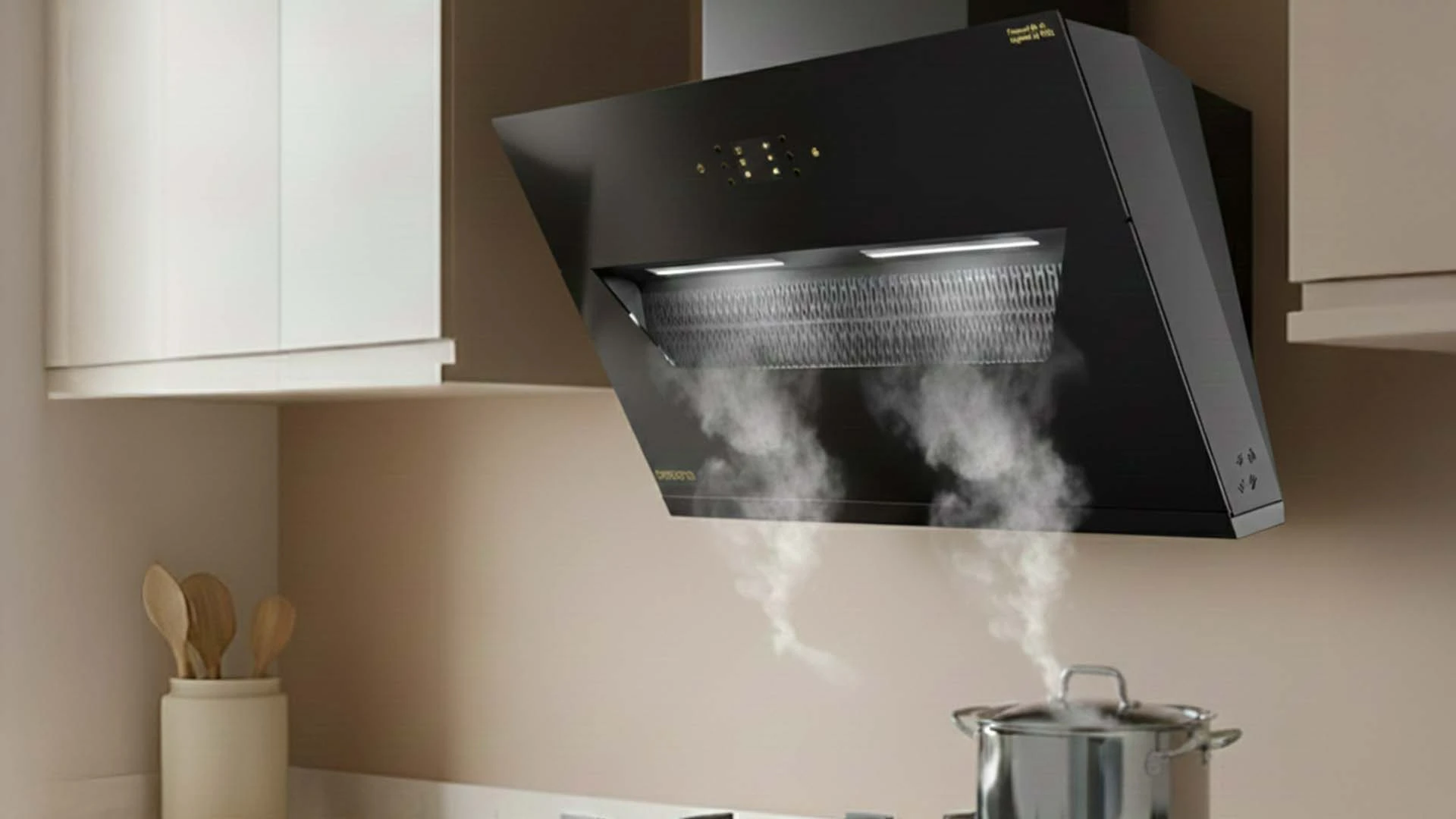
Slant chimneys often operate more quietly than traditional straight designs due to improved airflow dynamics. Curved chimneys offer excellent noise reduction through their aerodynamic design. Wall-mounted units typically produce less noise than island chimneys because they have better structural support, reducing vibrations.
Selecting the right features ensures your kitchen exhaust fan noise remains minimal while maintaining excellent performance. Modern technology offers several solutions for achieving quiet operation without compromising suction power. Understanding these features helps you make an informed purchase decision.
BLDC (Brushless Direct Current) motors operate significantly quieter than conventional motors while providing better energy efficiency. These motors feature fewer moving parts, reducing vibration and noise. Sound-insulated housing with specialized materials dampens motor noise, while balanced fan systems prevent wobbling that creates additional sound.
Optimal suction capacity for Indian kitchens ranges from 400-1200 m³/hr, depending on kitchen size and cooking frequency. Variable speed controls allow you to adjust power based on cooking intensity, maintaining quiet operation during light cooking. Auto-clean functions reduce maintenance noise while keeping the chimney operating efficiently.
Proper installation and maintenance significantly impact your chimney's noise levels throughout its lifespan. Professional installation ensures optimal performance while minimizing vibration-related noise. Regular maintenance prevents issues that can increase operational noise over time.
Proper mounting with anti-vibration pads prevents structural noise transmission to walls and cabinets. Ductwork should be installed with smooth bends and adequate support to minimize air turbulence. Maintaining proper clearances around the unit prevents resonance issues that amplify noise.
Ductwork insulation using acoustic materials reduces noise transmission through ventilation systems. Installing flexible duct connectors prevents vibration transfer from the chimney to rigid ductwork. Regular cleaning of filters and internal components prevents strain on the motor that increases noise levels.
Modern efficient kitchen ventilation systems incorporate intelligent features that automatically adjust operation for optimal noise control. These smart technologies ensure your kitchen maintains excellent air quality while operating as quietly as possible. Advanced sensors detect cooking intensity and adjust fan speed accordingly.
Auto-speed adjustment features monitor cooking activity and adjust fan speed to maintain optimal air quality with minimal noise. Smart sensors detect smoke and heat levels, increasing power only when necessary. App-controlled quiet modes allow you to preset operation schedules for different cooking scenarios.
Smart kitchen ventilation systems integrate seamlessly with home automation platforms, allowing coordinated operation with other appliances. Energy-efficient operation reduces long-term costs while maintaining quiet performance. Voice control features enable hands-free operation without disrupting cooking activities.
Filterless designs with BLDC motors typically produce the least noise. These systems eliminate filter-related air turbulence while using advanced motor technology for quieter operation.
Less than 58 dB is considered good for comfortable cooking. The best quiet chimney models operate between 45-52 dB, which is barely noticeable during normal kitchen activities.
Proper installation with anti-vibration mounting, regular filter cleaning, ductwork insulation, and choosing models with BLDC motors significantly reduce noise levels.
Choose a chimney 6 inches wider than your cooktop for optimal airflow with minimal noise. Larger chimneys can operate at lower speeds while maintaining effectiveness.
Premium models typically feature better noise reduction technology, including superior motor design, sound insulation, and aerodynamic fan systems that justify their higher cost.
Clean filters monthly and perform professional servicing every six months to maintain optimal quiet operation and prevent noise-causing issues.
Choosing a quiet kitchen chimney requires balancing performance, features, and noise levels to suit your specific cooking needs. Focus on models with BLDC motors, proper decibel ratings below 58 dB, and features that support efficient kitchen ventilation without disrupting your home's peace. Professional installation and regular maintenance ensure your investment continues operating quietly for years. Remember that the best quiet chimney for your kitchen depends on your cooking style, kitchen layout, and personal preferences for noise tolerance.
