
Motion Sensor vs Touch Control: Chimney Showdown
Cart
Your cart is empty
Modern kitchens demand smart solutions that blend functionality with convenience. The choice between motion sensor chimney vs touch control chimney has become a crucial decision for homeowners upgrading their kitchen exhaust systems. Both technologies offer distinct advantages for efficient cooking ventilation, but understanding their differences helps you make the right choice for your cooking style and kitchen design. This comprehensive guide explores the features, benefits, and limitations of each control type to help you select the best kitchen chimney for your home.
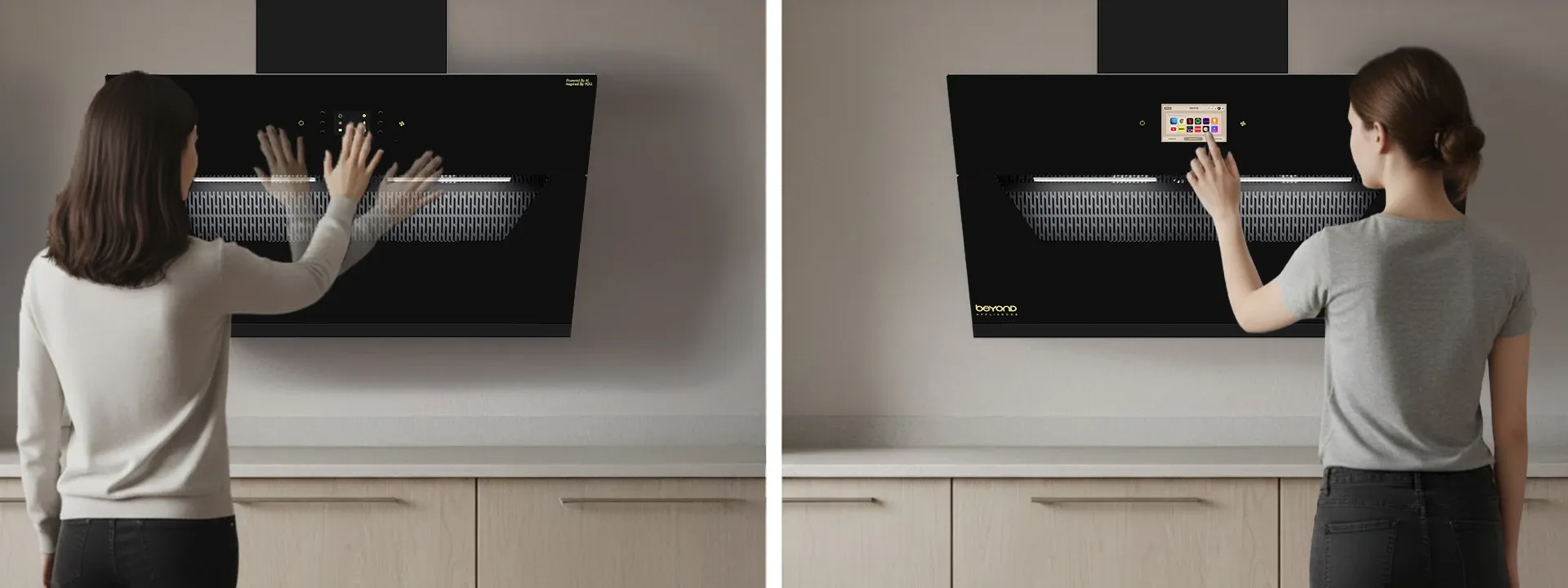
The evolution of chimney technology has transformed kitchen exhaust systems from basic manual switches to sophisticated smart kitchen appliances. Modern range hood features now include advanced control mechanisms that respond to user behavior and cooking patterns. Motion sensor technology uses infrared or ultrasonic detection to automatically activate the chimney when movement is detected near the cooking area. Touch control systems employ capacitive or resistive panels that respond to finger contact, offering precise control over various functions.
Motion sensor hoods utilize infrared sensors that detect heat signatures and movement within a specific range. The response time typically ranges from 1-3 seconds, with adjustable sensitivity settings to prevent false triggers. These systems consume minimal standby power, usually under 2 watts, making them energy-efficient options for continuous operation.
Touch control hoods feature smooth glass or acrylic panels with embedded sensors. Capacitive touch technology responds to electrical conductivity from fingertips, while resistive panels require slight pressure. Digital displays show speed settings, timer functions, and filter maintenance alerts, providing comprehensive control over the kitchen exhaust systems.
The motion sensor hood offers hands-free convenience that appeals to busy home cooks. When you approach the cooktop, the system automatically activates, ensuring efficient cooking ventilation without manual intervention. This feature proves particularly valuable when your hands are occupied with cooking tasks or covered in ingredients. Key advantages include automatic activation within 2-3 feet of the cooking area, eliminating the need to touch controls with messy hands. The hygiene benefits are significant, especially during food preparation involving raw ingredients. Energy efficiency improves through smart activation patterns that prevent unnecessary operation when the kitchen is unoccupied. However, motion sensor systems face certain limitations. False triggers can occur from pets, children, or general kitchen movement, leading to unnecessary activation. The initial cost typically exceeds traditional controls by INR 3,000-5,000. Sensor malfunction over time may require professional calibration or replacement, adding to long-term maintenance costs.
The touch control hood provides precise control over all range hood features through an intuitive interface. Users can adjust fan speeds incrementally, set cooking timers, and access specialized functions like boost mode or delayed shutoff. The sleek design integrates seamlessly with modern kitchen design aesthetics. Advantages include precise speed control with 3-6 variable settings, compared to basic high-medium-low options. Timer functions allow automatic shutoff after 5-30 minutes, preventing energy waste. The flat control surface resists grease accumulation better than traditional buttons and switches. Disadvantages center on the requirement for clean, dry hands during operation. Grease buildup on the touch panel can affect sensitivity over time. The technology adds INR 2,000-4,000 to the base price compared to mechanical controls. Touch sensitivity may decrease after 3-4 years of heavy use, requiring panel replacement.
When comparing motion sensor chimney vs touch control chimney options, several performance factors determine the better choice for your kitchen exhaust systems. Speed control precision favors touch systems, offering 5-6 variable speeds versus 2-3 preset options in motion sensor models. Response time analysis shows motion sensors activate within 2-3 seconds of detection, while touch controls respond instantly to user input. Suction power efficiency remains comparable between both systems, with performance depending more on motor quality and duct design than control type. Energy consumption patterns differ significantly. Motion sensors consume 1-3 watts in standby mode but may activate unnecessarily, increasing overall usage. Touch controls use minimal standby power but rely on user discipline for efficient operation. Auto-shutoff features in both systems help reduce long-term electricity costs. Maintenance requirements favor motion sensors for daily cleaning, as the sensor area requires only occasional dusting. Touch panels need regular cleaning to maintain sensitivity and appearance. Professional service costs are similar, ranging from INR 800-1,500 for annual maintenance.
Choosing the best kitchen chimney involves considerations beyond control mechanisms. Suction capacity, measured in cubic feet per minute (CFM), should match your cooking style and kitchen size. For Indian cooking with heavy oil usage, minimum 600-800 CFM ensures adequate smoke and odor removal. Noise levels significantly impact kitchen comfort. Quality models operate below 58 decibels at maximum speed, comparable to normal conversation levels. Filter types affect maintenance frequency and costs. Baffle filters require monthly cleaning but last 5-7 years, while cassette filters need replacement every 6-8 months. Installation type influences performance and cost. Ducted systems provide superior suction but require external venting. Ductless models offer easier installation but need regular filter replacement. Size compatibility ensures optimal coverage, with the chimney width matching or exceeding cooktop dimensions.
Integration with modern kitchen design requires careful attention to material quality and finish options. Stainless steel models resist corrosion and maintain appearance over time. Glass panels add elegance but require frequent cleaning to prevent water spots and fingerprints.
Service network availability affects long-term ownership costs. Comprehensive warranty coverage should include motor, controls, and electrical components for minimum 2-3 years. Customer support quality determines resolution time for technical issues and spare parts availability.
Proper installation ensures optimal performance for both control types in your kitchen exhaust systems. Motion sensor positioning requires careful calibration to prevent false triggers while ensuring reliable activation. The sensor should face the primary cooking area at 18-24 inches above the cooktop for best results. Touch control installation focuses on protecting the panel during construction work. Electrical connections must meet safety standards, with proper grounding to prevent interference. Initial configuration includes setting preferred speeds, timer durations, and display brightness. Long-term maintenance protocols differ between systems. Motion sensors need quarterly cleaning with soft, dry cloth to remove dust and grease particles. Touch panels require weekly cleaning with appropriate cleaners to maintain sensitivity and appearance. Professional service every 12-18 months ensures optimal performance and extends equipment lifespan.
Touch control chimneys offer better precision for high-speed operation needed during heavy oil cooking. The ability to quickly adjust speeds and activate boost mode makes them more suitable for Indian cooking styles that generate significant smoke and odors.
Motion sensors can trigger from general kitchen movement, but modern systems include sensitivity adjustments and delay settings to minimize false activation. Proper positioning and calibration reduce unnecessary operation while maintaining convenience.
Motion sensors require minimal cleaning of the sensor area, while touch panels need regular maintenance to prevent grease buildup that affects sensitivity. Both systems benefit from professional cleaning every 6-12 months.
Motion sensor models typically cost INR 3,000-5,000 more than touch control versions. Touch controls add INR 2,000-4,000 compared to basic mechanical switches. The price difference varies by brand and feature set.
Retrofitting is technically possible but often not cost-effective due to electrical modifications and compatibility issues. Replacing with an integrated smart system provides better performance, warranty coverage, and long-term reliability.
The choice between motion sensor and touch control chimneys depends on your cooking habits, budget, and preference for convenience versus precision. Motion sensors excel in hands-free operation and hygiene benefits, making them ideal for busy cooks who value convenience. Touch controls offer superior precision and reliability, suiting users who prefer direct control over all functions. Consider your kitchen layout, cooking frequency, and long-term maintenance preferences when making this important decision for your smart kitchen appliances upgrade.
