Induction vs Gas Cooktops: Which Stove Model Suits Your Indian Kitchen?
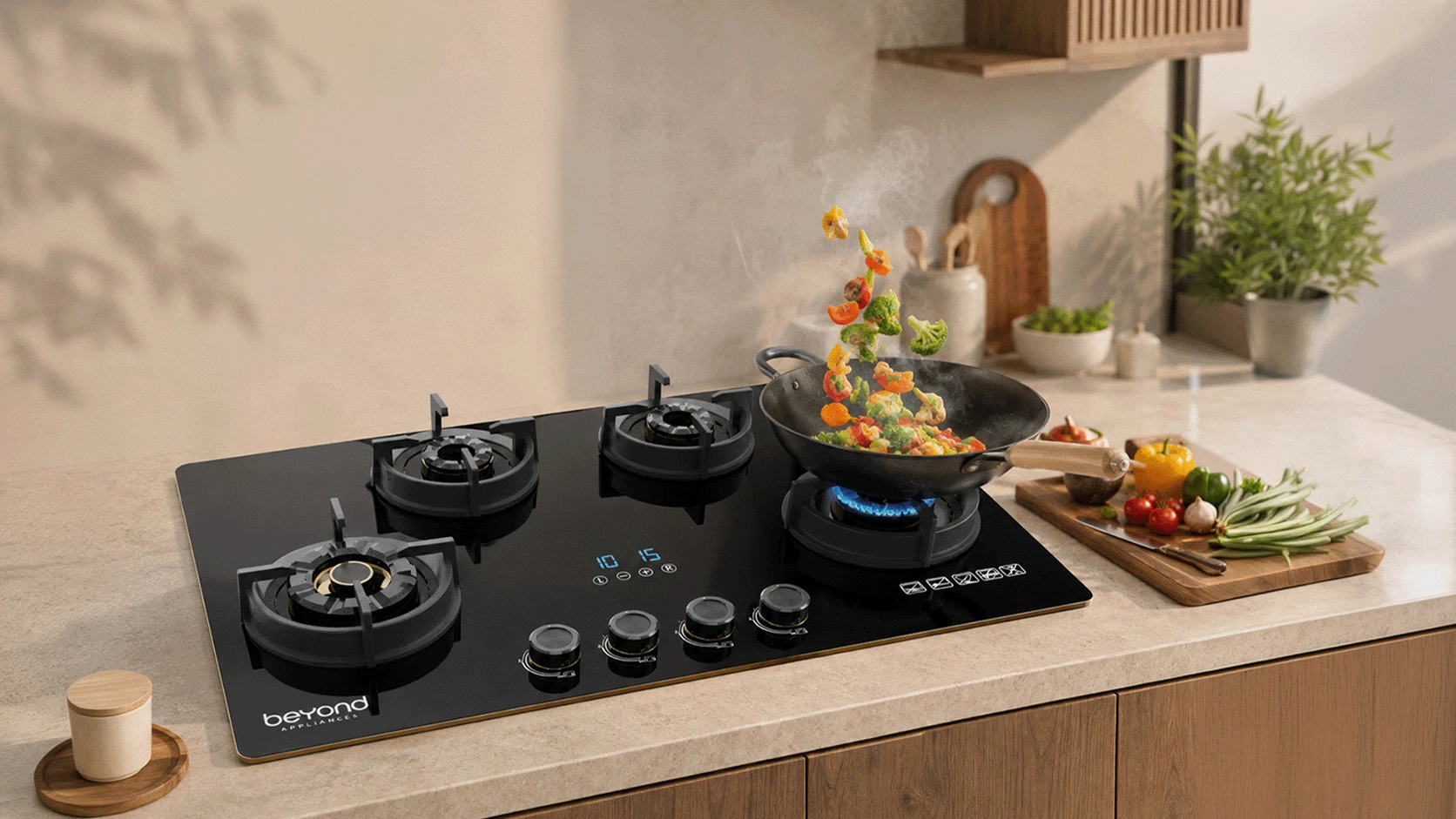
Choosing between induction and gas cooktops depends on how your household cooks each day. Indian meals often need a tawa, a deep kadai, quick tadka, and several dishes at once. Gas supports familiar cookware and direct flame control. Induction offers a flat surface, fast heat response, and no open flame. Your kitchen layout also matters. A built-in hob can suit a modular counter, while a tabletop unit can work in a rented home. Beyond Appliances offers gas cooktop stove models with features such as auto-ignition, digital timers, and Flame Failure Devices. This guide compares each option so you can match the appliance to your vessels, fuel access, safety needs, and cooking routine.
Your cooking method and kitchen setup should guide the choice. There is no single cooktop type for every Indian home.
Choose gas for open-flame cooking, traditional vessels, and multi-dish meals.
Choose induction for flat magnetic cookware, easy cleaning, and no gas dependency.
Check burner count, safety features, counter space, and fuel access before buying.
Cooktop stove models include gas, induction, electric, and hob units. Each uses a different heat source and needs a different kitchen setup. Gas models use LPG or piped gas. Induction units use electricity and magnetic cookware. Electric coil and ceramic models also use electricity, but they heat the surface itself.
Gas cooktops are available with two, three, four, or five burners. They support many common Indian vessels, including rounded kadais and tawas. A two-burner unit can suit a compact household. Three and four burners help when several dishes cook at the same time.
Induction cooktops heat compatible cookware through electromagnetic energy. They need flat-bottomed, magnetic vessels. Coil and ceramic electric cooktops heat a coil or glass surface. These electric cooktops can work with more vessel types, but their surface stays hot after cooking.
Hob cooktops sit within a cut-out in the counter. They give a flush look in a modular kitchen. A freestanding tabletop cooktop sits above the counter and is easier to move. Beyond Appliances Dorado Gas Hob can work as a tabletop or hob unit, which can help during a kitchen upgrade.
Gas cooktops create heat through a controlled flame. You can see the flame and adjust it at once. This suits tasks such as roasting, simmering, and rapid tadka. Gas use depends on a working LPG cylinder or piped gas connection.
Induction cooktops send heat into a compatible vessel rather than creating an open flame. The cooking zone stays cooler than a gas burner area, though the pan can transfer heat back to the surface. Induction needs electricity and cookware that attracts a magnet. Both types can offer precise control, but the control method feels different.
Gas: direct flame and broad vessel compatibility.
Induction: electricity, touch controls, and magnetic flat-base vessels.
Electric ceramic or coil: electricity with a heated cooking surface.
Gas cooktops often fit traditional Indian cooking with fewer changes. A gas flame works with a curved kadai and many tawas. It also supports direct-flame tasks, such as roasting a roti or charring an ingredient. A stable pan support is useful when stirring thick gravies or frying.
Induction can handle daily boiling, simmering, and pan cooking when the vessel has a flat magnetic base. Traditional round-bottomed vessels may not sit evenly. A tawa must also be induction-ready. For homes that use high-heat bhunao or flame roasting often, gas may feel more natural.
For four-burner cooking, the Beyond Appliances Altair Gas Hob includes a jumbo burner, full brass burners, and cast iron support. Its Smart Timer can turn off cooking after the selected time. This can help with slow-cooked dishes that need a set duration.
Cooktop safety starts with correct installation, clear ventilation, and careful use. Both gas and induction models have useful safeguards. The right features can reduce risk when a pan boils over or a flame goes out.
Gas cooktops should have a secure gas connection and regular hose checks. A Flame Failure Device, or FFD, cuts the gas supply if the flame goes out. This matters if a spill extinguishes the burner. The Beyond Appliances Auriga Gas Cooktop includes FFD, auto-ignition, and a digital timer.
Induction has no open flame and no LPG leak risk. Many induction cooktops offer timers and automatic shut-off functions. Their glass surface is also easier to wipe after a spill. Still, cookware can remain hot, so handles and pans need the same care.
Smart cooktops can add control features that solve daily cooking problems. Useful cooktop features include touch controls, timers, auto-ignition, and automatic shut-off. Connected cooktops may also offer app-based functions, but buyers should confirm current model support and setup needs before choosing one.
A timer is practical when milk is heating or a curry needs a fixed simmer time. Beyond Appliances Solaria Gas Cooktop includes a Smart Timer, auto-ignition, FFD, full brass burners, and an 8mm glass top. These features keep gas cooking familiar while adding a set cooking duration.
Kitchen appliance technology should support a clear need. Avoid paying for a connected feature that your household will not use. Also consider whether power backup, Wi-Fi access, and service support matter in your area.
Burner count should match both household size and counter space. More burners can reduce waiting time during breakfast or dinner. Yet a larger cooktop needs enough space between pans. Measure the counter before selecting a built-in hob or tabletop model.
Two burners: suitable for small kitchens and simple daily meals.
Three burners: useful for most households cooking two or three dishes.
Four burners: suited to larger families or frequent multi-dish cooking.
The Beyond Appliances Quantum Gas Saver Stove comes in three- and four-burner versions. It is a tabletop model with auto-ignition and FFD. Its stated 5 Star Energy Rating and HEXA Technology may be relevant for households that want to consider gas use alongside burner capacity.
Do not compare only the purchase price. Gas cooking needs an LPG cylinder or piped gas connection. Induction needs a suitable electrical point and compatible cookware. Running costs depend on local electricity tariffs, gas refill prices, cooking duration, and household habits.
A built-in hob may also need a counter cut-out and professional fitting. A tabletop unit usually needs less counter work. Before the Big Billion Days or the Great Indian Festival, shortlist features and confirm installation requirements. Exchange offers, warranty add-ons, and bank-linked reductions can affect the final cost more than a headline price change.
Cleaning also differs. Induction glass can be wiped after it cools. Gas cooktops need burner and pan-support cleaning, especially after oil or masala spills. Follow the appliance care instructions for glass, burners, and ignition parts.
Choose gas if you use varied cookware, cook rotis on flame, or need several burners for daily meals. Choose induction if you use compatible flat vessels, prefer a compact setup, and want to avoid LPG dependence. A ceramic or coil electric option can suit users who want electric heating with broader vessel compatibility.
For a modular kitchen, consider whether a hob installation fits the counter plan. For a flexible setup, consider a tabletop model. Beyond Appliances Dorado, Altair, Auriga, Solaria, and Quantum models offer different burner counts and safety features. Compare the timer, FFD, ignition type, glass thickness, and warranty terms against your actual routine.
These common questions can help narrow the choice before installation.
Gas cooktops use LPG or piped gas. Induction cooktops heat magnetic cookware. Electric coil models use exposed heated coils. Ceramic electric models heat beneath a glass surface. Hob cooktops are built into the counter and may use gas or electricity.
The best type depends on use. Gas suits direct-flame tasks and varied vessels. Induction suits flat magnetic cookware and flame-free cooking. Your LPG access, electrical setup, counter space, and meal style should guide the decision.
An FFD cuts the gas supply when the flame goes out. Beyond Appliances includes this feature on models such as Dorado, Altair, Auriga, Solaria, and Quantum. It can add protection if a spill puts out a flame.
The Altair Gas Hob is a four-burner option with a Smart Timer, jumbo burner, FFD, cast iron support, and full brass burners. Dorado, Auriga, Solaria, and Quantum also have selected four-burner variants. Check the available counter space and installation type first.
Gas and induction cooktops meet different needs. Gas supports traditional Indian cooking methods and a wide range of vessels. Induction offers a cleaner flat surface and removes dependence on LPG. Focus on cookware, burner count, fuel access, safety, and installation before deciding. Features such as timers, auto-ignition, and FFD can make daily cooking easier when they match your routine.