
Hobtop vs Stove: Ultimate Efficiency Showdown
Cart
Your cart is empty
Modern kitchens demand smart choices when it comes to cooking appliances. The debate between hobtops and traditional stoves has intensified as homeowners seek maximum efficiency without compromising on cooking performance. Understanding the differences in energy consumption, cost implications, and overall efficiency helps you make an informed decision that aligns with your cooking habits and budget. This comprehensive comparison examines real-world performance data, energy transfer rates, and long-term cost considerations to help you choose the most efficient cooking solution for your home.
The fundamental difference between hobtops and stoves lies in their design and energy transfer mechanisms. Hobtops are built-in cooking surfaces that integrate seamlessly into kitchen countertops, while stoves are freestanding units that combine cooking surfaces with storage or oven compartments. Energy efficiency in cooking appliances measures how effectively the unit converts fuel or electricity into usable heat for cooking. This efficiency directly impacts your utility bills and environmental footprint. Modern hobtops typically achieve higher efficiency ratings due to their advanced heating technologies and precise temperature control systems.
Induction hobtops lead the efficiency race with electromagnetic heating that directly warms cookware. Gas stoves rely on open flame combustion, while electric coil stoves use resistive heating elements. Each method has distinct efficiency characteristics that affect cooking performance and energy consumption.
Cooking appliance efficiency is measured through heat transfer rates, expressed as percentages of energy successfully transferred to cookware. BTU ratings for gas appliances and wattage specifications for electric units provide baseline comparisons, though real-world efficiency depends on usage patterns and cookware compatibility.
Induction hob vs stove efficiency shows dramatic differences in energy transfer rates. Induction hobtops achieve approximately 90% energy efficiency, meaning nine-tenths of consumed electricity directly heats your cookware. Traditional gas stoves typically reach 40-50% efficiency, with significant heat loss to surrounding air. Electric hob energy consumption varies by heating element type. Ceramic glass cooktops with radiant heating elements achieve 65-70% efficiency, while older coil-style electric stoves reach 60-65% efficiency. These figures represent substantial improvements over gas alternatives but fall short of induction technology performance.
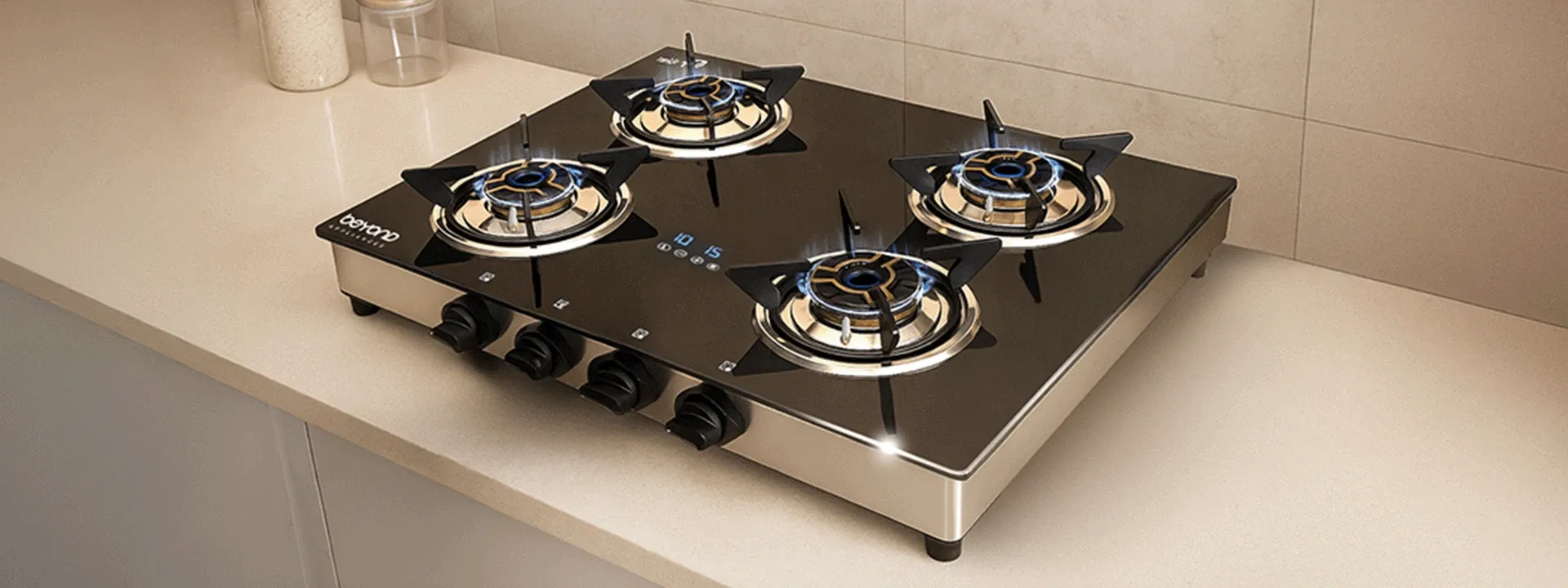
Gas stove efficiency depends on burner design and flame adjustment capabilities. High-efficiency gas burners with sealed construction minimize heat loss and improve combustion completeness. However, even premium gas stoves struggle to exceed 55% efficiency due to inherent heat loss through exhaust gases and radiant heat dispersion.
Efficient cooking methods significantly reduce preparation time. Induction hobtops boil water 50% faster than gas stoves and 25% faster than electric coil stoves. This time reduction translates to lower overall energy consumption despite higher instantaneous power draw.
Hobtop vs stove cost analysis requires examining both initial investment and long-term operational expenses. Built-in hobtops typically cost INR 15,000 to INR 80,000, while comparable freestanding stoves range from INR 8,000 to INR 50,000. However, installation complexity for hobtops adds INR 3,000 to INR 8,000 to total project costs. Monthly utility bill differences become apparent within the first year of ownership. Induction hobtops reduce cooking-related electricity costs by 30-40% compared to electric coil stoves. Gas stove users benefit from lower fuel costs per BTU, but efficiency losses offset some savings.
Total cost of ownership calculations reveal surprising results. Despite higher initial costs, efficient hobtops often provide better value over five years. Energy savings accumulate significantly, especially for households that cook frequently or prepare multiple meals daily.
Local utility rates dramatically affect efficiency economics. Areas with subsidized LPG pricing favor gas stoves, while regions with competitive electricity rates make induction hobtops more attractive. Installation infrastructure availability also influences total project costs.
Smart cooking appliances revolutionize efficiency through automated controls and energy monitoring capabilities. Advanced hobtops feature programmable settings that optimize power consumption based on cookware type and cooking method. These intelligent systems adjust heating patterns to minimize energy waste while maintaining precise temperature control. Integration with home energy management systems allows real-time monitoring of cooking appliance efficiency. Smart features include automatic shut-off timers, power level optimization, and cooking progress tracking through mobile applications.
Modern efficient cooking methods include voice-activated controls that adjust heat levels without manual intervention. Smartphone apps provide energy consumption reports and efficiency recommendations based on usage patterns.
Emerging technologies promise even greater efficiency improvements. Hybrid induction-gas systems combine the precision of electromagnetic heating with the visual feedback of open flames. Advanced materials and improved insulation continue pushing efficiency boundaries higher.
Energy efficient cooking techniques work across all appliance types but show different effectiveness levels. Proper cookware selection dramatically impacts efficiency regardless of heating method. Flat-bottomed pans with good thermal conductivity maximize heat transfer from any cooking surface. Maintenance practices preserve efficiency over time. Regular cleaning prevents buildup that reduces heat transfer effectiveness. For gas stoves, keeping burner ports clear ensures optimal combustion efficiency. Electric and induction surfaces require different cleaning approaches to maintain peak performance.
Induction-compatible cookware with magnetic properties works exclusively with electromagnetic heating systems. Heavy-gauge aluminum or copper-core pans distribute heat evenly across all cooking surface types. Proper pan sizing matches heating element dimensions for maximum efficiency.
Cooking multiple items simultaneously maximizes appliance efficiency. Batch cooking and meal preparation strategies reduce overall energy consumption per serving. Understanding heat retention properties helps optimize cooking sequences for different ingredients.
Hobtops generally offer superior efficiency, especially induction models that achieve 90% energy transfer rates. Built-in design reduces heat loss and provides better temperature control compared to freestanding stoves.
Cooktops typically consume less energy due to focused heating without additional oven components. However, total energy efficiency depends on heating technology rather than appliance configuration.
Hobtops and cooktops are essentially the same appliance with different installation methods. Built-in hobtops often provide better efficiency due to improved insulation and integration with kitchen ventilation systems.
Built-in hobs require professional installation and dedicated electrical or gas connections. Initial costs are higher, but long-term efficiency gains typically offset installation expenses within 2-3 years.
Gas hobtops offer slight efficiency improvements over traditional stoves through better flame control and reduced heat loss. However, induction alternatives provide dramatically better efficiency where electrical infrastructure supports higher power requirements.
Choosing between hobtops and stoves requires balancing efficiency, cost, and cooking preferences. Induction hobtops deliver unmatched energy efficiency but require compatible cookware and adequate electrical capacity. Gas options provide familiar cooking experiences with moderate efficiency improvements in built-in configurations. Consider your cooking frequency, local utility costs, and kitchen renovation plans when making this important appliance decision. The most efficient choice aligns with your specific needs while providing long-term value through reduced energy consumption.
