

Cooking Hobs for Healthy Eating: A Step-by-Step Guide
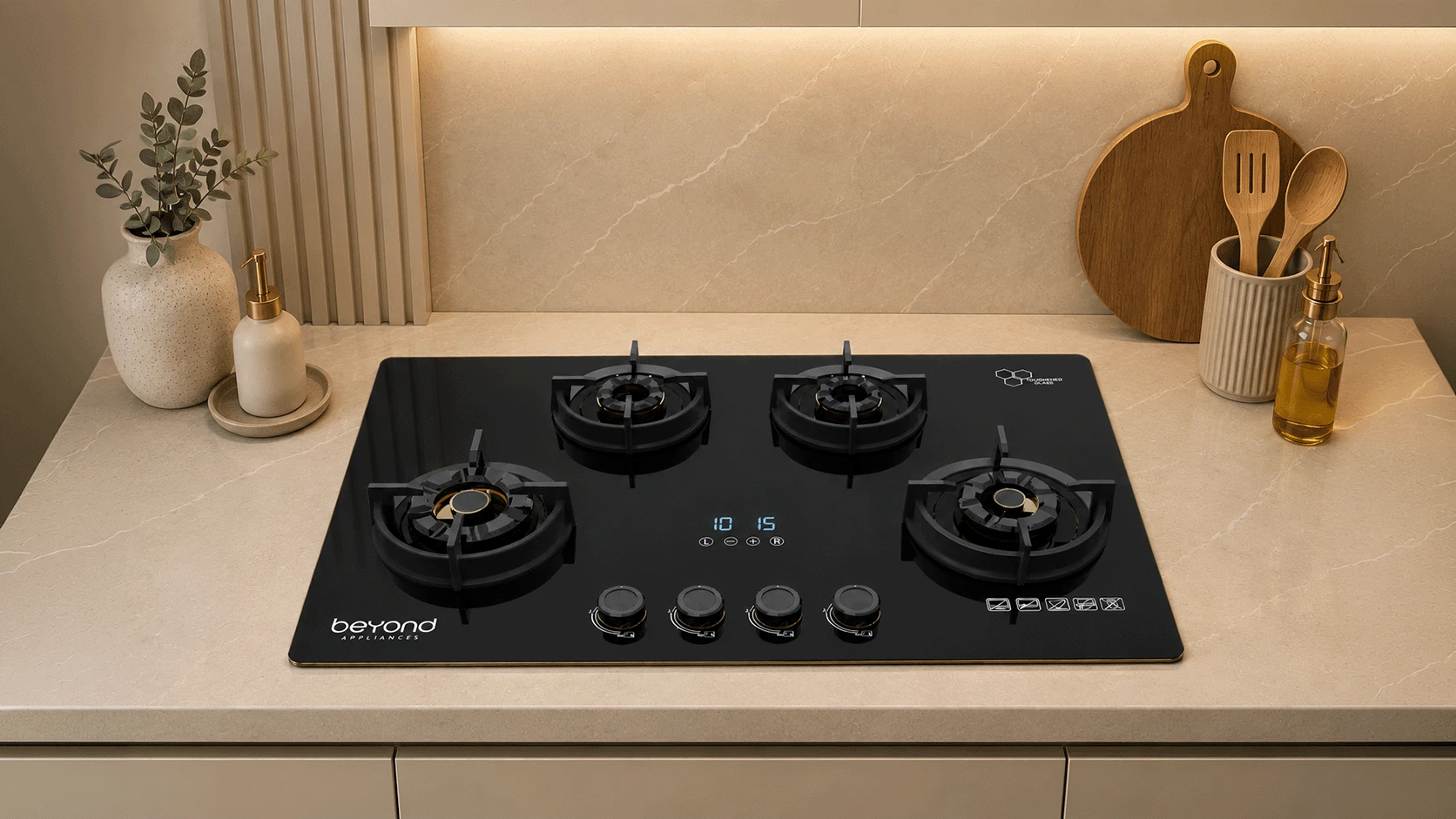
Research shows that cooking method can reduce water-soluble vitamin content by anywhere from 15% to over 50%, depending on the technique and food type. That means the hob you cook on is not just a kitchen fixture — it is a health decision. Whether you are managing your weight, eating more plant-based meals, or simply trying to get more nutrition from every plate, choosing the right cooking hob for healthy eating matters more than most people realise. This guide walks you through how different hob types handle heat, which cooking techniques preserve the most nutrients, and how smart features on modern gas hobs support more mindful, consistent cooking habits.
Your hob type directly affects how many nutrients survive the cooking process — induction offers the most precision, gas offers the most versatility, and ceramic suits slow, low-calorie cooking.
Steaming retains up to 85–90% of nutrients; boiling retains as little as 40–60% — the hob you use determines how well you can control these outcomes.
Smart features like built-in timers and Flame Failure Devices on gas hobs such as the Beyond Appliances Dorado and Altair reduce overcooking risk and support safer, healthier daily cooking.
Most people focus on ingredients when planning a healthy meal. But the surface you cook on, and how it delivers heat, plays an equally important role. Different heat sources interact with food in different ways, and those differences show up directly in the nutritional value of what ends up on your plate.
Heat breaks down nutrients at the cellular level. Vitamins C and B, antioxidants, and omega-3 fatty acids are particularly vulnerable. Direct flame, electromagnetic induction, and radiant electric heat all transfer energy differently — and that affects how quickly food reaches temperature, how evenly it cooks, and how much nutritional value is lost in the process. Oxidation is another factor. Prolonged exposure to high heat accelerates oxidation in fats and water-soluble vitamins. Hob types that allow faster, more controlled cooking reduce this exposure window.
Lower, controlled temperatures preserve more nutrients. The longer food is exposed to heat — especially high, uncontrolled heat — the greater the nutrient loss. Using efficient cooking methods that minimise heat exposure is one of the most effective strategies for retaining nutritional value. Steaming retains up to 85–90% of nutrients. Sautéing at low heat retains around 75–80%. Boiling drops retention to 40–60%, and high-heat frying can reduce it further to 30–50%. A hob that responds quickly and holds a steady temperature gives you far more control over these outcomes than one that runs hot and slow.
Cooking Method |
Avg. Nutrient Retention |
Best Hob Type |
|---|---|---|
Steaming |
~85–90% |
Induction / Electric |
Sautéing (low heat) |
~75–80% |
Gas / Induction |
Boiling |
~40–60% |
Any |
High-heat frying |
~30–50% |
Gas |
Not all hobs are equal when it comes to supporting a healthy diet. Each type has a distinct heat mechanism, and that mechanism shapes which cooking techniques it handles best. Understanding these differences helps you match your hob to your actual eating goals.
Induction hobs use an electromagnetic field to heat cookware directly. No ambient heat is wasted, and the surface itself stays relatively cool. This precision makes induction the strongest choice for nutrient-preserving cooking. You can hold a steady simmer without the temperature creeping up, which is critical for steaming, poaching, and low-oil sautéing. The absence of combustion also means no nitrogen dioxide in your kitchen air — a meaningful benefit for indoor air quality. The main limitation is cookware compatibility: induction requires magnetic-base pots and pans.
Gas hobs deliver instant, visible heat that responds the moment you adjust the flame. This makes them ideal for high-heat, short-duration cooking — stir-frying, wok cooking, and flame-roasting vegetables — where speed itself is the nutrient-preservation strategy. The key health consideration with gas is ventilation. Combustion releases nitrogen dioxide, so a well-functioning chimney is essential. Gas hobs also work with all cookware types, which adds flexibility. For Indian kitchens where tempering spices and high-heat cooking are daily requirements, a gas hob with full brass burners and a built-in Flame Failure Device — like the Beyond Appliances Dorado or Altair — provides both performance and safety in one unit.
Ceramic hobs use electric radiant heat beneath a smooth glass-ceramic surface. They heat more slowly than induction or gas, but they distribute heat evenly — making them well-suited to slow simmering, soups, stews, and low-calorie one-pot meals. The smooth surface is easy to clean, which supports kitchen hygiene. One consideration: ceramic hobs retain residual heat after switching off, which can continue cooking food if you are not careful. Switching off a few minutes before the dish is fully done uses this residual heat productively rather than letting it overcook your meal.
Electric hobs with coiled elements offer stable, consistent heat over long durations. They are a practical choice for batch cooking and meal prepping, where steady low heat over 30–45 minutes is more important than rapid response. They produce no combustion emissions and are generally the most budget-accessible option. The trade-off is responsiveness — electric hobs are the slowest to adjust, which increases the risk of overcooking if you are not monitoring closely.
Quick Verdict: For maximum nutrient retention and precision — induction. For versatile high-heat healthy cooking — gas. For easy low-calorie simmering — ceramic.
If you have ever wondered which hob type gives you the most control over nutrient retention, the answer depends on the technique you use most. Knowing which hob suits which technique is useful — having a clear workflow to follow makes it practical. The steps below are designed to get the most nutritional value from your ingredients using the hob type best suited to each method.
Steaming is the single most effective method for retaining water-soluble vitamins. An induction hob gives you the temperature control to keep steam consistent without boiling the water aggressively.
Fill a saucepan with 2–3 cm of water and place a steamer basket inside.
Set the hob to medium-high — approximately 180°C or power level 7 on an induction unit.
Wait until steam is clearly visible before adding vegetables. Do not pre-boil.
Cover and steam for 4–6 minutes. Broccoli, spinach, and carrots all fall within this range.
Remove immediately and serve. Do not leave vegetables sitting over residual heat.
Season with herbs, lemon juice, or a small drizzle of olive oil after cooking — not before.
Health tip: Adding salt to steaming water does not improve nutrition. Season after cooking to keep sodium intake in check.
Stir-frying on a gas hob uses high heat and short cooking time to lock in nutrients while using minimal oil. The instant flame response of a gas hob is essential here — you need to be able to reduce heat the moment food is done.
Prep all ingredients before turning on the hob. Gas responds instantly, so there is no time to chop once cooking starts.
Heat the wok on a high flame for 60 seconds before adding any oil.
Add half a teaspoon of a high-smoke-point oil such as refined olive oil or avocado oil.
Add protein first and cook for 2–3 minutes on high heat.
Add vegetables in order of density — harder vegetables like carrots go in before leafy greens like spinach.
Total cook time should be 5–7 minutes. High heat and short duration is the nutrient-preservation strategy.
Ceramic hobs are well-suited to one-pot cooking because of their even, steady heat. The key is managing the residual heat so it works for you rather than overcooking the dish.
Set the ceramic hob to medium-low and allow 3–4 minutes for it to reach temperature.
Add base aromatics — onion, garlic — with minimal oil or a splash of vegetable stock instead.
Layer in proteins and root vegetables.
Add liquid — water or low-sodium stock — and bring to a gentle simmer.
Reduce to the lowest heat setting. Maintain a gentle bubble, not a rolling boil.
Cook for 20–30 minutes, then switch off 5 minutes before the dish is fully done. Residual heat will finish the cooking.
These seven meals cover a range of dietary goals — from high-protein to plant-based to heart-healthy — and each is matched to the hob type that best suits its cooking method. All can be prepared in under 45 minutes.
Meal Name |
Hob Type |
Cook Time |
Calories (approx.) |
|---|---|---|---|
Steamed Salmon with Ginger and Bok Choy — High in omega-3, minimal oil required. |
Induction |
12 minutes |
~320 |
Vegetable Stir-Fry with Tofu — High fibre, low saturated fat. |
Gas |
8 minutes |
~280 |
Lentil and Spinach Soup — High in iron and protein, one-pot simplicity. |
Ceramic |
30 minutes |
~240 |
Poached Eggs on Wilted Greens — High protein, zero added fat. |
Induction |
6 minutes |
~190 |
Chicken and Vegetable Broth — Collagen-rich, batch-cook friendly. |
Electric |
45 minutes |
~260 |
Quinoa and Roasted Pepper Bowl — Complete protein, gluten-free. |
Ceramic |
20 minutes |
~310 |
Prawn and Asparagus Sauté — Low calorie, high in zinc and selenium. |
Gas |
7 minutes |
~230 |
Smart hob features are often discussed in terms of convenience alone. Their impact on healthy eating outcomes is less commonly covered — but it is real. Modern cooktops for wellness go well beyond basic heat delivery; timer controls, auto-shutoff, and energy efficiency all connect directly to how consistently and safely you cook at home.
A built-in timer prevents overcooking — which is one of the most common causes of nutrient loss in home kitchens. When a hob can alert you or cut heat automatically at a set time, you are less likely to leave food on the flame too long. The Beyond Appliances Dorado and Altair gas hobs both include a Smart Timer for exactly this reason. The Altair also features a Jumbo Burner for high-heat cooking and a Flame Failure Device that cuts the gas supply automatically if the flame goes out — a safety mechanism that also prevents the kind of unattended cooking that leads to burnt, nutrient-depleted food. Child lock and auto-shutoff features reduce cooking anxiety, which in turn supports more consistent home cooking habits.
Induction hobs operate at approximately 85% energy efficiency compared to around 40% for gas on average under typical home cooking conditions. Faster cooking means shorter heat exposure for food, which directly supports better nutrient retention. Lower energy consumption also reduces kitchen heat — a more comfortable cooking environment encourages people to cook at home more often. Research consistently shows that people who cook at home regularly consume fewer calories and more whole-food nutrients than those who rely on processed or restaurant meals.
The cookware you pair with your hob affects how much oil you need and how evenly food cooks. Ceramic-coated non-stick pans can reduce oil requirements significantly. Stainless steel on induction distributes heat evenly without chemical leaching. Cast iron on a gas hob retains heat well for slow, nutrient-preserving cooking. One important caution: avoid using damaged non-stick coatings. Scratched or flaking surfaces can introduce unwanted compounds into food and should be replaced.
The right hob depends on how you actually cook — not just what sounds appealing in a product description. Matching your hob to your dietary approach makes healthy food preparation easier to sustain over time.
Dietary Goal |
Recommended Hob |
Key Reason |
|---|---|---|
Weight loss / low-calorie cooking |
Induction |
Precise heat means less oil needed |
High-protein meal prep |
Electric or Ceramic |
Consistent low heat for batch cooking |
Plant-based / vegan cooking |
Induction or Gas |
Versatile across diverse techniques |
Heart-healthy Mediterranean diet |
Gas or Induction |
Ideal for olive oil sautéing and fish |
Family meal planning |
Ceramic |
Multiple zones, easy cleanup |
Athlete / performance nutrition |
Induction |
Speed and precision for macro-focused meals |
More burner zones allow you to cook multiple components at once — reducing the temptation to rely on processed sides when time is short. Larger zones accommodate steamers and woks, which are the workhorses of healthy cooking. A smooth surface is easier to clean, and kitchen hygiene is a genuine health factor. Think of a quality hob as a long-term investment in your eating habits, not just a kitchen appliance purchase.
No precise temperature settings — increases the risk of overcooking and nutrient loss.
No timer function — makes it harder to avoid leaving food on heat too long.
Incompatibility with steamer inserts or wok rings — limits your healthy cooking technique options.
Gas models with no ventilation guidance — combustion byproducts need to be managed with a properly rated chimney.
Induction hobs are widely considered the healthiest option. They offer precise temperature control, require less oil due to even heat distribution, and produce no combustion byproducts. Paired with a steamer insert, an induction hob supports the most nutrient-preserving cooking methods available in a standard home kitchen.
Stainless steel pans, ceramic-coated non-stick pans, and glass or stainless steel steamers are the best choices. These materials do not leach chemicals into food, require minimal added fat, and distribute heat evenly. Avoid damaged non-stick coatings and uncoated aluminium for regular cooking.
Yes. A timer prevents the most common cause of nutrient loss in home kitchens — leaving food on heat too long. Gas hobs like the Beyond Appliances Dorado and Altair include a Smart Timer that helps you cook to a set duration consistently. The Altair's Flame Failure Device also cuts gas automatically if the flame goes out, reducing the risk of unattended overcooking.
Steaming retains up to 90% of nutrients, making it the most effective method for preserving nutritional value. Poaching and low-oil stir-frying are also strong options. Boiling retains 40–60%, and high-heat frying drops to 30–50%. An induction hob gives you the temperature precision to execute steaming and poaching most effectively.
For most households, three to four burners allow you to cook a protein, a vegetable, and a grain simultaneously — which is the foundation of balanced meal prep. A four-burner gas hob with varied burner sizes, such as the Beyond Appliances Altair with its Jumbo Burner and full brass construction, gives you the flexibility to handle both high-heat and low-heat cooking at the same time.
Seven great options — each matched to the hob type that suits it best — include: Steamed Salmon with Ginger and Bok Choy (induction, 12 min), Vegetable Stir-Fry with Tofu (gas, 8 min), Lentil and Spinach Soup (ceramic, 30 min), Poached Eggs on Wilted Greens (induction, 6 min), Chicken and Vegetable Broth (electric, 45 min), Quinoa and Roasted Pepper Bowl (ceramic, 20 min), and Prawn and Asparagus Sauté (gas, 7 min). All are under 320 calories and can be prepared in 45 minutes or less using efficient cooking methods that support a healthy lifestyle.
Choosing the right cooking hob for healthy eating is not about finding the most expensive option. It is about matching the hob's heat mechanism to the cooking techniques that preserve the most nutrition for your specific dietary goals. Induction leads on precision and nutrient retention. Gas offers the instant response and high-heat capability that Indian cooking — and many healthy global cuisines — genuinely require. Ceramic and electric hobs serve slow, batch-style cooking well.
Smart features like built-in timers, Flame Failure Devices, and auto-ignition are not just convenience additions. They reduce the risk of overcooking, support safer daily cooking habits, and make it easier to cook at home consistently — which is, ultimately, the most reliable path to a healthier diet. Whether you are setting up a new modular kitchen or upgrading an existing one, the hob you choose shapes how you cook every single day.
