

Choosing the Right Hob Type: A Step-by-Step Tutorial
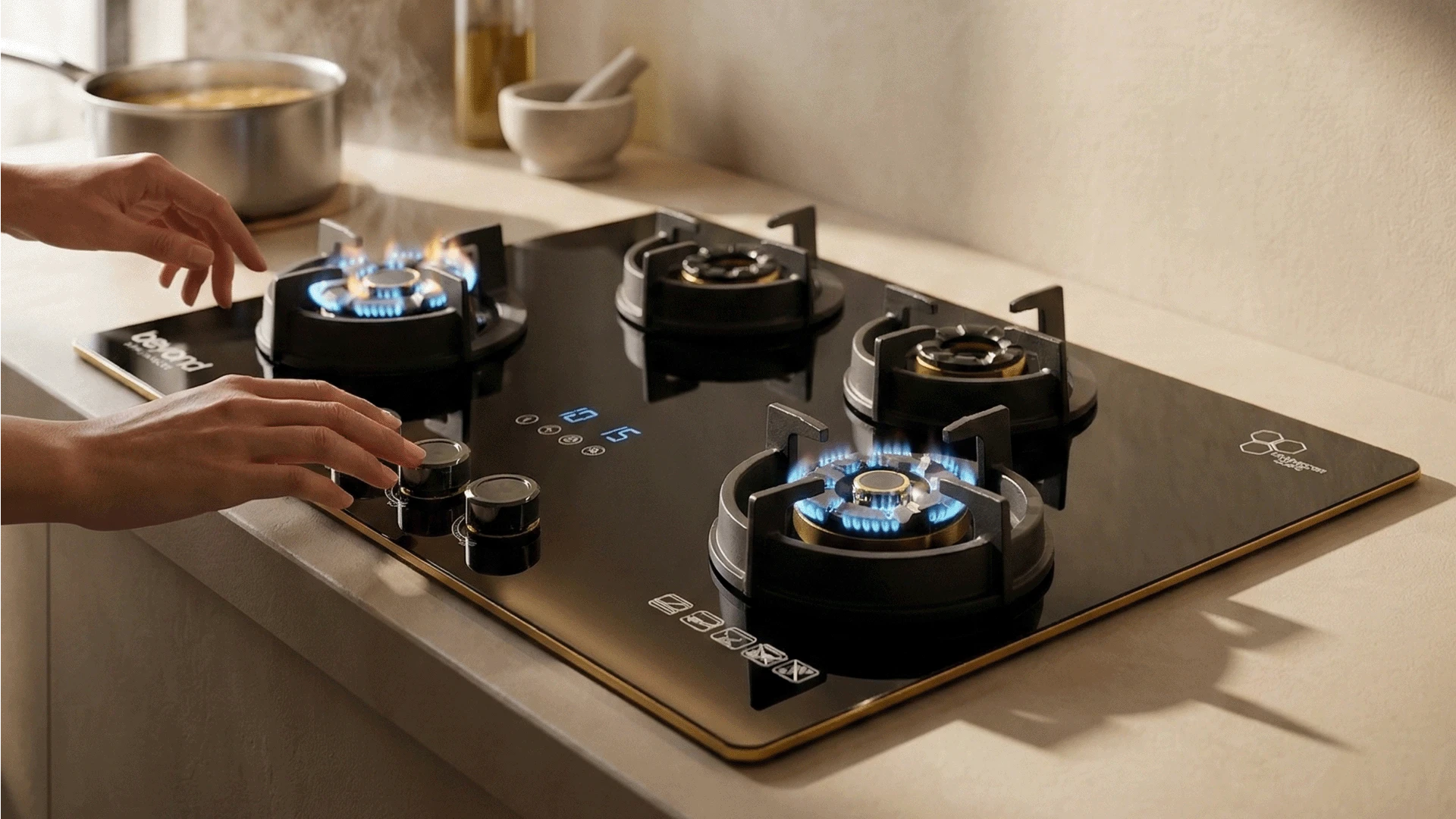
Walk into any kitchen showroom and the hob section alone can stop you in your tracks. Gas, induction, ceramic, electric — each type looks convincing on a display stand, and every salesperson has a reason why their pick is the right one. Choosing the right hob type is not just a purchase decision. It shapes how you cook every single day, how much you spend on energy, and how safe your kitchen is for years ahead. The wrong choice is expensive to reverse. At Beyond Appliances, this guide offers a clear, step-by-step framework built around your cooking style, kitchen setup, and budget — so you walk away with a decision you are confident in.
The best hob for your kitchen depends on your cooking style, energy supply, budget, and safety needs — not on what looks good in a showroom.
Gas hobs suit high-heat Indian cooking; induction hobs lead on energy efficiency and safety; ceramic hobs offer an affordable electric entry point.
Use the six-step framework in this guide to narrow down your choice before comparing features or prices.
A hob is the cooking surface built into or placed on a kitchen countertop that provides the heat source for cooking — without an integrated oven. Many buyers use the terms hob, stove, and cooktop interchangeably — but they are not the same thing, and the distinction matters when you are planning a modular kitchen.
A hob is the cooking surface only. It sits on or is built into your kitchen countertop and provides the heat source for cooking. It does not include an oven. Hobs are available as built-in units (fitted flush into the countertop) or as freestanding tabletop models that sit on the counter surface.
A stove or cooker combines a hob on top with an oven below, all in one freestanding unit. A hob gives you the cooking surface without the oven, which means more design flexibility and better use of countertop and cabinet space in a modular kitchen layout.
Feature |
Hob |
Stove / Cooker |
|---|---|---|
Oven included |
No |
Yes |
Installation |
Built-in countertop or tabletop |
Freestanding |
Design flexibility |
High |
Limited |
Space requirement |
Countertop only |
Floor space |
For most Indian modular kitchens, a hob is the preferred choice. It integrates cleanly into the countertop, pairs with a separate chimney above, and leaves cabinet space below intact.
There are four main hob categories available in India today. Each works differently, suits a different cooking style, and comes with its own set of trade-offs. Understanding these categories is the foundation of any good hob selection guide. Electric hob benefits include no gas line requirement, easier surface cleaning, and improved safety in households with children — making induction and ceramic hobs increasingly popular choices in modern Indian kitchens.
Gas hobs use an open flame to heat cookware directly. They offer instant heat control — turn the knob and the flame responds immediately. This makes them the preferred choice for Indian cooking, where you need high heat for tadkas, quick temperature changes for sauces, and the ability to char directly over a flame.
Works during power cuts
Compatible with all cookware types including pressure cookers and heavy kadais
Available in 3-burner and 4-burner configurations
Requires a gas connection and adequate kitchen ventilation
Burner caps and grates need regular cleaning
Gas hob installation requires a licensed professional and access to a gas supply line. Most models support both LPG and natural gas, but confirm this before purchasing. Beyond Appliances gas hobs and cooktops — including the Dorado, Altair, Solaria, and Auriga — include Flame Failure Devices (FFD) as a standard feature across the range, automatically cutting the gas supply if the flame goes out. Note that the Altair uses battery ignition, while the Dorado, Solaria, and Auriga include auto ignition — a useful distinction when comparing models.
Induction hobs use an electromagnetic field to heat the cookware directly, not the surface. The glass top stays cool to the touch, which makes them the safest option for households with young children or elderly family members.
Fastest heating of all hob types
Most energy-efficient — very little heat is wasted
Flat glass surface is easy to wipe clean
Requires induction-compatible cookware with a magnetic base
Needs a dedicated electrical circuit — no gas line required
Modern induction hobs often include touch controls, power boost zones, and timer functions. They suit minimalist kitchen designs well. The main limitation is cookware compatibility — if your existing pots and pans are not induction-ready, factor in the cost of replacing them.
Ceramic hobs use electric heating elements beneath a flat glass surface. They look similar to induction hobs but work differently — the surface itself heats up and transfers heat to the cookware. This means the surface stays hot after you turn it off, which is a burn risk to be aware of.
Sleek, flat surface that is easy to clean
No gas connection required
Works with all cookware types
Slower to heat and cool compared to induction
Less energy-efficient than induction
Ceramic hobs are a good entry-level electric option. They suit smaller households or renters who want a clean-looking cooking surface without the higher cost of induction.
Solid plate hobs are the oldest electric hob format. They use coiled metal heating elements and are slow to heat and cool. They have largely been replaced by ceramic and induction options and are rarely recommended for new kitchen setups today. They remain in use mainly in older homes or as a budget replacement option.
Two specialty formats are worth knowing about, even if they are less common in Indian kitchens. Domino hobs are modular units — you can mix a gas zone with an induction zone in the same countertop space. Venting hobs have an integrated extractor built into the hob itself, which eliminates the need for an overhead chimney. These are particularly useful in open-plan kitchens where a wall-mounted chimney is not practical.
This six-step framework is the core of this hob selection guide. Work through each step in order. By the end, you will have a clear hob type in mind — and the next section will help you refine your choice with the right features.
Start with how you actually cook, not how you think you might cook. Ask yourself: Do you cook at least once a day? Do you regularly use high heat — for tempering spices, deep frying, or pressure cooking? Do you need two or more burners running at the same time?
Daily high-heat cooking with multiple pots → Gas hob or high-wattage induction
Light, occasional cooking → Ceramic or 2-zone induction
Precision cooking — sauces, melting, slow cooking → Induction
Your kitchen's existing infrastructure narrows your options quickly. If you have a gas connection, a gas hob is straightforward to install. If you do not have a gas line, your options are electric, ceramic, or induction. Switching from gas to induction may also require an electrician to upgrade your electrical circuit — factor this cost into your planning.
The purchase price is only part of the cost. Running costs over three to five years can be significant, especially with less efficient hob types. The cheapest hob upfront is not always the cheapest hob to own.
Hob Type |
Typical Purchase Cost |
Running Cost (Monthly Est.) |
|---|---|---|
Gas |
Mid-range |
Low to Medium |
Induction |
Mid to High |
Low (most efficient) |
Ceramic |
Low to Mid |
Medium |
Solid Plate |
Low |
High |
Induction hobs have the best hob energy efficiency over time. If you cook daily, the savings on electricity can offset the higher upfront cost within a few years. Budget-conscious buyers should also consider the Beyond Appliances Auriga gas cooktop, which includes FFD, a digital timer, and auto ignition — making it a feature-rich option at an accessible price point.
Safety is a practical consideration, not just a marketing point. Households with young children or elderly members benefit most from induction hobs, where the surface stays cool and auto-shutoff is standard. For gas hobs, look specifically for a Flame Failure Device (FFD). This cuts the gas supply automatically if the flame is extinguished — by a boilover, a draft, or accidental contact. The Beyond Appliances Dorado and Altair hobs both include FFD as a standard feature, which addresses one of the most common safety concerns in Indian kitchens. Ceramic hobs should have a residual heat indicator — a light that stays on until the surface cools to a safe temperature.
Gas and ceramic hobs work with all cookware types. Induction hobs require cookware with a magnetic base. A simple test: hold a fridge magnet to the bottom of your pot. If it sticks, the cookware is induction-compatible. If you are switching to induction and your existing cookware is not compatible, budget for new pots and pans as part of your total cost.
The hob you choose should work with your kitchen layout and aesthetic, not against it. Modern minimalist kitchens suit induction or ceramic hobs — their flat, frameless glass surfaces integrate cleanly into the countertop. Traditional or semi-modular kitchens pair well with gas hobs featuring cast iron grates and full brass burners. Open-plan kitchens without a wall for a chimney are good candidates for a venting hob. Smart features like touch controls, digital timers, and auto-ignition also contribute to a cleaner, more functional kitchen surface.
Once you have identified your hob type, the next step is comparing features within that category. These are the specifications that separate a hob that performs well from one that frustrates you within a year.
Heat output: Measured in kW for gas hobs and watts for electric or induction. Higher output means faster cooking. The Beyond Appliances Altair delivers 10.4 kW across 4 burners including a Jumbo Burner — suited to high-demand Indian cooking. The Dorado offers 6.5–8 kW across its 3 and 4 burner variants, while the Solaria tabletop cooktop ranges from 8–10.5 kW for versatile performance.
Flame Failure Device (FFD): Essential for gas hobs. Cuts gas automatically if the flame goes out.
Auto Ignition: Lights the burner with a single press — no separate lighter needed. Available on the Dorado, Solaria, and Auriga. Note that the Altair uses battery ignition rather than auto ignition.
Smart Timer: Lets you set a countdown for each burner. Useful for precision cooking and for households where multiple dishes are on the hob simultaneously.
Number of burners or zones: 2-zone for studio apartments; 3-burner for couples or small families; 4-burner (60cm) for standard families; 4 to 5 burner (90cm) for large families or serious home cooks.
Surface material: Tempered glass (induction and ceramic) is easy to wipe clean. Cast iron grates on gas hobs are durable but need soaking to remove grease buildup. 8mm glass, as found on the Beyond Appliances Solaria tabletop cooktop, offers greater resistance to thermal stress than standard 6mm glass — though note the Solaria is designed for tabletop use rather than built-in countertop installation.
Controls: Touch controls suit minimalist kitchens and are easy to clean. Rotary knobs offer tactile feedback and are easier to use without looking — a practical advantage during active cooking.
Hob size: Standard sizes are 60cm, 70cm, 75cm, and 90cm. Always measure your countertop cutout space and compare it with the manufacturer's cut-out dimensions — these are not the same as the overall hob dimensions.
The induction hob vs gas hob debate is the most common decision point for Indian kitchen buyers. Here is a direct comparison across the criteria that matter most.
Criteria |
Induction |
Gas |
|---|---|---|
Heat speed |
Fastest |
Fast |
Energy efficiency |
Highest |
Lower |
Cookware flexibility |
Magnetic base only |
All types |
Safety |
Cool surface, auto-shutoff |
Open flame — FFD recommended |
Cleaning |
Flat glass — wipe clean |
Grates and burner caps |
Power cut resilience |
Needs electricity |
Works without power |
Best for |
Efficient, modern kitchens |
Traditional, high-heat cooking |
Both induction and ceramic hobs have flat glass surfaces and require no gas connection. The key difference is how they generate heat. Induction heats the cookware directly through an electromagnetic field. Ceramic heats the glass surface, which then transfers heat to the pot. This makes induction significantly more energy-efficient and safer — the surface stays cool on an induction hob, while a ceramic surface remains hot after the element is switched off. Induction costs more upfront; ceramic is the more affordable electric entry point.
Indian cooking places specific demands on a hob. High heat for tempering spices, simultaneous use of multiple burners, compatibility with pressure cookers and heavy-bottomed kadais — these are non-negotiable for most Indian households. Gas hobs handle all of these naturally. The open flame gives you instant, visible heat control. Full brass burners, as found across the Beyond Appliances gas hob range, deliver consistent heat output and resist corrosion from oil and moisture better than aluminium alternatives. High-wattage induction hobs are a viable modern alternative for Indian cooking, provided you use induction-compatible cookware. Pressure cookers with a magnetic base work on induction. Ceramic hobs are generally not recommended for heavy Indian cooking due to slower heat response and lower maximum temperatures.
Getting the hob type right is only part of the decision. Sizing and installation requirements can derail an otherwise well-researched purchase if they are not checked in advance.
Built-in hobs require a cutout in the countertop. The cutout dimensions are always smaller than the overall hob dimensions — the hob frame sits on the countertop surface around the cutout. Always compare the manufacturer's specified cutout dimensions against your available countertop space, not the overall product size.
Measure the countertop space available (length and width)
Check the manufacturer's minimum cutout dimensions
Verify cabinet depth below the countertop for ventilation clearance
Confirm minimum distances from the sink and walls as per safety guidelines
Gas hob installation must be carried out by a licensed professional. The hob needs access to a gas supply line — either LPG or piped natural gas. Most hobs come with conversion kits for both, but confirm this before purchasing. Adequate kitchen ventilation is also required, which typically means pairing the hob with a chimney or extractor hood directly above it.
Induction hobs require a dedicated electrical circuit, typically rated at 32 amperes or higher for full-size models. Check your existing wiring capacity before purchasing a high-wattage induction hob. While induction installation is simpler than gas in that no gas line is needed, an electrician may still be required to upgrade the circuit. Ceramic hobs have lower power requirements and are generally easier to install.
Every hob type generates steam, smoke, and cooking odours that need to be extracted. A chimney or extractor hood positioned directly above the hob is the standard solution. Minimum clearance heights between the hob surface and the bottom of the chimney vary by model — check the specifications for both the hob and the chimney before finalising your kitchen layout. For kitchens without wall space for a chimney, a venting hob or ceiling-mounted extractor is an alternative worth considering.
The two main types of hobs are gas hobs and electric hobs. Electric hobs include induction and ceramic variants. Gas hobs use an open flame to heat cookware directly; electric hobs use electromagnetic or resistive heating. Each type suits different cooking styles, energy supplies, and kitchen setups.
The best hob type for your kitchen depends on your cooking style, energy supply, and budget. Induction hobs lead on energy efficiency, safety, and ease of cleaning. Gas hobs are best for cooking flexibility and high-heat performance, particularly for Indian cuisine. Ceramic hobs offer an affordable electric option. There is no single best hob — only the best hob for your specific cooking style, kitchen setup, and budget.
Gas hobs are the best choice for Indian cooking in most households, delivering high heat output, open flame for charring and tempering, and compatibility with all cookware including pressure cookers and heavy kadais. High-wattage induction hobs are a practical modern alternative if induction-compatible cookware is used. Ceramic hobs are generally not recommended for heavy Indian cooking loads.
Induction outperforms ceramic on heat speed, energy efficiency, safety, and cleaning ease. The ceramic surface stays hot after cooking, which is a burn risk. Induction surfaces stay cool. Ceramic hobs cost less upfront and work with all cookware types. If budget allows, induction is the better long-term investment for most households.
Match hob size to household size. A 60cm hob with 3 to 4 burners suits most families of 3 to 4. A 90cm hob suits large families or households that cook in volume. For 1 to 2 people with light cooking needs, a 2-zone induction or 3-burner gas hob is sufficient. Always measure your countertop cutout space and compare it with the manufacturer's cut-out dimensions before purchasing.
Yes. Beyond Appliances gas hobs and cooktops — including the Dorado, Altair, Solaria, and Auriga — all include a Flame Failure Device (FFD) as standard. The FFD cuts the gas supply automatically if the flame is extinguished — by a boilover, a draft, or accidental contact. The Dorado, Solaria, and Auriga also include Auto Ignition, which lights the burner with a single press, while the Altair uses battery ignition. These are practical safety features designed for the realities of daily Indian cooking, not just specification checkboxes.
Choosing the right hob type comes down to six honest questions: How do you cook? What energy supply does your kitchen have? What is your total budget including running costs? What are your safety priorities? Is your cookware compatible? And does the hob suit your kitchen's design and layout? Work through these in order and the decision becomes straightforward.
There is no universally best hob. Gas hobs remain the most practical choice for traditional Indian cooking. Induction hobs offer the best energy efficiency and safety profile for modern households. Ceramic hobs provide an accessible electric option at a lower entry cost. The right answer is the one that fits your kitchen, your cooking, and your household — not the one with the most features on a spec sheet.
When comparing gas hobs specifically, look beyond the burner count. Features like FFD, full brass burners, smart timers, and glass thickness are the details that determine how a hob performs over years of daily use — and how much maintenance it demands along the way.
