
BLDC vs AC Chimney Motors: Which Wins Today?
Cart
Your cart is empty
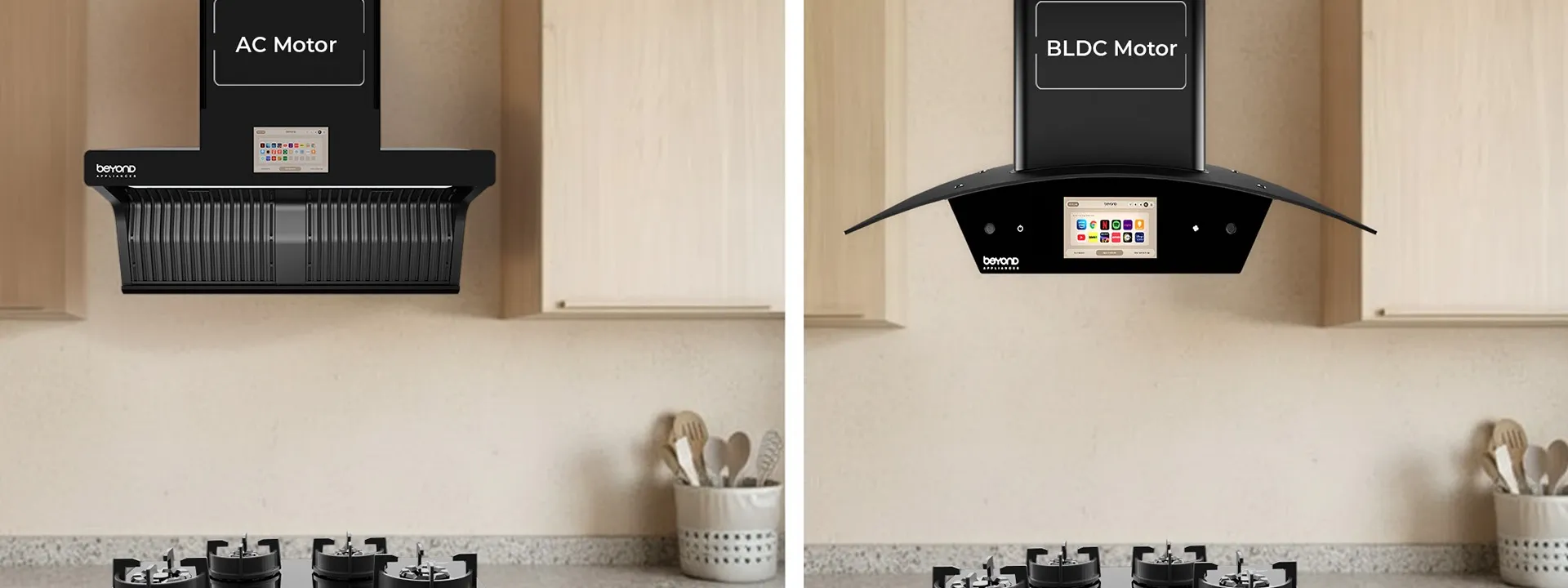
Modern kitchens demand efficient ventilation systems that can handle everything from light sautéing to heavy Indian cooking. The heart of any kitchen chimney motor determines how well it removes smoke, grease, and odors from your cooking space. Today's homeowners face a crucial decision between two dominant technologies: BLDC (Brushless DC) and AC (Alternating Current) motors. Understanding the differences between these chimney motor types helps you choose the right smoke extraction chimney for your home. This comparison explores performance, efficiency, and value to help you make an informed decision for your kitchen ventilation needs.
The motor serves as the powerhouse of any chimney for cooking, driving the fan that pulls smoke and odors away from your cooking area. Traditional AC motors have dominated the market for decades, offering reliable performance at affordable prices. However, BLDC technology has emerged as a game-changer in recent years. Motor technology directly impacts suction power, energy consumption, noise levels, and overall durability. The choice between BLDC and AC motors affects your daily cooking experience, monthly electricity bills, and long-term maintenance costs. Modern kitchen chimney motor designs focus on balancing power with efficiency, creating systems that work harder while consuming less energy.
Early kitchen chimneys relied on simple AC motors that prioritized raw power over efficiency. These motors served their purpose but often consumed significant electricity and generated considerable noise. The introduction of BLDC technology brought precision control and energy optimization to kitchen ventilation.
Your motor choice influences how effectively your chimney handles different cooking styles. Heavy Indian cooking with high heat and oil requires robust suction power, while light cooking benefits from quieter, more efficient operation.
Brushless DC motors represent the latest advancement in efficient chimney technology. These motors use electronic controllers instead of physical brushes, eliminating friction and reducing wear. The result is a more precise, efficient, and durable motor system. BLDC chimney systems offer variable speed control, allowing you to adjust suction power based on cooking intensity. This precision control means you can run the motor at lower speeds for light cooking, saving energy while maintaining effective ventilation. During heavy cooking sessions, BLDC motors can ramp up to maximum power instantly.
BLDC motors typically consume 30-50% less electricity compared to equivalent AC motors. This efficiency translates to significant savings on monthly electricity bills, especially for households that cook frequently.
The brushless design creates a silent chimney experience, with noise levels often 20-30% lower than traditional AC motors. This reduction makes kitchen conversations more pleasant during cooking.
Modern BLDC systems support smart features like auto-speed adjustment, timer functions, and smartphone connectivity. These features enhance convenience and optimize performance automatically.
AC motors have powered kitchen chimneys for decades, earning a reputation for reliability and straightforward operation. These motors use alternating current to drive the fan, providing consistent suction power for smoke extraction chimney applications. AC chimney systems excel in high-power applications where maximum suction is the primary concern. They offer robust performance for heavy cooking scenarios and typically cost less upfront than BLDC alternatives. Many professional kitchens still rely on AC motors for their proven durability under demanding conditions.
AC motors have demonstrated long-term reliability across various cooking environments. Their simple design means fewer electronic components that could potentially fail over time.
AC motor chimneys generally require lower upfront investment, making them accessible for budget-conscious buyers who need effective ventilation without premium features.
When maximum suction power is essential, AC motors can deliver powerful chimney performance that handles even the most challenging cooking scenarios effectively.
The BLDC motor chimney vs AC motor chimney debate centers on several key performance factors that impact daily use and long-term value. Understanding these differences helps you choose the right motor type for your specific needs. Energy consumption represents the most significant difference between these technologies. BLDC motors achieve superior efficiency through precise electronic control, while AC motors consume more power but deliver it consistently. For households cooking multiple meals daily, the energy savings from BLDC technology can offset the higher initial cost within 2-3 years.
BLDC motors create a notably quieter cooking environment, operating at 45-55 decibels compared to 55-65 decibels for AC motors. This difference makes BLDC systems ideal for open kitchen designs where noise affects living spaces.
Both motor types can achieve excellent suction power, but BLDC motors offer better control over power delivery. AC motors provide consistent high power, while BLDC motors adjust power based on actual needs.
BLDC motors require less maintenance due to their brushless design, while AC motors may need periodic brush replacement and more frequent servicing.
Your cooking habits significantly influence which motor type delivers better value and performance. Heavy Indian cooking with frequent frying, grilling, and spice-heavy preparations demands different capabilities than occasional light cooking. For households that cook multiple meals daily with high heat and oil, both motor types can handle the workload effectively. However, BLDC chimney systems provide better long-term value through reduced energy consumption and lower maintenance needs. The variable speed control allows you to match suction power to cooking intensity, optimizing both performance and efficiency.
Intensive cooking with multiple burners, high heat, and oil-heavy preparations requires sustained high suction power. BLDC motors excel here by maintaining consistent performance while consuming less energy than AC alternatives.
For occasional cooking or light meal preparation, BLDC motors offer significant advantages through their ability to operate efficiently at lower speeds, creating an energy saving chimney solution.
Open kitchen designs or apartments where kitchen noise affects living areas benefit greatly from the silent chimney operation that BLDC motors provide.
Choosing between BLDC and AC motor chimneys requires evaluating your specific needs, budget, and long-term goals. Consider your cooking frequency, kitchen design, energy costs, and desired features when making this decision. Budget considerations extend beyond initial purchase price to include operating costs and maintenance expenses. While BLDC systems cost more upfront, their energy efficiency and reduced maintenance needs often provide better long-term value. Calculate potential energy savings based on your cooking habits to determine the payback period.
Larger kitchens or those with poor natural ventilation may benefit from the precise control that BLDC motors offer, allowing optimal performance without energy waste.
BLDC technology supports smart home integration and advanced features that may become standard in coming years, making it a more future-ready choice.
BLDC motors offer superior energy efficiency, quieter operation, and longer lifespan, making them better for most modern kitchens. AC motors provide reliable performance at lower initial cost, suitable for budget-conscious buyers who prioritize upfront savings over long-term efficiency.
Yes, BLDC motors typically consume 30-50% less electricity than equivalent AC motors. For households cooking daily, this translates to savings of INR 1,500-3,000 annually on electricity bills, depending on usage patterns and local energy costs.
BLDC chimneys justify their higher price through energy savings, reduced maintenance costs, and enhanced features. Most users recover the additional investment within 2-3 years through lower operating expenses.
BLDC motors operate significantly quieter than AC motors, typically producing 20-30% less noise. This makes them ideal for open kitchens or noise-sensitive environments where cooking sounds affect living spaces.
BLDC motors typically last 10-15 years due to their brushless design, while AC motors usually require replacement after 7-10 years. The longer lifespan of BLDC motors adds to their overall value proposition.
Upgrading existing AC motor chimneys to BLDC technology is generally not practical due to different control systems and mounting requirements. Replacement with a new BLDC unit is typically more cost-effective than attempting conversion.
The choice between BLDC and AC motor chimneys depends on your priorities, cooking habits, and budget considerations. BLDC motors excel in energy efficiency, noise reduction, and smart features, making them ideal for modern kitchens where long-term value matters most. AC motors remain viable for budget-conscious buyers who need reliable performance without premium features. Consider your cooking frequency, energy costs, and desired features when making this important decision for your kitchen ventilation needs.
