Affordable Cooktop Stove: Induction vs Gas vs Electric – Which Is Right for Your Kitchen?
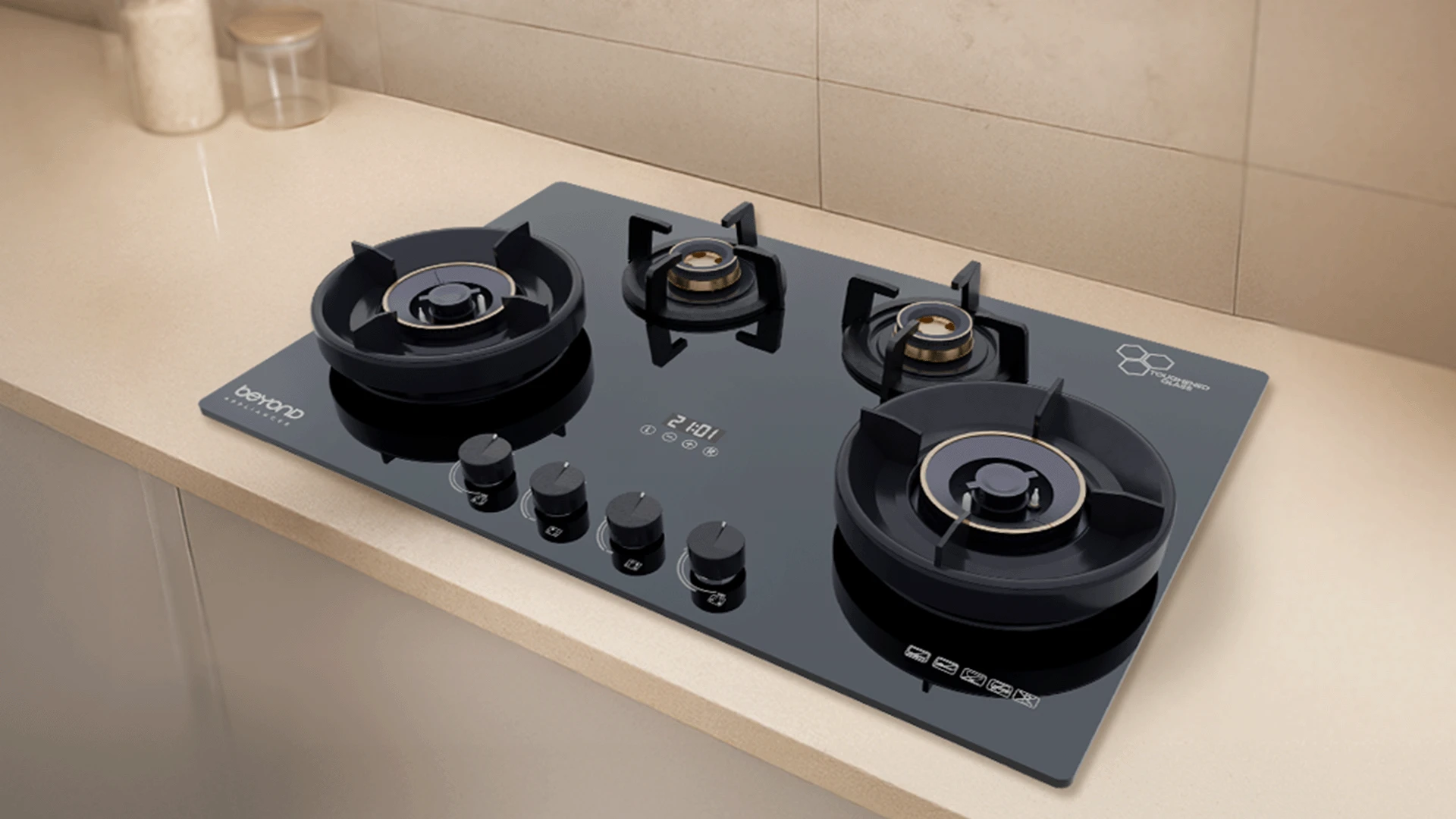
An affordable cooktop stove is not always the one with the lowest shelf price. Your fuel source, daily menu, cookware, kitchen layout, and service needs all shape its real cost. Gas remains familiar for Indian cooking. Induction offers a flame-free surface. Electric cooktops can avoid LPG, but they work differently from induction.
For a renovated kitchen, safety tools also matter. Beyond Appliances gas cooktops such as Auriga, Solaria, and Dorado pair gas cooking with timers, auto ignition, and Flame Failure Devices. These features can help when a burner is left on or a flame goes out.
Choose gas for familiar cookware and multi-pan cooking.
Choose induction for a flame-free setup with compatible utensils.
Compare installation, fuel, power stability, and burner count before comparing cooktop price.
Affordability includes more than the purchase bill. A cooktop stove may need a gas connection, regulator, suitable wiring, new utensils, or a counter cutout. Cleaning time and repair support also affect long-term value.
Match the appliance to your actual cooking pattern. A household that cooks several dishes at once may value more burners. A small rental kitchen may value a portable unit and easy setup.
Gas cooking uses LPG, while induction and electric units use household electricity. Monthly cost depends on local LPG and electricity tariffs, cooking time, and appliance use. There is no single cheaper choice for every home. Compare your own bills before deciding. Gas models also need safe hose and connection checks. Electric options need stable, suitable power.
Product-listing signals in the supplied research span roughly ₹2,034 to ₹28,000. This wide range does not make one type cheaper by itself. Burner count, glass, ignition, safety systems, and installation change the final cooktop price. Confirm the current listing, included parts, and warranty terms before purchase.
An induction cooktop heats compatible cookware through its base. It has no open flame. This can suit compact kitchens, students, and homes that want a separate cooking surface.
Its main limit is utensil compatibility. Check whether your pots and pans work on induction before you switch. A multi-burner induction cooktop also needs enough electrical capacity for its combined load.
Useful cooktop features include touch controls, auto shutoff, timers, and preset cooking modes. These controls can reduce guesswork for common tasks. Some listings mention a 2000W infrared unit, but infrared and induction are not the same technology. Read the product description closely before comparing power figures.
Check for compatible cookware requirements.
Confirm the number of cooking zones.
Look for auto shutoff and timer controls.
Check the power requirement for your kitchen socket.
Two-burner induction pricing varies by controls, total wattage, and build. The supplied research notes sub-₹3,000 options, yet it does not provide verified current two-burner prices. Treat a low price as a starting point. Confirm the number of active zones and whether both zones can run together at the stated power.
A gas cooktop supports familiar Indian cookware and cooking methods. It also works during a power cut when manual ignition is possible. Gas models come as tabletop units and built-in hobs.
Look beyond the glass top. Burner material, pan support, ignition type, and flame safety affect daily use. A Flame Failure Device cuts gas supply if the flame goes out. This is useful for homes with busy cooking routines.
A three-burner gas cooktop can suit a smaller household or limited counter space. A four-burner layout can help when several dishes cook at once. Measure the available counter area and leave space for handles. Beyond Appliances offers Auriga, Solaria, and Dorado in three- and four-burner variants. Altair is a four-burner hob with a jumbo burner and cast iron support.
Auriga includes a digital timer, auto ignition, and FFD.
Solaria uses 8mm glass, full brass burners, a timer, and FFD.
Dorado works as a tabletop or hob unit and has cast iron support.
An electric cooktop without gas can be viable where LPG is not preferred. However, electric coil or infrared cooktops differ from induction cooktops. Infrared surfaces heat the cooking zone itself. Induction units heat compatible cookware through induction.
This distinction affects cookware choices and surface behavior. Do not assume that every electric hob is induction. Ask whether the unit is infrared, coil-based, or induction before buying.
A two-burner electric stove may help in a small kitchen. Check socket capacity, cable condition, and voltage stability first. Avoid overloading a shared circuit. Clean the surface only after it has cooled.
A hybrid setup combines gas cooking and induction cooking in one kitchen plan. It can give a household flexibility when cookware, recipes, and fuel access vary. The supplied research identifies hybrid gas and induction as a buyer question, but it does not verify models, specifications, or prices.
For that reason, compare only confirmed details from a seller or product manual. Check the gas connection, electrical load, spacing, and service terms. A hybrid layout can also mean separate gas and induction appliances rather than one combined unit.
A hybrid approach may suit homes with mixed utensil collections. It can also suit rental kitchens where a portable induction unit adds flexibility. In areas with power cuts, gas can remain useful. In homes with LPG supply concerns, induction can provide another cooking option. Plan the counter layout so both surfaces remain easy to clean and use.
Each kitchen cooktop type solves a different problem. The right choice depends on your cooking style rather than a general ranking. Use this comparison as a short decision aid.
Factor |
Induction |
Gas |
Electric or infrared |
|---|---|---|---|
Heat source |
Compatible cookware |
LPG flame |
Heated surface |
Safety |
No open flame |
FFD can cut gas if flame goes out |
No open flame |
Utensils |
Needs compatible bases |
Works with common cookware |
Check maker guidance |
Power need |
Stable electrical supply |
LPG supply |
Stable electrical supply |
Multi-dish cooking |
Depends on zones and load |
Three or four burners available |
Depends on zones and load |
Gas can suit frequent multi-pan cooking. Induction can suit controlled, flame-free cooking. Electric or infrared can suit users who want to avoid LPG but should understand surface heat and power needs.
Start with your kitchen, not a feature list. Measure the counter, note the number of people at home, and list the dishes you cook most often. Then check fuel access and electrical readiness.
Choose a two-burner setup for light cooking and small counters.
Consider three burners for regular family meals.
Consider four burners for frequent parallel cooking.
Choose induction only after checking cookware compatibility.
Choose a gas hob with FFD if flame safety is a priority.
Check whether tabletop or built-in placement suits your counter.
For planned upgrades, the Big Billion Days and the Great Indian Festival can be useful comparison periods. Shortlist specifications before the sale window. Exchange offers, extended warranty add-ons, and bank-linked reductions can change the effective price. Do not let a headline price replace a fit check.
These answers focus on information that can be confirmed from the supplied material and product details.
The supplied research does not provide verified model names, current prices, or wattage data for five induction units. Avoid unverified rankings. Compare confirmed wattage, active zones, cookware needs, safety controls, and current seller details instead.
The most cost-effective stove is the one that fits your fuel access and cooking habits. Add purchase cost, LPG or electricity use, installation, cookware changes, and maintenance. A low initial price may not mean a lower total cost.
Auriga, Solaria, Dorado, and Altair include a Flame Failure Device. It cuts gas supply if a flame goes out. These models also include timer functions and auto ignition, although features vary by model.
The supplied research raises this as a buyer question but does not confirm current product availability. A three-zone induction or electric unit is different from a traditional coil stove. Verify the technology, total power need, and local electrical suitability before purchase.
An affordable cooktop stove should fit your daily cooking, not just your initial budget. Gas supports familiar cookware and multi-burner meals. Induction removes the open flame but needs compatible pots. Electric and infrared options avoid LPG but need careful power planning.
For a gas-led kitchen, Beyond Appliances offers options across three- and four-burner needs. Auriga focuses on accessible safety features. Solaria and Dorado add timer-led control, while Altair suits a four-burner hob layout. Compare confirmed specifications, warranty coverage, and kitchen fit before making a final choice.