
Ultimate Guide: Choosing the Right Kitchen Chimney
Cart
Your cart is empty
Indian cooking brings incredible flavors to our homes, but it also creates unique challenges for kitchen ventilation. The heavy use of spices, oils, and high-heat cooking methods produces more smoke and odors than typical Western cooking styles. A properly chosen kitchen chimney becomes essential for maintaining a healthy kitchen environment while preserving the authentic cooking experience. Understanding how to pick a chimney for Indian cooking style requires knowledge of specific requirements that differ significantly from standard kitchen exhaust systems.
Indian cooking presents distinct ventilation challenges that require specialized solutions. The frequent use of tempering spices in hot oil creates intense smoke bursts that standard exhaust systems struggle to handle effectively. High-heat cooking methods like deep frying, tandoor-style preparations, and pressure cooking generate substantial amounts of steam and smoke. These cooking techniques often involve temperatures exceeding those used in Western cuisine, demanding robust smoke extraction capabilities from your kitchen exhaust system. Masala grinding and roasting spices release aromatic particles that can quickly spread throughout your home without proper ventilation. The volume of cooking in Indian households typically exceeds Western patterns, with multiple daily meal preparations requiring consistent odor control in kitchen environments. Humidity and grease accumulation occur more rapidly due to oil-heavy cooking methods. This creates additional maintenance requirements and affects the longevity of chimney components if not properly addressed during selection.
Selecting the right type of kitchen chimney depends on your kitchen layout and cooking patterns. Each design offers specific advantages for Indian cooking requirements.
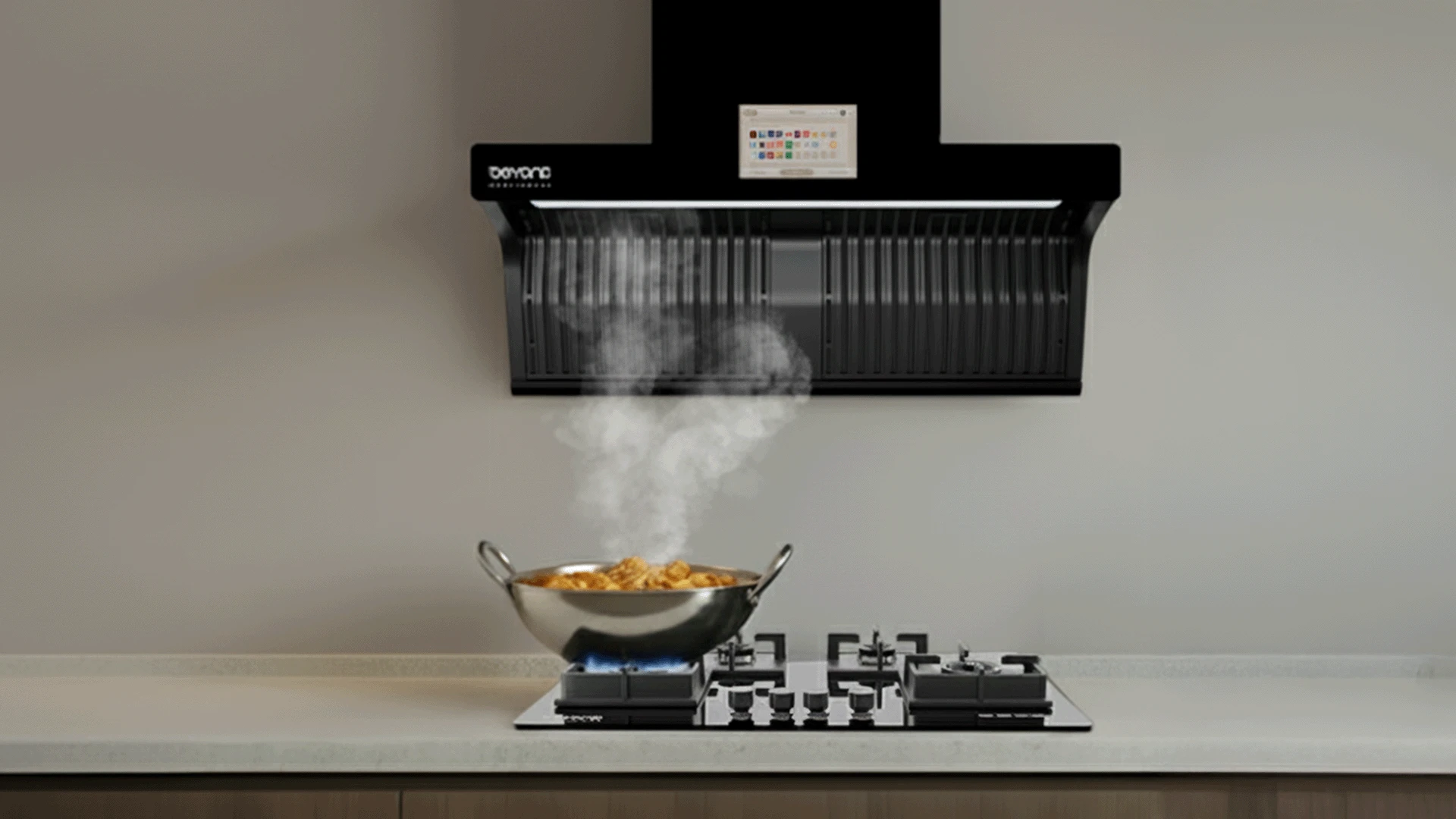
Wall-mounted designs work best for traditional Indian kitchen layouts where the cooking area sits against a wall. These units provide excellent suction power and can handle the intense smoke production from spice tempering and high-heat cooking.
Island chimneys suit modern open kitchen designs where the cooking area sits in the center of the room. These units require higher suction capacity due to air circulation patterns in open spaces.
Built-in options offer space-saving solutions for compact kitchens. These integrate seamlessly with cabinetry while maintaining adequate performance for regular Indian cooking needs.
Corner installations optimize space in smaller kitchens while providing effective smoke extraction. These work well when cooking areas are positioned at kitchen corners. Suction capacity requirements for Indian cooking typically range from 600-1500 m³/hr, significantly higher than requirements for Western cooking styles.
Choosing a chimney for Indian kitchen use requires attention to specific features that handle the unique demands of our cooking methods. Standard specifications often fall short of Indian cooking requirements.
Minimum suction capacity should reach 600 m³/hr for regular Indian cooking, with 800-1200 m³/hr recommended for heavy cooking households. Higher capacity ensures effective removal of smoke from spice tempering and oil-based preparations.
Baffle filters work best for Indian cooking due to their ability to handle heavy grease and easy cleaning requirements. Cassette filters require more frequent replacement but offer good initial filtration. Charcoal filters help with odor control but need regular replacement.
Your kitchen exhaust system must withstand high-temperature cooking methods common in Indian cuisine. Look for units rated for temperatures exceeding 200°C to ensure durability.
Auto-clean features become essential for managing heavy grease buildup from oil-intensive Indian cooking. This technology reduces maintenance frequency and ensures consistent performance.
Following a systematic approach ensures you choose the right chimney for your specific Indian cooking needs. This process considers all critical factors affecting performance and satisfaction.
Measure your kitchen size and evaluate cooking frequency. Larger kitchens and frequent cooking require higher capacity units for effective smoke extraction.
Calculate required suction using the formula: Kitchen volume × 10-12 for Indian cooking. Add 20% extra capacity for spice-heavy cooking styles.
Choose appropriate width: 60cm for small kitchens, 75cm for medium spaces, and 90cm for large cooking areas. Ensure the chimney covers your entire cooktop area.
Select filter type based on cooking patterns. Heavy oil users benefit from baffle filters, while moderate cooking allows cassette filter options.
Allocate budget considering initial cost, installation, and long-term maintenance. Quality units offer better value through durability and performance.
Proper installation ensures optimal performance and safety for your kitchen chimney. Correct placement becomes crucial for effective smoke extraction during Indian cooking. Optimal height placement ranges from 65-75cm above your cooktop, with 70cm being ideal for most Indian cooking scenarios. This distance balances suction efficiency with safety requirements.
Ducting diameter should match chimney specifications, typically 150mm for most units. Minimize bends in ductwork to maintain suction efficiency and reduce noise levels.
Ensure dedicated electrical connections with proper grounding. Most chimneys require 15-amp connections for optimal motor performance.
Professional installation ensures warranty compliance and optimal performance. Technicians understand local building codes and safety requirements for kitchen exhaust systems.
Regular maintenance ensures your chimney continues providing effective odor control in kitchen environments. Indian cooking demands more frequent cleaning due to higher grease and spice residue. Daily maintenance involves wiping external surfaces after heavy cooking sessions. This prevents grease buildup and maintains appearance.
Weekly cleaning should include filter removal and washing with warm soapy water. Baffle filters can be cleaned in dishwashers, while cassette filters may require replacement.
Monthly checks should cover motor performance, duct cleanliness, and electrical connections. Address any unusual noises or reduced suction immediately.
Reduced suction often indicates clogged filters or blocked ducts. Excessive noise may signal motor issues or loose components requiring professional attention.
Indian cooking requires minimum 600 m³/hr suction capacity, with 800-1200 m³/hr recommended for heavy cooking households. This higher capacity handles intense smoke from spice tempering and oil-based preparations effectively.
Baffle filters work best for Indian cooking due to their superior grease handling and easy cleaning. They withstand heavy oil residue better than cassette filters and require less frequent replacement.
With daily Indian cooking, clean filters weekly and wipe external surfaces after each heavy cooking session. Deep clean the entire unit monthly to maintain optimal performance.
Yes, chimneys can be safely installed above gas stoves when maintaining proper clearance of 65-75cm. Ensure adequate ventilation and follow manufacturer safety guidelines for installation.
For small Indian kitchens, a 60cm wide chimney typically provides adequate coverage. Ensure the unit covers your entire cooktop area and offers minimum 600 m³/hr suction capacity.
Reduce noise by cleaning filters regularly, checking for loose components, and ensuring proper installation. Quality units with good motor design naturally operate more quietly.
Choosing the right kitchen chimney for Indian cooking requires understanding unique ventilation challenges and specific feature requirements. Focus on adequate suction capacity, appropriate filter technology, and heat resistance to handle intense cooking methods. Proper installation and regular maintenance ensure long-term performance and healthy kitchen living. Consider your cooking patterns, kitchen size, and budget when making the final selection to achieve optimal smoke extraction and odor control in your kitchen environment.
