
Kitchen Chimneys 101: Your Complete Modular Guide
Cart
Your cart is empty
Modern kitchens are the heart of every home, and proper ventilation is essential for maintaining a healthy cooking environment. A kitchen chimney is no longer a luxury but a necessity, especially in modular kitchens where cooking happens in enclosed spaces. The right chimney removes smoke, grease, and odors while protecting your family's health and keeping your kitchen spotless. With various types and brands available, choosing the best chimney for modular kitchen can feel overwhelming. This guide breaks down everything you need to know about kitchen chimneys, from types and features to installation costs and maintenance tips.
A kitchen chimney is a ventilation device that extracts smoke, steam, grease particles, and cooking odors from your kitchen. Unlike traditional exhaust fans, modern chimneys offer superior suction power and advanced filtration systems. For modular kitchen ventilation, chimneys are particularly important because these kitchens often have limited natural airflow. The health benefits of proper kitchen ventilation cannot be overstated. Cooking releases harmful pollutants including carbon monoxide, nitrogen dioxide, and particulate matter. Without adequate ventilation, these pollutants accumulate and can cause respiratory problems, especially for children and elderly family members. A good kitchen exhaust system removes up to 95% of cooking fumes and maintains healthy kitchen air quality. Beyond health benefits, chimneys protect your modular kitchen investment. They prevent grease buildup on cabinets, walls, and appliances, reducing cleaning time and maintenance costs. Modern chimneys also enhance kitchen aesthetics with sleek designs that complement contemporary modular kitchen layouts.
Understanding the different types of kitchen chimneys helps you make an informed decision based on your kitchen layout and ventilation needs. The two main categories are ducted and ductless systems, each with distinct advantages.
Ducted kitchen chimneys are the most effective option for removing cooking fumes. They connect to external ducts that expel air outside your home. These systems offer superior performance with suction capacities ranging from 600 to 1500 cubic meters per hour. Ducted chimneys work best in kitchens with access to external walls or proper ducting infrastructure.
Ductless kitchen chimneys use recirculation technology with advanced filtration systems. They filter cooking fumes through multiple layers including mesh filters, charcoal filters, and HEPA filters before recirculating clean air back into the kitchen. While slightly less effective than ducted systems, ductless chimneys are perfect for apartments or kitchens without external ducting options.
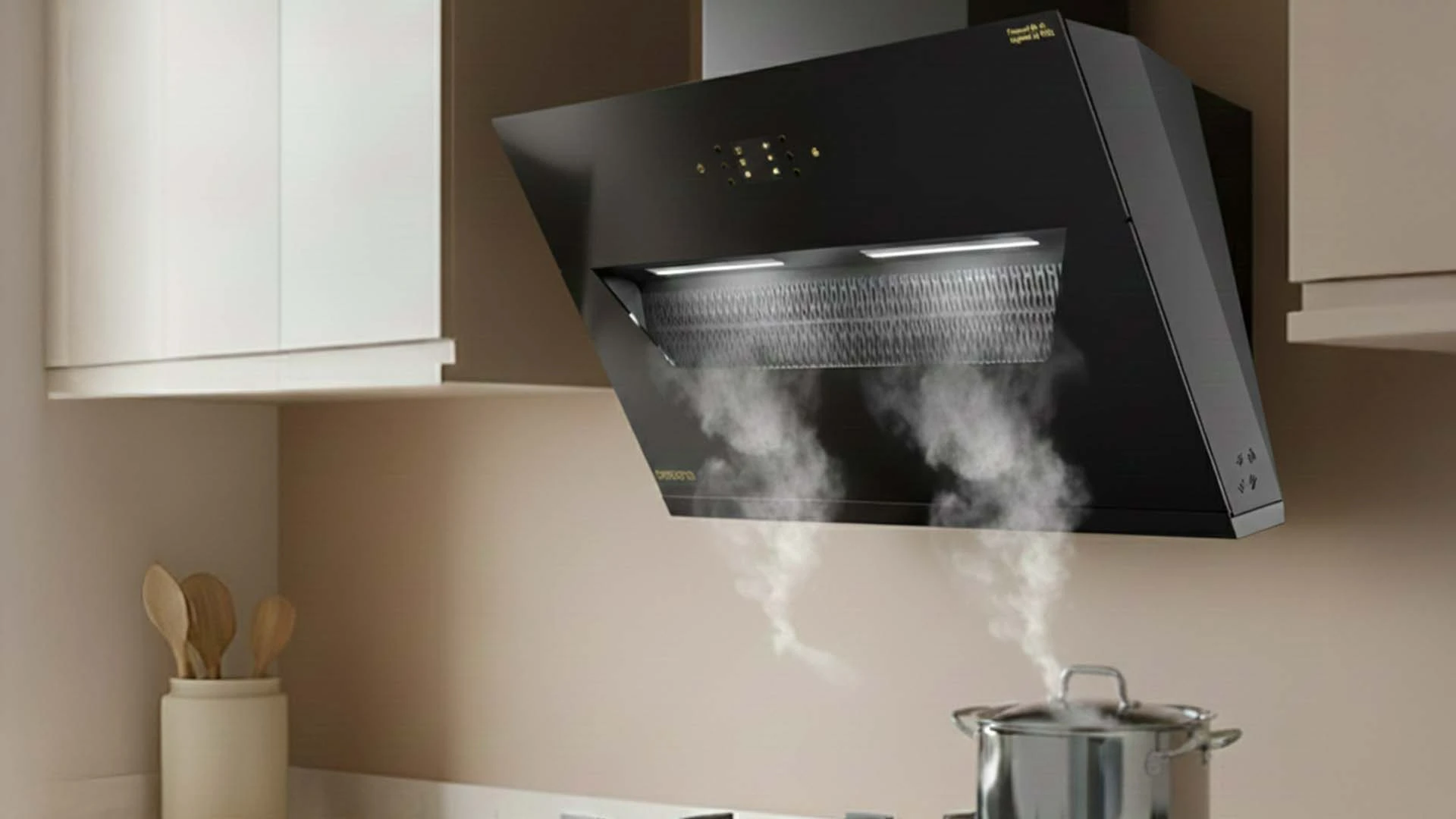
Based on chimney design for kitchen aesthetics, you can choose from wall-mounted, island, built-in, or corner models. T-shaped chimneys offer a classic look, while curved and slant designs provide modern appeal. Android chimneys feature smart controls and connectivity options for tech-savvy homeowners.
Selecting the right chimney involves considering multiple factors including kitchen size, cooking habits, and budget. The suction power requirement depends on your kitchen dimensions and cooking frequency. For small kitchens up to 175 square feet, 400-600 cubic meters per hour suffices. Medium kitchens need 600-800 cubic meters per hour, while large kitchens require 800-1200 cubic meters per hour or more. Filter technology plays a crucial role in chimney performance. Baffle filters are most effective for Indian cooking, handling heavy grease and spices efficiently. Mesh filters are economical but require frequent cleaning. Filterless technology uses centrifugal force to separate grease, reducing maintenance needs. Noise levels matter for comfortable cooking experiences. Look for chimneys operating below 58 decibels. Energy efficiency ratings help reduce electricity bills, especially important for frequently used chimneys. Auto-clean features save time and effort by automatically cleaning internal components.
Modern chimneys offer touch controls, LED lighting, and timer functions. Some models include motion sensors that automatically start the chimney when you begin cooking. Smart connectivity allows remote control through mobile apps, perfect for busy homeowners.
Professional installation ensures optimal performance and safety. Chimney installation cost varies based on chimney type, kitchen layout, and ducting requirements. Basic wall-mounted chimney installation costs between INR 1,500 to INR 3,000. Complex installations requiring extensive ducting can cost INR 5,000 to INR 10,000. Electrical requirements include dedicated power connections and proper grounding. Ducted systems need external venting, which may require wall modifications. Consider ceiling height, cabinet clearances, and proximity to cooking surfaces during planning. Maintenance costs include filter replacements and periodic servicing. Baffle filters need cleaning every 2-3 months, while charcoal filters require replacement every 6-12 months. Regular maintenance ensures optimal performance and extends chimney lifespan.
While some homeowners attempt DIY installation, professional installation is recommended for safety and warranty compliance. Certified technicians ensure proper electrical connections, adequate clearances, and optimal positioning for maximum efficiency.
Proper ventilation significantly impacts indoor air quality and family health. Cooking activities release various pollutants including volatile organic compounds, particulate matter, and combustion gases. Without adequate ventilation, these pollutants accumulate and can cause headaches, respiratory irritation, and long-term health issues. A well-designed kitchen exhaust system removes pollutants at the source, preventing their spread throughout your home. This is particularly important in open-plan homes where kitchen air circulates to living areas. Proper ventilation also controls humidity levels, preventing mold growth and structural damage. Complementary strategies enhance air quality further. Use exhaust fans in conjunction with chimneys for maximum effectiveness. Regular cleaning of filters and ducts maintains optimal performance. Consider air purifiers for additional protection, especially if family members have respiratory sensitivities.
Several reputable brands offer quality kitchen chimneys. Look for companies with strong after-sales service, comprehensive warranties, and proven reliability. Consider factors like suction power, filter technology, noise levels, and energy efficiency when comparing brands.
Chimney size depends on your kitchen dimensions and cooking habits. Measure your kitchen area and choose a chimney with appropriate suction capacity. Small kitchens need 400-600 cubic meters per hour, while larger kitchens require 800-1200 cubic meters per hour or more.
Yes, 1200 cubic meters per hour suction power is excellent for Indian cooking, which produces more smoke and grease than other cuisines. This capacity handles heavy-duty cooking effectively, making it ideal for families who cook frequently.
Installation costs range from INR 1,500 to INR 10,000 depending on complexity. Basic installations cost INR 1,500-3,000, while complex ducting work can cost INR 5,000-10,000. Professional installation ensures safety and optimal performance.
Clean baffle filters every 2-3 months or when grease buildup becomes visible. Replace charcoal filters every 6-12 months depending on usage. Regular cleaning maintains efficiency and prevents odor buildup.
Most kitchens can accommodate chimneys with proper planning. Ducted systems need external venting access, while ductless systems work in any kitchen. Consider ceiling height, electrical connections, and cabinet clearances during planning.
Choosing the best chimney for modular kitchen requires careful consideration of your specific needs, kitchen layout, and budget. Ducted systems offer superior performance, while ductless options provide flexibility for apartments and compact spaces. Focus on adequate suction power, quality filtration, and reliable after-sales service when making your decision. Professional installation and regular maintenance ensure optimal performance and longevity. Remember that a good kitchen chimney is an investment in your family's health and your kitchen's longevity, making it one of the most important appliances in your modular kitchen setup.
