
How to Eliminate Cooking Odors: Simple Tips for Fresh Air
Cart
Your cart is empty
Cooking delicious meals brings joy to any home, but lingering food odors can quickly turn your kitchen into an uncomfortable space. Whether it's the smell of fried fish, spicy curries, or burnt garlic, these odors can spread throughout your house and affect your indoor air quality. Learning effective tips to eliminate cooking odors helps maintain a fresh, welcoming environment for your family and guests. The good news is that you don't need expensive products or complicated systems to achieve clean, odor-free air in your kitchen.
Understanding why cooking odors in house persist helps you tackle them more effectively. When you cook, tiny particles of oil, steam, and food compounds become airborne and settle on surfaces throughout your kitchen. These microscopic particles cling to walls, cabinets, curtains, and even your ceiling, creating a reservoir of smells that can last for hours or even days.
Poor ventilation makes this problem worse by allowing these particles to circulate and settle instead of being removed from your kitchen. The oils from cooking can also create a thin film on surfaces, which traps odors and makes them harder to eliminate. This is why maintaining healthy kitchen air requires both immediate action during cooking and regular cleaning routines.
The best approach to remove cooking smells is prevention. Taking action while you cook prevents odors from spreading throughout your home and makes cleanup much easier later.
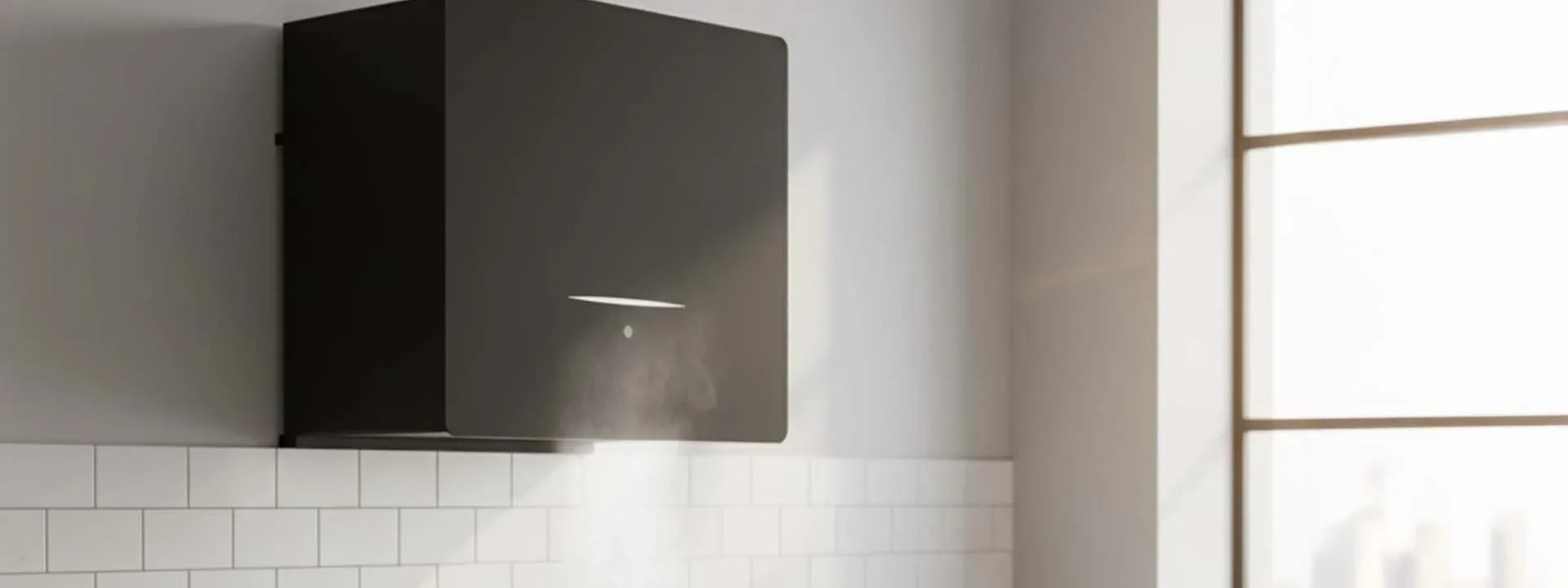
Your kitchen chimney is your first line of defense against cooking odors. Turn on your exhaust fan before you start cooking, not after smells begin to develop. This creates proper airflow that captures odors at their source.
Open windows strategically to create cross-ventilation. Position one window near your cooking area and another on the opposite side of your kitchen or adjacent room. This creates a natural airflow that helps push cooking odors outside instead of letting them settle in your home.
Cover your pots and pans whenever possible to contain steam and cooking vapors. Use splatter screens when frying to reduce the amount of oil particles that become airborne.
Control your cooking temperature to minimize smoke production. High heat often creates more odors and smoke than necessary. Lower temperatures may take slightly longer but produce significantly fewer odors that need elimination later.
When cooking odors have already settled in your kitchen, natural solutions offer safe and effective ways to eliminate kitchen odors naturally. These methods work by neutralizing odor molecules rather than just masking them with artificial fragrances.
Fill a small pot with equal parts water and white vinegar. Bring this mixture to a gentle boil and let it simmer for 10-15 minutes. The vinegar steam neutralizes odor molecules in the air and on surfaces.
This method works particularly well for strong odors like fish or burnt food. The acidic properties of vinegar break down the alkaline compounds that create many cooking smells, making it one of the most effective natural kitchen deodorizer options available.
Place several small bowls of baking soda around your kitchen before going to bed. Baking soda absorbs odors naturally and works continuously while you sleep.
For stubborn smells on surfaces, create a paste with baking soda and water. Apply this paste to cutting boards, countertops, or inside your microwave. Let it sit for 30 minutes before wiping clean with a damp cloth.
Used coffee grounds make excellent odor absorbers. Place dried coffee grounds in small dishes around your kitchen. Replace them every few days for continued effectiveness.
Activated charcoal bags work as powerful best odor absorbers for kitchen spaces. These can be placed in cabinets, near your stove, or anywhere odors tend to linger. They last for months and can be recharged by placing them in direct sunlight.
Small kitchens and apartments present unique challenges for odor control because limited space means less natural ventilation. However, targeted strategies can help you get rid of food odors effectively even in compact spaces.
Use portable air purifiers with activated carbon filters near your cooking area. These devices actively remove odor particles from the air and work especially well in small spaces where natural ventilation is limited.
Close doors to other rooms while cooking to contain odors in your kitchen area. This prevents smells from spreading to bedrooms, living areas, or closets where they can linger in fabrics and upholstery.
Clean up spills and splatters immediately to prevent them from becoming odor sources. In small spaces, even minor spills can create noticeable smells that persist longer than they would in larger, better-ventilated kitchens.
For persistent odors that resist basic cleaning methods, advanced techniques target the root causes and provide long-lasting solutions. These methods require more effort but deliver superior results for maintaining fresh kitchen air.
Clean your exhaust fan and range hood filters monthly to maintain their effectiveness. Grease and food particles accumulate on these surfaces and can actually become sources of odors rather than solutions.
Wash kitchen walls and cabinets with a solution of warm water and mild detergent. Pay special attention to areas near your stove where grease and food particles tend to accumulate. This removes the thin film of cooking residue that traps odors.
Establish a regular cleaning schedule that includes daily wipe-downs of cooking surfaces and weekly deep cleaning of your kitchen. Consistency prevents odor buildup and makes your daily cooking smell removal efforts more effective.
Consider your cooking methods when planning meals. Steaming, boiling, and baking typically produce fewer odors than frying or grilling. When you do use high-odor cooking methods, plan them for times when you can provide maximum ventilation.
Sometimes you need to remove cooking smells quickly, whether unexpected guests are arriving or you simply can't tolerate the lingering odors any longer. These emergency techniques provide rapid results when time is limited.
Boil water with lemon slices and fresh herbs like mint or rosemary. This creates pleasant-smelling steam that helps neutralize cooking odors while adding a fresh scent to your kitchen.
Use a spray bottle filled with water and a few drops of essential oil to mist the air. Eucalyptus, tea tree, or citrus oils work particularly well for neutralizing food odors without creating overwhelming artificial scents.
Set up multiple odor absorption stations before bedtime using bowls of baking soda, activated charcoal, or coffee grounds. Place these strategically around your kitchen and let them work while you sleep.
Leave a bowl of white vinegar on your counter overnight. The vinegar will continue neutralizing odor molecules in the air, and you can simply dispose of it in the morning for a fresh-smelling kitchen.
While natural methods work well for most situations, sometimes professional-grade solutions provide the most effective kitchen odor eliminator results. Modern kitchen equipment can significantly reduce odor problems when used properly.
High-quality kitchen chimneys with powerful suction capabilities remove cooking odors at their source. Look for models with multiple speed settings and efficient filters that can handle different types of cooking. Regular maintenance of these systems ensures optimal performance for odor control.
Air purifiers designed specifically for kitchens combine HEPA filtration with activated carbon to remove both particles and odors. These devices work continuously to maintain clean air and can be particularly valuable in homes where cooking odors are a persistent problem.
Most cooking odors can be significantly reduced within 30 minutes using proper ventilation and natural deodorizers like vinegar steam or baking soda. For very strong odors like burnt food or fish, it may take 2-3 hours of active odor elimination techniques to completely clear the air.
Activated charcoal and baking soda are among the most effective natural odor absorbers. For immediate results, vinegar steam works quickly to neutralize odor molecules in the air. Commercial air purifiers with activated carbon filters provide continuous odor removal.
Commercial air fresheners typically mask odors rather than eliminate them. While they may provide temporary relief, they don't address the source of the problem. Natural deodorizers and proper ventilation provide more effective long-term solutions for maintaining fresh kitchen air.
Close doors to adjacent rooms while cooking, use your kitchen exhaust fan, and ensure proper ventilation. Creating positive air pressure in your kitchen by using exhaust fans helps prevent odors from migrating to other areas of your home.
Steaming, boiling, and baking generally produce fewer odors than frying, grilling, or sautéing at high temperatures. Using lower cooking temperatures and covering pots and pans also helps minimize odor production during meal preparation.
Daily cleaning of cooking surfaces and weekly deep cleaning of your kitchen helps prevent odor buildup. Pay special attention to your range hood, exhaust fan, and areas around your stove where grease and food particles accumulate most quickly.
Effective odor elimination combines immediate action during cooking with regular maintenance and natural deodorizing methods. The key to maintaining fresh kitchen air lies in prevention through proper ventilation, immediate cleanup, and consistent cleaning routines. Natural solutions like vinegar, baking soda, and activated charcoal provide safe, effective alternatives to chemical air fresheners while addressing odors at their source rather than simply masking them.
Remember that the most successful approach to eliminate cooking odors involves multiple strategies working together. Combine proper ventilation with natural deodorizers and regular cleaning for the best results. With these techniques, you can enjoy cooking your favorite meals while maintaining a fresh, welcoming kitchen environment for your family and guests.
