
How to Compare Kitchen Chimney Types Step-by-Step
Cart
Your cart is empty
Choosing the right kitchen chimney can transform your cooking experience. With multiple chimney types available in the Indian market, making an informed decision requires understanding each option's unique features and benefits. This comprehensive guide walks you through a systematic approach to compare chimney types features, helping you select the perfect kitchen ventilation solution for your home. Whether you're renovating your kitchen or building a new one, understanding these differences ensures you invest in the right appliance for years of efficient cooking.
Modern kitchens offer various chimney types designed to meet different cooking needs and space requirements. Each type brings distinct advantages and limitations that directly impact your kitchen's functionality and aesthetics.
Ducted chimneys connect to external venting systems, removing smoke and odors completely from your kitchen. These systems excel in Indian cooking conditions where heavy oil usage and strong spices create substantial smoke. Installation requires proper duct routing to the outside, which may involve structural modifications. Ductless chimneys use advanced filtration systems to clean air before recirculating it back into the kitchen. They offer installation flexibility but require regular filter maintenance for optimal performance.
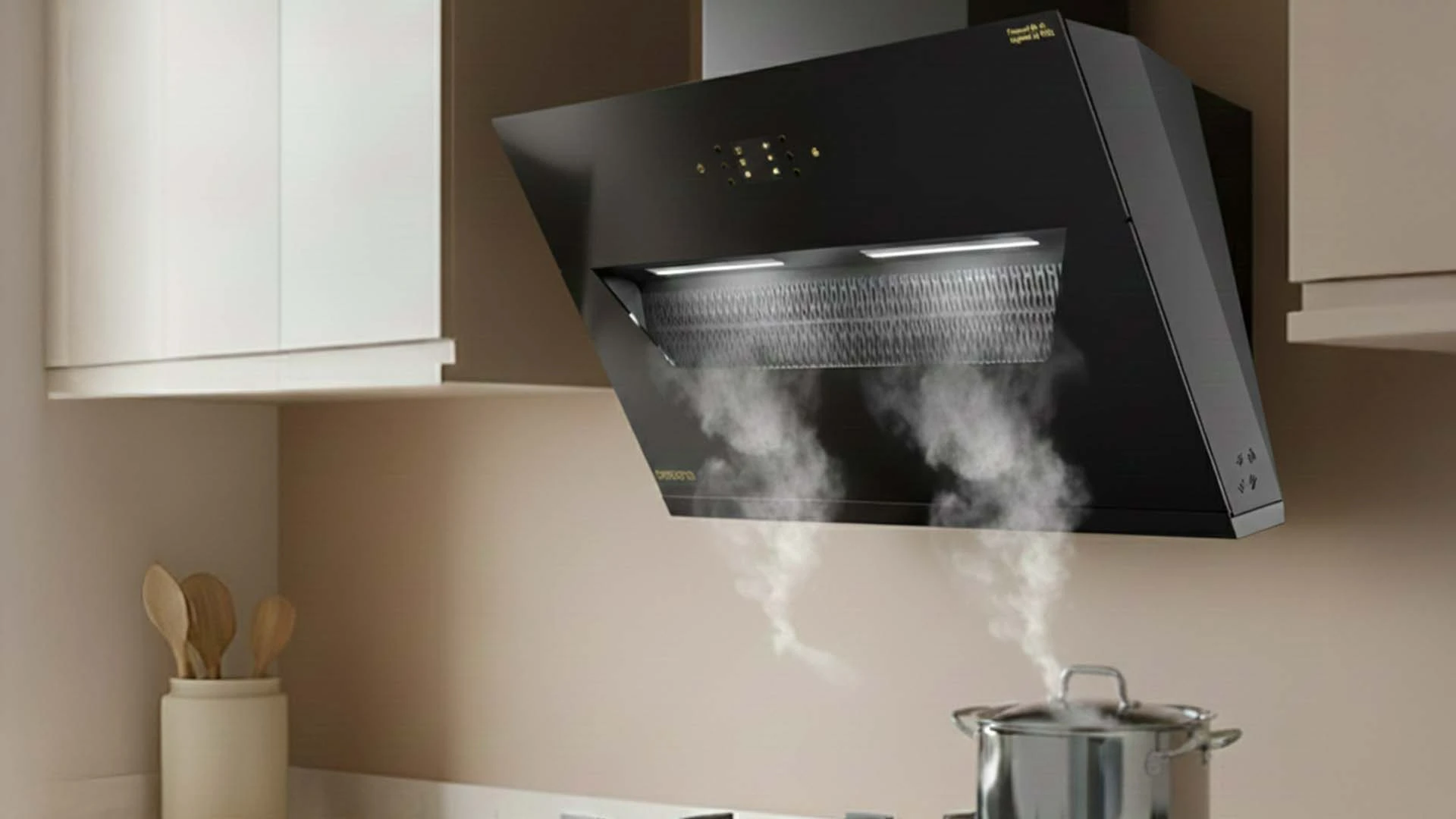
Wall-mounted chimneys attach to kitchen walls above your cooking surface, making them ideal for traditional kitchen layouts. They provide excellent suction power and come in various designs to match your kitchen aesthetics. Island range hood types suspend from the ceiling above kitchen islands, offering 360-degree smoke capture. These units require robust ceiling support and electrical connections but create stunning focal points in open kitchen designs.
Box chimneys feature rectangular designs that blend seamlessly with modern kitchen cabinetry. Their straight lines and clean aesthetics suit contemporary homes perfectly. Pyramid chimneys offer traditional triangular shapes that provide excellent smoke capture due to their funnel-like design. Curved chimneys combine style with functionality, featuring smooth lines that complement both traditional and modern kitchen designs while maintaining efficient ventilation options.
When you compare chimney types features, several technical specifications directly impact performance and long-term satisfaction. Understanding these features helps you make informed decisions based on your specific cooking habits and kitchen requirements.
BLDC (Brushless Direct Current) motors represent the latest advancement in chimney technology. These motors consume 50% less energy than conventional motors while delivering superior performance. They operate quietly, last longer, and require minimal maintenance. Conventional motors, while more affordable initially, consume more electricity and generate higher noise levels. For Indian households with frequent cooking, BLDC motors provide better long-term value despite higher upfront costs.
Baffle filters use curved metal plates to separate grease from air, making them ideal for heavy Indian cooking. They're dishwasher-safe and highly durable. Cassette filters use multiple layers to trap grease but require frequent replacement. Auto-clean technology uses heat to break down grease deposits, significantly reducing maintenance requirements. For Indian kitchens with regular oil-based cooking, baffle filters with auto-clean features offer the best kitchen chimney performance.
CFM (Cubic Feet per Minute) measures your chimney's air movement capacity. Indian kitchens typically require 200-400 CFM for small spaces and 400-800 CFM for larger areas. Higher suction power ensures effective smoke removal but may increase noise levels. Calculate your kitchen's volume and multiply by 10-12 for optimal CFM requirements. Consider your cooking frequency and style when determining ideal suction power.
A systematic approach to kitchen chimney comparison ensures you select the right appliance for your specific needs. This process eliminates guesswork and helps you focus on features that matter most for your cooking style.
Measure your cooking area and identify available installation spaces. Check ceiling height, wall strength, and electrical connections. Determine if external ducting is possible or if you need ductless options. Consider your kitchen's traffic flow and how different chimney types might impact movement. Document these measurements and constraints before exploring specific models.
Analyze your cooking frequency, preferred cooking methods, and typical meal preparation. Heavy oil usage and spice-heavy cooking require more powerful suction and robust filtration. Light cooking with minimal oil can work well with smaller, energy-efficient models. Consider family size and entertaining frequency when evaluating capacity requirements.
Create a comparison matrix listing must-have versus nice-to-have features. Prioritize energy efficiency, noise levels, and maintenance requirements based on your lifestyle. Calculate long-term operational costs including electricity consumption, filter replacements, and service requirements. This analysis helps identify the most cost-effective option for your specific situation.
Understanding the advantages and limitations of different types of range hoods helps you make realistic expectations and choose appropriately for your kitchen setup.
Ducted systems provide superior smoke and odor removal, making them ideal for heavy Indian cooking. They maintain consistent performance without filter saturation issues. However, installation complexity increases costs and may require structural modifications. External ducting needs regular cleaning and may face weather-related blockages. Despite these challenges, ducted chimneys offer the most effective kitchen ventilation for serious cooking enthusiasts.
Ductless systems offer installation flexibility and work well in apartments or homes without external venting options. They require minimal structural changes and can be relocated easily. However, filter replacement costs accumulate over time, and performance may decline with heavy usage. Air recirculation means some odors may linger compared to ducted systems.
Auto-clean technology reduces maintenance time and ensures consistent performance. These systems use heat to break down grease deposits, extending filter life and maintaining suction efficiency. Manual clean chimneys cost less initially but require regular maintenance for optimal performance. For busy households, auto-clean features provide significant convenience despite higher upfront investment.
Indian cooking presents unique challenges that influence chimney buying guide recommendations. Understanding these specific requirements ensures your chosen chimney handles local cooking styles effectively.
Tandoor-style cooking and high-heat preparations generate intense smoke and heat. Chimneys must withstand these conditions while maintaining efficient operation. Look for heat-resistant materials and powerful motors that won't struggle under demanding conditions. Adequate CFM ratings become crucial for managing the substantial smoke production from traditional Indian cooking methods.
Indian spices create complex aromas that require effective filtration systems. Strong-smelling ingredients like asafoetida and fish preparations need robust odor elimination capabilities. Quality filter systems prevent cross-contamination between different dishes prepared in sequence. Consider chimneys with multiple filtration stages for comprehensive aroma management in Indian kitchens.
Your final selection should balance performance requirements with budget constraints and long-term value considerations. This decision impacts your kitchen experience for many years.
Initial purchase prices vary significantly between basic and premium models. Factor in installation costs, which can add INR 2,000-5,000 depending on complexity. Consider operational expenses including electricity consumption and filter replacements. Premium models with energy-efficient motors often provide better long-term value despite higher upfront costs. Calculate total cost of ownership over 5-7 years for accurate comparison.
Choose brands with established service networks in your area. Warranty coverage should include motor, filters, and installation support. Check spare parts availability and typical service response times. Reliable after-sales service becomes crucial for maintaining optimal performance throughout your chimney's lifespan.
Ducted chimneys with baffle filters and BLDC motors offer the best performance for heavy Indian cooking, providing superior smoke removal and energy efficiency while handling oil-heavy preparations effectively.
Main types include ducted/ductless systems, wall-mounted/island configurations, and design variants like box, pyramid, and curved chimneys, each suited for different kitchen layouts and cooking requirements.
Essential features include motor type (BLDC vs conventional), filter system efficiency, suction power (CFM), auto-clean technology, noise levels, and energy consumption for comprehensive performance evaluation.
Choose ducted systems for maximum performance with heavy cooking and external venting capability; select ductless options for easy installation and flexibility when external ducting isn't feasible in your kitchen setup.
Selecting the right chimney requires careful consideration of your kitchen layout, cooking habits, and long-term requirements. Ducted systems with BLDC motors and baffle filters provide optimal performance for Indian cooking conditions. Consider total cost of ownership including energy consumption and maintenance when making your final decision. Invest in quality brands with reliable service support to ensure years of efficient kitchen ventilation. Remember that the best kitchen chimney for your home balances performance, features, and budget while meeting your specific cooking needs.
