
How to Compare Chimney Types for Your Home
Cart
Your cart is empty
Choosing the right chimney for your home involves understanding various types, materials, and features that impact both performance and aesthetics. Modern kitchens demand efficient ventilation systems that can handle everything from light cooking to heavy Indian-style preparations. With multiple chimney types available in the market, making an informed decision requires careful comparison of design features, installation requirements, and long-term maintenance needs.
The foundation of any chimney comparison starts with understanding the basic types available for residential use. Each type serves specific kitchen layouts and cooking styles, making it essential to match your choice with your actual needs. Performance varies significantly between different chimney designs, especially when considering Indian cooking patterns that involve high heat and oil usage.
Ducted chimneys connect to external venting systems, providing superior smoke and odor removal by channeling air outside your home. These systems excel in kitchens with heavy cooking activities, particularly Indian-style preparations involving frequent frying and spice usage. Installation requires proper ducting setup, which may involve structural modifications but delivers unmatched performance for serious cooking enthusiasts.
Ductless chimneys operate through filtration systems, cleaning air before recirculating it back into the kitchen. These units offer easier installation without external venting requirements, making them suitable for apartments or homes where ducting installation proves challenging. However, their effectiveness depends heavily on filter quality and regular maintenance, especially in high-grease cooking environments.
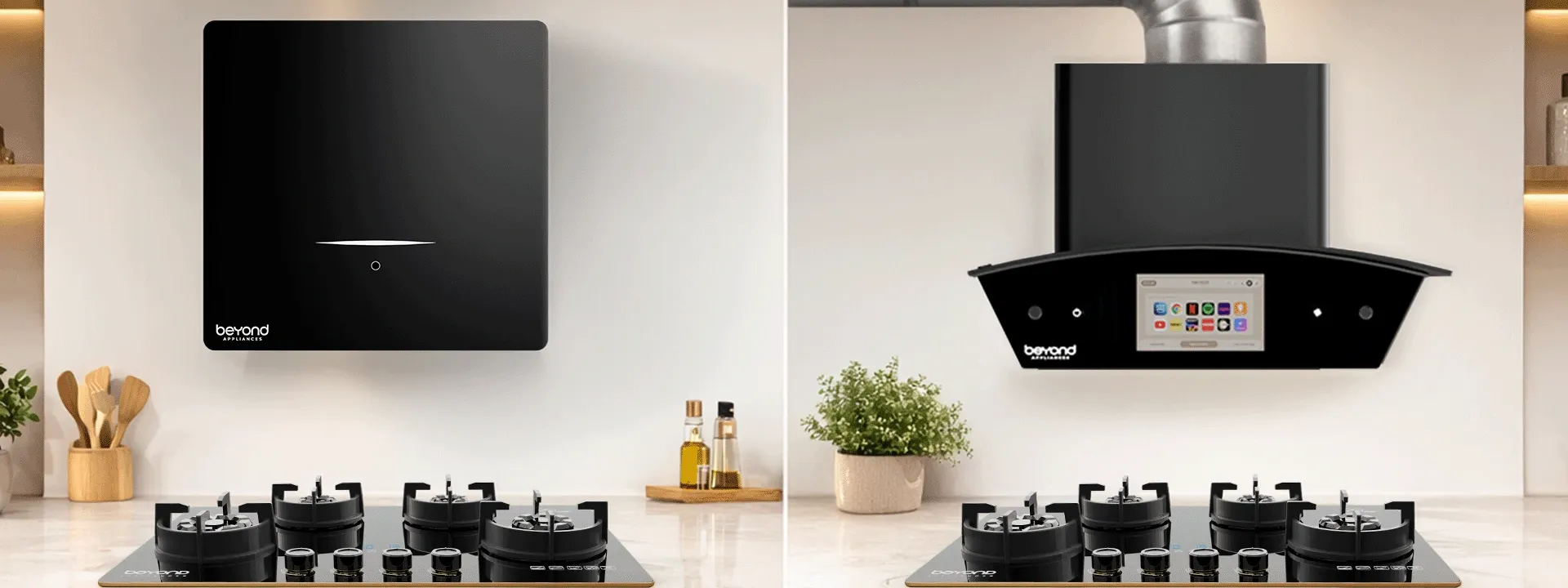
Wall-mounted chimneys attach directly to kitchen walls above cooking surfaces, offering the most common and cost-effective installation option. These designs work well with traditional kitchen layouts where cooking areas align with walls. Modern wall-mounted units come in various styles, from sleek curved designs to traditional T-shaped models, accommodating different aesthetic preferences.
Island chimneys suspend from ceilings above kitchen islands, providing ventilation for open-plan cooking areas. These units require robust mounting systems and often feature more powerful motors to handle the increased air circulation needs. Built-in chimneys integrate seamlessly into kitchen cabinetry, offering a clean, minimalist appearance while maintaining full functionality.
Traditional chimney construction focuses on proven materials and straightforward designs that prioritize functionality over aesthetics. These systems typically use standard stainless steel construction with basic filter systems and conventional motors. While less visually striking, traditional designs often provide reliable performance at lower price points.
Modern chimney construction incorporates advanced materials, smart technology, and innovative design elements. Features like touch controls, auto-clean functions, and energy-efficient motors characterize contemporary units. These chimneys often include premium finishes, LED lighting, and connectivity options that integrate with smart home systems.
Material selection significantly impacts chimney performance, durability, and maintenance requirements. Understanding the properties of different materials helps you choose options that align with your cooking habits and budget constraints. Quality materials ensure long-term performance while reducing maintenance costs and replacement frequency.
Stainless steel construction offers superior corrosion resistance and heat tolerance, making it ideal for heavy cooking environments. This material withstands high temperatures without warping and resists staining from grease and cooking residues. Stainless steel chimneys maintain their appearance longer and typically offer better resale value, though they command higher initial prices.
Aluminum construction provides lightweight alternatives with good heat dissipation properties. These units cost less initially but may show wear more quickly in high-use environments. Aluminum chimneys work well for light to moderate cooking needs but may require more frequent replacement in kitchens with heavy oil cooking or high-temperature preparations.
Baffle filters use curved metal plates to separate grease from air through centrifugal force, making them highly effective for Indian cooking styles. These filters handle high-grease environments well and can be cleaned easily with regular washing. Baffle filters last longer than other types and maintain efficiency even with heavy use, though they require regular cleaning to prevent grease buildup.
Cassette filters use mesh or fabric materials to trap grease and particles, offering good performance for moderate cooking needs. These filters cost less to replace but require more frequent changes, especially in high-use kitchens. Charcoal filters excel in ductless systems by absorbing odors and smoke, though they need regular replacement and cannot be cleaned like metal filters.
BLDC (Brushless Direct Current) motors provide superior energy efficiency and longer lifespan compared to conventional motors. These systems operate more quietly while delivering consistent suction power across different speed settings. BLDC motors also generate less heat and vibration, contributing to overall system durability and user comfort.
Conventional motors use traditional AC technology with brushes that create friction during operation. While these motors cost less initially, they consume more energy and may require more frequent maintenance. Conventional systems often produce more noise and may experience performance degradation over time due to brush wear.
Design features directly influence how effectively a chimney removes smoke, odors, and grease from your kitchen environment. Understanding these features helps you prioritize elements that matter most for your specific cooking style and kitchen layout. Performance-oriented features often justify higher initial costs through improved functionality and user experience.
Small kitchens (up to 100 square feet) typically require chimneys with 400-600 CFM suction power for adequate ventilation. These spaces benefit from efficient air circulation without overwhelming the room with excessive airflow. Proper sizing ensures effective smoke removal without creating uncomfortable drafts or noise levels.
Large kitchens (over 200 square feet) need chimneys with 800+ CFM capacity to handle increased air volume and cooking activity. Open-plan kitchens connected to living areas require even higher capacity to prevent cooking odors from spreading throughout the home. Professional-style cooking setups may need commercial-grade suction power for optimal performance.
Curved chimney designs offer modern aesthetics with improved airflow dynamics through their streamlined shape. These units often include advanced features like touch controls and LED lighting while providing efficient smoke capture. Curved designs typically cost more but deliver enhanced visual appeal and often superior performance in contemporary kitchen settings.
T-shaped chimneys provide proven performance with traditional rectangular designs that maximize capture area. These units offer excellent value for money while delivering reliable ventilation for most cooking needs. T-shaped designs often feature simpler controls and maintenance procedures, making them ideal for users who prioritize functionality over advanced features.
Auto-clean technology uses heat or oil collection systems to reduce manual cleaning requirements. Heat-based auto-clean functions use high temperatures to burn off grease deposits, while oil collectors capture grease in removable containers. These features significantly reduce maintenance time and ensure consistent performance over extended periods.
Smart features include digital displays, timer functions, and smartphone connectivity for remote operation. Advanced models offer cooking mode presets, filter replacement reminders, and energy consumption monitoring. While these features add convenience, they also increase initial costs and may require technical support for troubleshooting.
Installation requirements vary significantly between chimney types, affecting both initial costs and long-term performance. Professional installation ensures proper functioning and safety compliance while protecting warranty coverage. Understanding maintenance needs helps you budget for ongoing costs and plan for optimal performance throughout the chimney's lifespan.
Ducted chimney installation requires external venting setup, including ductwork routing and external wall modifications. Professional installers ensure proper duct sizing, secure mounting, and electrical connections that meet safety standards. Installation costs typically range from INR 2,000 to INR 8,000 depending on complexity and local labor rates.
Ductless chimney installation involves simpler mounting procedures without external venting requirements. These installations focus on secure wall mounting and electrical connections while ensuring proper clearances from cooking surfaces. Professional installation still provides benefits through warranty protection and optimal positioning for maximum effectiveness.
Ducted chimneys require regular duct cleaning to maintain airflow efficiency and prevent grease buildup in external venting systems. Filter cleaning or replacement schedules depend on cooking frequency and style, with heavy Indian cooking requiring monthly attention. Annual professional servicing helps maintain motor performance and identifies potential issues before they become costly repairs.
Ductless chimneys need more frequent filter maintenance since they rely entirely on filtration for air cleaning. Charcoal filters require replacement every 3-6 months depending on usage, while metal filters need regular washing. These units also benefit from periodic motor cleaning and performance checks to ensure optimal air circulation.
Premium chimney brands typically offer comprehensive warranties covering motors, electrical components, and manufacturing defects for 2-5 years. Extended warranty options provide additional protection for major components while ensuring access to genuine spare parts. Service network availability affects repair convenience and costs, making local support an important consideration.
Budget chimney options may offer limited warranty coverage with shorter terms and fewer covered components. While initial costs remain lower, potential repair expenses and parts availability issues could increase long-term ownership costs. Evaluating warranty terms helps determine true value when comparing different chimney types and brands.
Understanding the complete cost picture helps you make informed decisions that balance initial investment with long-term value. Different chimney types present varying cost structures for purchase, installation, and ongoing maintenance. Analyzing these factors ensures you choose options that fit both your immediate budget and future financial planning.
Basic T-shaped chimneys start around INR 8,000-15,000, offering reliable performance for standard cooking needs. Mid-range curved chimneys with auto-clean features range from INR 20,000-40,000, providing enhanced functionality and aesthetics. Premium models with smart features and advanced filtration systems can cost INR 50,000 or more but deliver superior performance and convenience.
Installation costs add INR 2,000-8,000 depending on chimney type and complexity requirements. Ducted installations typically cost more due to additional ductwork and potential structural modifications. Energy-efficient models may qualify for utility rebates or tax incentives, reducing effective purchase prices while providing ongoing savings through lower electricity consumption.
Filter replacement represents the largest ongoing expense for most chimney types. Baffle filters require only cleaning costs (detergent and labor), while cassette filters need replacement every 6-12 months at INR 500-2,000 per set. Charcoal filters for ductless systems cost INR 800-3,000 annually depending on usage and filter quality.
Professional cleaning services range from INR 1,500-4,000 per visit, with frequency depending on cooking habits and chimney type. Motor maintenance and repairs typically cost INR 2,000-8,000 when needed, though quality units may operate for years without major service requirements. Energy costs vary based on motor efficiency and usage patterns, with BLDC motors offering significant savings over conventional systems.
Quality chimneys enhance home value by improving kitchen functionality and aesthetics. Premium installations may recover 60-80% of their cost in increased property value, while basic units provide functional benefits without significant resale impact. Energy-efficient models reduce utility costs over time, with BLDC motors saving INR 1,000-3,000 annually compared to conventional systems.
Durability differences affect replacement timelines and total ownership costs. Premium chimneys often last 10-15 years with proper maintenance, while budget options may require replacement after 5-8 years. Factoring replacement costs into long-term planning helps identify the most cost-effective options for your specific situation and usage patterns.
For Indian kitchens with heavy oil cooking, ducted chimneys with baffle filters and high suction power (800+ CFM) perform best. Auto-clean features are essential for managing grease buildup from frequent frying and spice cooking. T-shaped or curved designs with BLDC motors provide optimal performance for traditional Indian cooking styles.
T-shaped chimneys offer proven performance and cost-effectiveness for traditional cooking needs, while curved chimneys provide modern styling with advanced functionality for contemporary kitchens. Consider your kitchen size, cooking frequency, design preferences, and budget when choosing between these options.
Essential comparison factors include motor type (BLDC vs conventional), filter system efficiency, suction power (CFM), noise levels, auto-clean technology, energy consumption, and warranty coverage. Also consider installation requirements, maintenance needs, and compatibility with your kitchen layout and cooking style.
Ducted chimneys provide superior smoke and odor removal by venting outside, making them ideal for heavy cooking. Ductless chimneys are easier to install but rely on filtration, making them suitable for light to moderate cooking needs. Ducted systems require more complex installation but deliver better long-term performance.
Small kitchens (up to 100 sq ft) need 400-600 CFM, medium kitchens (100-200 sq ft) require 600-800 CFM, and large kitchens (200+ sq ft) need 800+ CFM. Heavy Indian cooking may require 20-30% higher capacity regardless of kitchen size to handle increased smoke and grease production effectively.
Comparing chimney types effectively requires evaluating multiple factors including design, materials, performance features, and long-term costs. Ducted chimneys excel for heavy cooking environments, while ductless options suit lighter cooking needs with easier installation. Material quality, motor type, and filter technology significantly impact both performance and maintenance requirements.
Consider your specific cooking style, kitchen layout, and budget when making comparisons. Premium features like auto-clean technology and BLDC motors provide long-term value through reduced maintenance and energy costs. Professional installation and regular maintenance ensure optimal performance regardless of the chimney type you choose for your home.
