
How a Gas Hob Works: From Ignition to Burner Explained
Cart
Your cart is empty
Gas hobs have become the heart of modern Indian kitchens, offering precise heat control and instant cooking power. Understanding how your gas hob works helps you cook better, maintain it properly, and use it safely. From the moment you turn the knob to when flames dance beneath your pan, a fascinating process unfolds that combines engineering precision with everyday convenience.
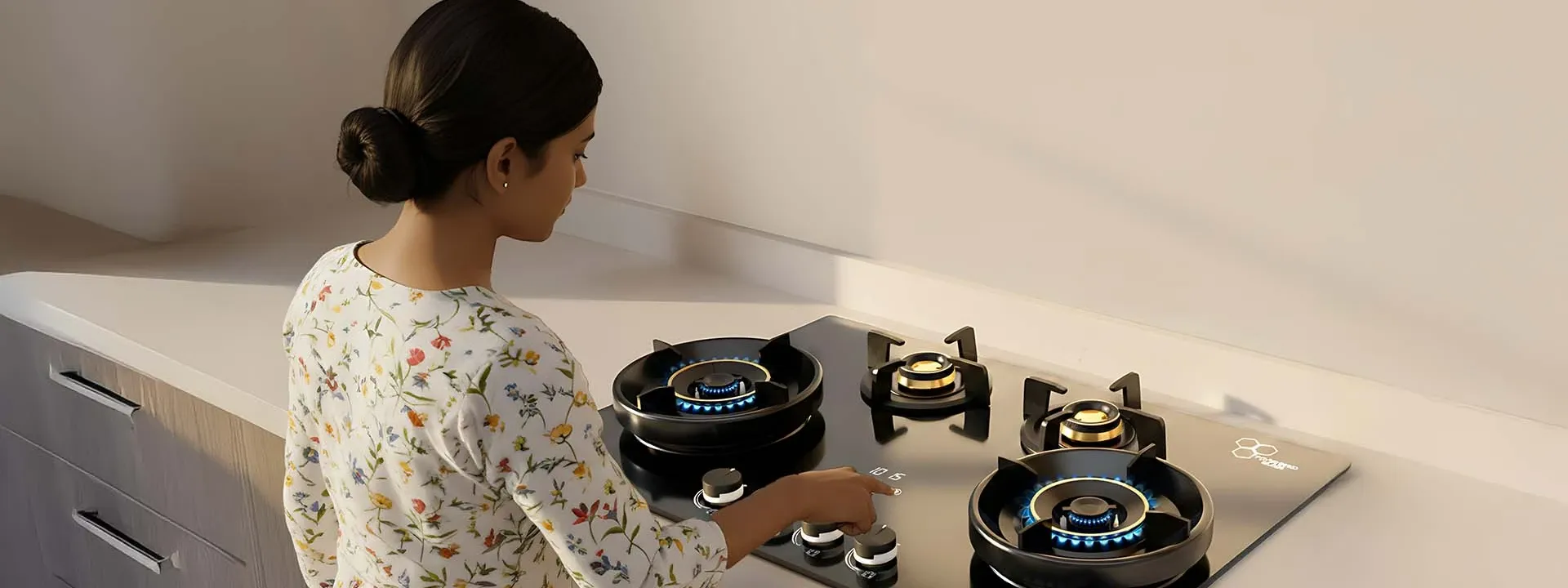
A gas hob is a cooking appliance that burns natural gas or LPG to create controlled flames for cooking. Unlike traditional gas stoves, hobs are designed to be built into kitchen countertops, creating a sleek and modern cooking surface. The basic principle involves gas flowing through valves, mixing with air, and igniting to produce a clean blue flame.
The process starts when you turn the control knob, which opens a gas valve. Gas flows through internal pipes to the burner head where it mixes with air in precise ratios. This mixture creates the perfect combustion environment for efficient cooking. The ignition system then sparks to light the gas, creating the flame that heats your cookware.
Every gas hob contains several key components that work together to deliver safe and efficient cooking. Understanding these parts helps you appreciate the engineering behind your appliance and makes maintenance easier. Each component plays a crucial role in the overall functionality of your gas hob.
The burner assembly sits at the heart of each cooking zone. It consists of a burner head with precisely drilled holes that distribute gas evenly around the circumference. These holes, called gas jets, control the flame pattern and intensity. The burner cap sits on top, directing flames upward toward your cookware for maximum heat transfer efficiency.
Modern gas hobs use either piezo ignition or electric ignition systems. Piezo systems generate sparks mechanically when you press the control knob, requiring no electricity. Electric ignition systems use a small electric spark to light the gas, often activated automatically when you turn the gas valve. Both systems provide reliable ignition for safe cooking.
Control knobs regulate gas flow to each burner through precision-engineered valves. These valves control both the on/off function and flame intensity. Quality gas hobs feature smooth-turning knobs with clear markings for different heat levels, allowing precise temperature control for various cooking techniques.
Cast iron or steel pan supports provide stable platforms for cookware while allowing proper air circulation around flames. Modern gas hobs include safety features like flame failure devices that automatically shut off gas if flames are accidentally extinguished. These features prevent gas accumulation and potential hazards.
The ignition process in a gas hob involves several coordinated steps that happen within seconds. Understanding this process helps you troubleshoot issues and use your hob more effectively. Each step must work perfectly for safe and reliable operation.
When you turn the control knob, it opens a spring-loaded valve that allows gas to flow from the main supply line. The valve position determines how much gas flows, controlling flame size and heat output. A properly functioning valve provides smooth control from minimum to maximum flame settings.
The ignition system creates a spark near the burner head as gas begins flowing. This spark ignites the gas-air mixture, creating the initial flame. The flame then spreads around the burner ring, establishing a stable cooking flame. Quality ignition systems provide reliable sparks even after thousands of uses.
Once lit, you can adjust flame intensity by turning the control knob to different positions. This changes the gas flow rate, making flames larger or smaller as needed. Proper flame adjustment ensures efficient cooking and prevents wasted energy or uneven heating.
Advanced gas hobs include thermocouple safety devices that monitor flame presence. If flames are accidentally blown out, these devices detect the temperature drop and automatically shut off gas flow. This prevents dangerous gas accumulation in your kitchen.
Different types of gas hobs suit various kitchen designs and cooking needs. Each type offers unique advantages in terms of installation, maintenance, and cooking performance. Choosing the right type depends on your kitchen layout, cooking habits, and budget considerations.
Built-in gas hobs integrate seamlessly into kitchen countertops, creating a clean, modern appearance. They require professional installation and proper ventilation but offer superior aesthetics and space efficiency. Freestanding units are more portable and easier to install but may not match modern kitchen designs as well.
Glass top gas hobs provide elegant aesthetics and easy cleaning but require more careful handling. Steel gas hobs offer durability and traditional styling with excellent heat resistance. Both materials can provide years of reliable service when properly maintained and used according to manufacturer guidelines.
Gas hobs come in various burner configurations from two to six burners. Four-burner models are most popular for family kitchens, offering different burner sizes for various cooking needs. Larger configurations suit serious home cooks who prepare multiple dishes simultaneously.
Safety should always be your top priority when using gas appliances. Proper safety practices protect your family and property while ensuring years of trouble-free cooking. Understanding potential hazards and prevention methods keeps your kitchen safe and functional.
Incomplete combustion can produce carbon monoxide, a dangerous colorless gas. Ensure proper ventilation by using exhaust fans or opening windows during cooking. Blue flames indicate complete combustion, while yellow or orange flames suggest adjustment needs or maintenance requirements.
Adequate ventilation removes combustion byproducts and cooking odors from your kitchen. Install a quality chimney or exhaust system that matches your hob's capacity. Proper ventilation also prevents moisture buildup that can damage kitchen surfaces and appliances.
Keep children away from operating gas hobs and consider safety knobs that prevent accidental gas release. Never leave cooking unattended, especially when children are present. Teach older children about gas safety and proper emergency procedures.
Learn to recognize gas leak signs including unusual odors, hissing sounds, or dead vegetation near gas lines. If you suspect a leak, turn off gas supply immediately, avoid electrical switches, and contact professionals. Regular maintenance helps prevent leaks and ensures safe operation.
Regular maintenance keeps your gas hob operating efficiently and safely while extending its lifespan. Proper cleaning prevents grease buildup that can affect performance and create fire hazards. Following manufacturer maintenance guidelines ensures warranty coverage and optimal performance.
Clean spills immediately to prevent staining and buildup. Use mild detergent and soft cloths to clean surfaces without scratching. Remove and wash burner caps and pan supports regularly to maintain proper gas flow and prevent blockages.
Monthly deep cleaning involves removing all removable parts for thorough washing. Clean gas jets carefully with small brushes or toothpicks to remove food particles. Ensure all parts are completely dry before reassembling to prevent corrosion.
Common problems include uneven flames, ignition failures, or gas odors. Check for blocked jets, loose connections, or worn ignition components. Many issues can be resolved with proper cleaning, but complex problems require professional service.
Contact qualified technicians for gas line issues, major component failures, or safety concerns. Annual professional inspections ensure safe operation and may be required for warranty coverage. Never attempt major repairs yourself as improper work can create serious safety hazards.
Proper installation is crucial for safe and efficient gas hob operation. Professional installation ensures compliance with safety codes and manufacturer requirements. Understanding installation requirements helps you prepare your kitchen and choose appropriate models.
Licensed technicians should handle all gas connections and safety testing. Professional installation includes proper ventilation setup, gas line sizing, and safety device testing. Many manufacturers require professional installation to maintain warranty coverage.
Built-in installations require precise cutouts and proper support structures. Consider countertop material compatibility and heat resistance requirements. Professional installers ensure proper clearances and ventilation for safe operation.
Gas connections must meet local building codes and safety standards. Proper connections prevent leaks and ensure adequate gas pressure for optimal performance. Professional installers test all connections and provide safety certifications.
Professional installation costs are worthwhile investments in safety and performance. Quality installation prevents future problems and ensures warranty coverage. Consider long-term benefits including energy efficiency, safety, and appliance longevity when evaluating installation costs.
A gas hob works by controlling gas flow through valves to burner heads where gas mixes with air and ignites to create cooking flames. Control knobs regulate gas flow for different heat levels, while ignition systems provide sparks to light the gas safely.
Yes, poor ventilation can cause carbon monoxide buildup leading to dizziness or headaches. Ensure proper ventilation, maintain blue flames, and never use gas hobs for heating rooms. Install carbon monoxide detectors for added safety.
Built-in gas hobs require professional installation, precise countertop cutting, and can be more expensive to repair. They are less portable than freestanding units and may require kitchen renovation for proper installation.
Gas hobs offer instant heat control, work with all cookware, and continue operating during power outages. Induction hobs are more energy-efficient and safer but require compatible cookware and electricity. Choice depends on cooking preferences and kitchen setup.
Gas stoves are freestanding units with built-in ovens, while gas hobs are cooktop-only appliances designed for countertop installation. Hobs offer more design flexibility and modern aesthetics but require separate oven units for baking.
Check for blocked gas jets, clean ignition electrodes, ensure proper gas supply, and verify control knob positions. If problems persist after cleaning, contact professional service as internal components may need replacement or adjustment.
Understanding how your gas hob works empowers you to use it safely and efficiently while maintaining optimal performance. Regular maintenance, proper ventilation, and professional installation ensure years of reliable cooking service. Remember that safety always comes first when working with gas appliances.
Quality gas hobs combine precision engineering with user-friendly operation to deliver exceptional cooking experiences. Whether you choose built-in or freestanding models, proper understanding and maintenance will maximize your investment while keeping your family safe.
