Gas Hob vs. Induction for Modular Kitchens: Which Is Right for You?
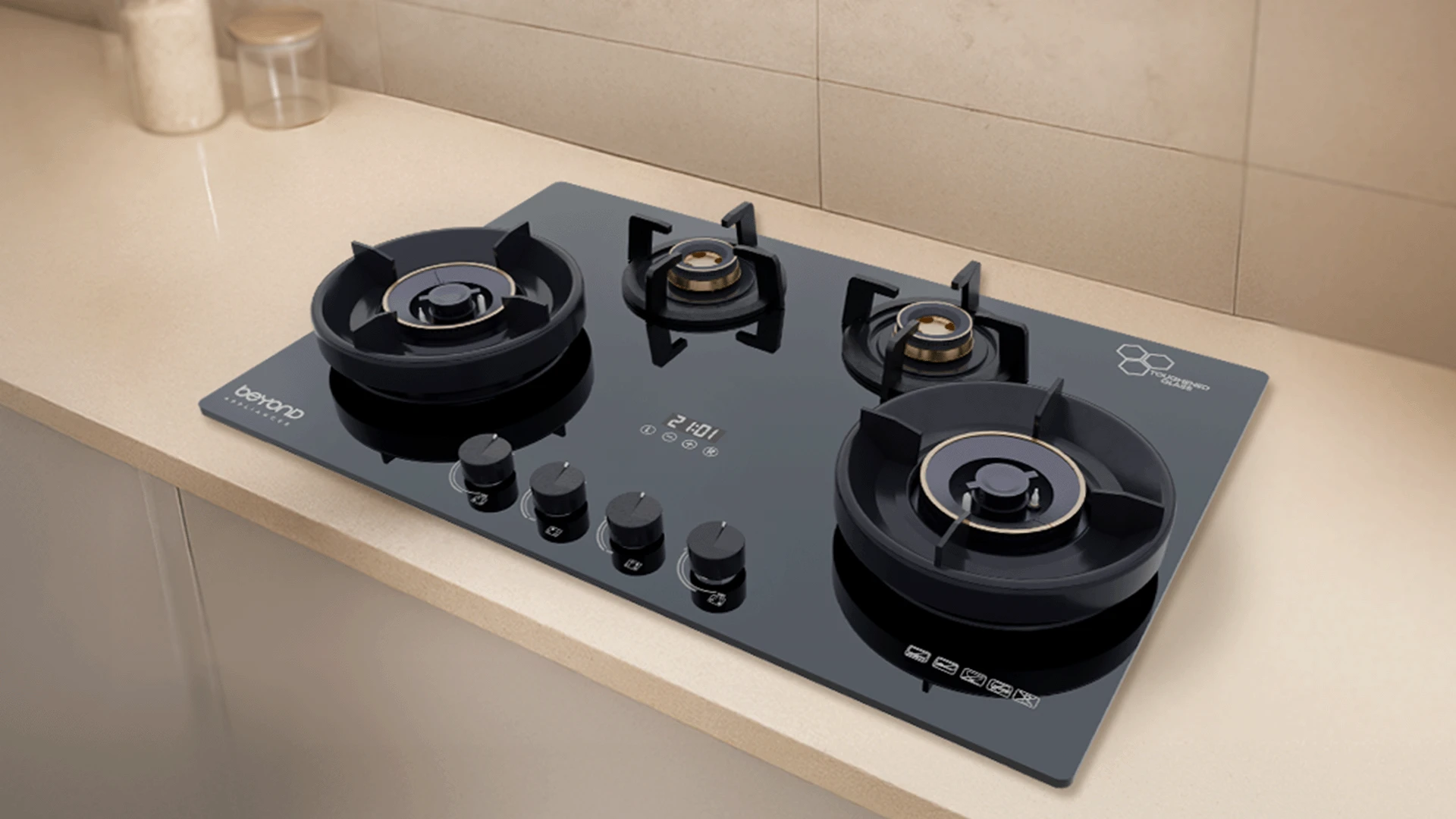
A gas hob for modular kitchens and an induction cooktop solve different cooking needs. A built-in gas hob gives instant visible heat and works with familiar Indian cookware. Induction uses electromagnetic heating and needs compatible, flat-base vessels. Your choice affects the counter plan, power points, ventilation, safety steps, and daily cooking flow. For homes that cook with kadais, pressure cookers, and large pans, gas often fits established habits. Safety-led models, such as Beyond Appliances Dorado and Altair hobs, add features like Flame Failure Devices and timers to traditional gas cooking.
Choose gas for familiar cookware, instant flame control, and built-in modular kitchen integration.
Choose induction when compatible cookware and an electrical setup suit your cooking routine.
For gas, prioritise an FFD, auto ignition, correct cutout size, and ventilation.
A gas hob is a cooktop that sits within a countertop cutout. Its burners remain above the counter, while parts of the unit sit below it. This creates a clean work surface and supports planned kitchen zones.
A freestanding gas stove sits on the counter as a separate appliance. A modular kitchen cooktop is usually selected during cabinet and counter planning.
A built-in hob can align with the counter and nearby drawers. It needs a precise cutout and space below for fitting. A tabletop cooktop avoids a counter cutout, but it uses visible counter space. Beyond Appliances Auriga is a tabletop gas cooktop option with a digital timer, FFD, and auto ignition.
A three-burner hob can suit smaller counters and lighter meal preparation. A four-burner hob supports more pans at once, but needs a wider planned space. Confirm the appliance dimensions and required cutout with the kitchen installer before the countertop is cut.
Induction cooktops use electromagnetic heating to heat compatible cookware. The cooking surface itself is not the heat source in the same way as a gas flame. They need an electrical connection and cookware with a suitable flat base.
For a modular layout, plan the power point, cable route, and clear counter space. Check that everyday vessels work before making induction the only cooking surface.
The induction vs gas hob decision depends on cooking methods and installation limits. Gas offers a visible flame and broad vessel compatibility. Induction depends on compatible cookware and electricity.
Heat control: Gas changes instantly through the knob. Induction uses controlled power settings.
Cookware: Gas accepts most kadais, pans, and pressure cookers. Induction needs suitable flat-base vessels.
Installation: Gas needs a gas connection and ventilation planning. Induction needs an appropriate power point.
Efficiency and costs: Compare current LPG and electricity tariffs in your area before deciding.
Gas heat is visible and direct. This can suit tasks that need flame adjustment during cooking. Induction can provide controlled heating, but the result depends on the vessel and selected setting. Consider the dishes your household prepares most often.
Gas is flexible with varied vessel shapes and materials. This matters when a kitchen uses round-bottomed kadais or older pressure cookers. Induction requires cookware designed to work with its heating method. Test or check each vessel before relying on it.
Kitchen safety features should guide a gas hob purchase. Controls, stable pan supports, and a reliable gas connection all matter. A flame failure device hob adds a direct response if a flame goes out.
Keep burner ports clean and ensure professional installation. Follow the supplied care instructions for glass and burner parts.
An FFD cuts the gas supply when the flame is accidentally extinguished. It is a practical safety feature for a gas hob for modular kitchens. Beyond Appliances Dorado, Altair, Solaria, and Auriga models include FFD.
An auto ignition hob lights the burner without a separate lighter. A timer can also help manage cooking duration. The Dorado has auto ignition and a Smart Timer. The Altair has an FFD, Smart Timer, jumbo burner, and battery ignition.
A smart gas hob should solve a clear cooking need. Timers can support planned cooking time, while safety systems respond to flame loss. These features do not remove the need for supervision around active cooking.
Connected kitchen appliances can also support the wider kitchen setup. For example, a chimney with a smart screen may place useful functions near the cooking zone. Match features to daily use rather than choosing them only for appearance.
Choose the hob before finalising the counter cutout. Check the manufacturer’s dimensions, burner spacing, and clearance needs. Glass and stainless-steel finishes can suit different modern kitchen design plans, but both need appropriate care.
Pair the hob with a chimney based on cooktop width and cooking load. Beyond Appliances Orion offers 1600 CMH 3D suction, filterless technology, and auto clean. It is available in a 90 cm size. Ensure the chimney size suits the planned hob area.
Prices vary by burner count, glass thickness, burner material, safety features, and installation needs. Current prices should be checked with verified sellers, as no fixed price range fits every gas cooktop India purchase. Also include the cost of counter work, gas fitting, wiring, cookware changes, and chimney installation.
During Big Billion Days and the Great Indian Festival, shortlist specifications first. Exchange offers, warranty add-ons, and bank-linked reductions can change the effective price.
There is no single best gas hob for every home. Use your cooking style and kitchen plan as the deciding factors.
Choose gas if you use varied Indian cookware and want direct flame control.
Choose induction if you have compatible vessels and prefer an electric cooking surface.
Choose a three-burner layout for limited counter space and fewer simultaneous dishes.
Choose four burners for frequent multi-pan cooking and a suitably wide counter.
Choose FFD and timed controls when safety and cooking management are key needs.
Yes. A built-in gas hob is designed for countertop integration. Confirm the cutout size, gas connection, ventilation plan, and cabinet clearances before installation.
Yes. An FFD cuts off gas if the flame goes out. Beyond Appliances Dorado, Altair, Solaria, and Auriga models include this feature.
Yes. Match chimney width and suction needs to the hob and cooking habits. The Beyond Appliances Orion is a 90 cm chimney with 1600 CMH 3D suction.
Gas hobs suit households that value familiar cookware and direct flame control. Induction can suit kitchens built around compatible vessels and electrical cooking. For either choice, plan the counter, power or gas connection, ventilation, and safety features before installation. A well-matched hob and chimney setup supports a more organised cooking space.