
Filterless vs Baffle: Ultimate Chimney Durability Guide
Cart
Your cart is empty
Choosing the right kitchen chimney is crucial for maintaining a clean, comfortable cooking environment. When it comes to long-term performance, the debate between filterless chimney vs baffle filter chimney durability often leaves homeowners confused. Both systems offer distinct advantages, but their durability profiles differ significantly. Understanding these differences helps you make an informed decision that aligns with your cooking habits, maintenance preferences, and budget considerations. This comprehensive guide examines both chimney types through the lens of durability, performance degradation, and long-term value.
The fundamental difference between these kitchen chimney types lies in their filtration approach and internal mechanisms. Each system handles smoke extraction and oil collection differently, which directly impacts their durability and maintenance requirements.
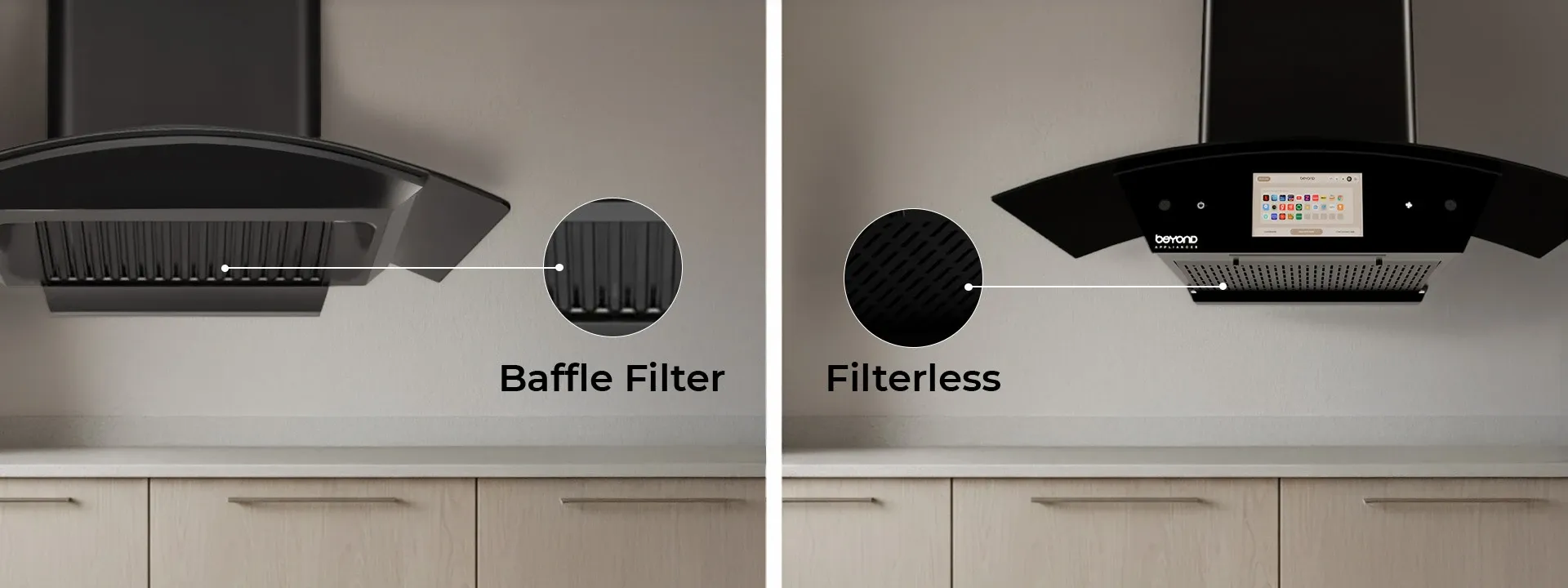
A filterless chimney operates without traditional filters, using powerful suction to draw smoke and grease directly through the ductwork. The motor creates strong airflow that pulls cooking fumes outside through external venting. This direct suction method eliminates filter-related maintenance but places greater demands on the motor and ductwork system.
The baffle filter chimney uses specially designed metal filters with curved panels that create turbulence in the airflow. This turbulence separates grease particles from smoke, allowing clean air to pass through while trapping oil and debris. The filtered air then moves through the motor and ductwork, providing additional protection to internal components.
Filterless systems feature simpler internal structures with fewer components that can fail over time. However, they require more robust motors to maintain effective suction. Baffle systems have more complex filtration mechanisms but distribute workload more evenly across components, potentially extending overall system life.
The durability of filterless chimneys depends heavily on motor quality and ductwork maintenance. These systems typically show excellent initial performance but face specific challenges over time.
Filterless chimney motors work harder than their baffle counterparts because they handle unfiltered air containing grease particles. High-quality motors in filterless systems typically last 8-12 years with proper maintenance. The absence of filters means motors face direct exposure to cooking fumes, which can accelerate wear in heavy-use kitchens.
Filterless systems excel in heat resistance because they lack filter components that might warp or degrade under high temperatures. The direct airflow path also prevents heat buildup that could damage internal components. This makes them particularly suitable for kitchens with frequent high-heat cooking.
The primary vulnerability in filterless systems lies in ductwork contamination and motor strain. Grease accumulation in ducts can reduce efficiency and create fire hazards. Motor bearings may wear faster due to unfiltered air exposure, leading to increased noise and reduced suction power over time.
Baffle filter systems demonstrate superior long-term durability in most residential applications. The filtration mechanism protects internal components while maintaining consistent performance over extended periods.
Stainless steel baffle filters typically last 10-15 years with proper cleaning and maintenance. These filters resist corrosion and maintain their structural integrity even under heavy grease exposure. Aluminum filters, while more affordable, may show signs of wear after 5-8 years in high-use environments.
The baffle filter chimney design significantly extends motor life by filtering out grease and debris before they reach internal components. Motors in well-maintained baffle systems often operate efficiently for 12-15 years, showing minimal performance degradation when filters are cleaned regularly.
Baffle systems maintain consistent smoke extraction efficiency even during intensive cooking sessions. The filter design prevents grease buildup in ductwork, maintaining optimal airflow and reducing the risk of performance degradation over time.
Proper chimney maintenance directly correlates with system durability and performance longevity. Both chimney types require different maintenance approaches that significantly impact their operational lifespan.
Filterless systems require monthly duct cleaning to prevent grease accumulation that can reduce suction efficiency and create safety hazards. Professional duct cleaning typically costs INR 2,000-4,000 per session. Motor servicing should occur every 6-8 months to maintain optimal performance and prevent premature failure.
Baffle filters need cleaning every 2-3 weeks, depending on cooking frequency and food types. This maintenance can be performed at home using warm soapy water or dishwasher cleaning. Filter replacement occurs every 3-5 years, costing INR 1,500-3,000 depending on filter quality and size.
Over a 10-year period, filterless systems typically incur higher maintenance costs due to frequent professional duct cleaning requirements. Baffle systems show lower overall maintenance expenses despite filter replacement needs, making them more cost-effective for long-term ownership.
Understanding how each system's performance changes over time helps predict long-term satisfaction and replacement timing. Both filterless vs baffle systems show distinct degradation patterns.
Filterless chimneys typically maintain 85-90% of original suction power after 5 years with proper maintenance. However, neglected ductwork can reduce efficiency to 60-70%. Baffle systems consistently maintain 90-95% efficiency over the same period when filters are cleaned regularly.
Both systems experience gradual noise increases over time. Filterless chimneys may develop motor noise earlier due to unfiltered air exposure. Baffle systems typically maintain quieter operation longer, with noise increases primarily occurring when filters become heavily soiled.
Filterless systems may show increased energy consumption as motors work harder to maintain suction through contaminated ductwork. Baffle systems demonstrate more stable energy usage patterns when properly maintained, contributing to lower long-term operating costs.
Selecting between filterless chimney vs baffle filter chimney durability depends on your specific cooking patterns, maintenance capabilities, and long-term expectations.
For families who cook frequently with oil-heavy preparations, baffle filter systems offer superior long-term durability. The filtration mechanism prevents rapid motor degradation and maintains consistent performance even under demanding conditions.
Large kitchens with multiple cooking stations benefit from filterless systems' powerful direct suction. However, smaller kitchens with moderate cooking activity achieve better durability outcomes with baffle filter systems due to lower maintenance demands.
Humid climates may accelerate corrosion in filterless ductwork, making baffle systems more durable choices. Areas with high dust levels also favor baffle systems, as filters protect internal components from environmental contamination.
Baffle filter chimneys typically demonstrate superior longevity in Indian kitchens due to heavy oil usage and frequent cooking. The filtration system protects motors from grease damage, extending overall system life to 12-15 years compared to 8-12 years for filterless systems.
High-heat cooking methods like tandoori or wok cooking favor filterless systems for immediate performance but may reduce long-term durability. Oil-heavy cooking styles benefit from baffle filtration, which prevents grease accumulation that can damage internal components.
Key indicators include reduced suction power below 70% of original capacity, persistent odors despite cleaning, unusual noise levels, visible motor damage, or repair costs exceeding 50% of replacement value.
Upgrading between systems typically requires complete unit replacement due to different motor specifications and ductwork requirements. However, some modular designs allow component upgrades with professional installation.
Filterless systems need professional duct cleaning every 2-3 months for heavy users, while baffle systems require professional servicing annually. Regular DIY maintenance significantly extends intervals between professional services.
The choice between filterless and baffle filter chimneys ultimately depends on balancing immediate performance needs with long-term durability expectations. Baffle filter systems generally offer superior durability, lower maintenance costs, and more consistent performance over time. They prove particularly valuable for households with heavy cooking routines and those seeking minimal maintenance requirements. Filterless systems excel in high-heat cooking environments and provide powerful immediate suction but require more intensive maintenance to achieve comparable longevity. Consider your cooking habits, maintenance capabilities, and budget for both initial purchase and ongoing care when making this important kitchen investment decision.
