
Essential Checklist: Choosing Range Hood Filters
Cart
Your cart is empty
Choosing the right range hood filter can make or break your kitchen's air quality and cooking experience. With grease, smoke, and odors constantly circulating during meal preparation, your kitchen exhaust filter serves as the first line of defense against unwanted particles. The two most popular options—baffle filter vs mesh filter—offer distinct advantages and limitations that directly impact your daily cooking routine. Understanding these differences helps you make an informed decision that aligns with your cooking habits, maintenance preferences, and budget considerations. Whether you're installing a new chimney or upgrading your existing system, selecting the appropriate grease filter ensures optimal performance and long-term satisfaction.
Range hood filters serve as the critical component that separates grease particles and contaminants from the air before it recirculates or exits your kitchen. These filters directly impact indoor air quality, cooking comfort, and the overall efficiency of your ventilation system. The wrong filter choice can lead to poor grease capture, frequent maintenance headaches, and higher long-term costs.
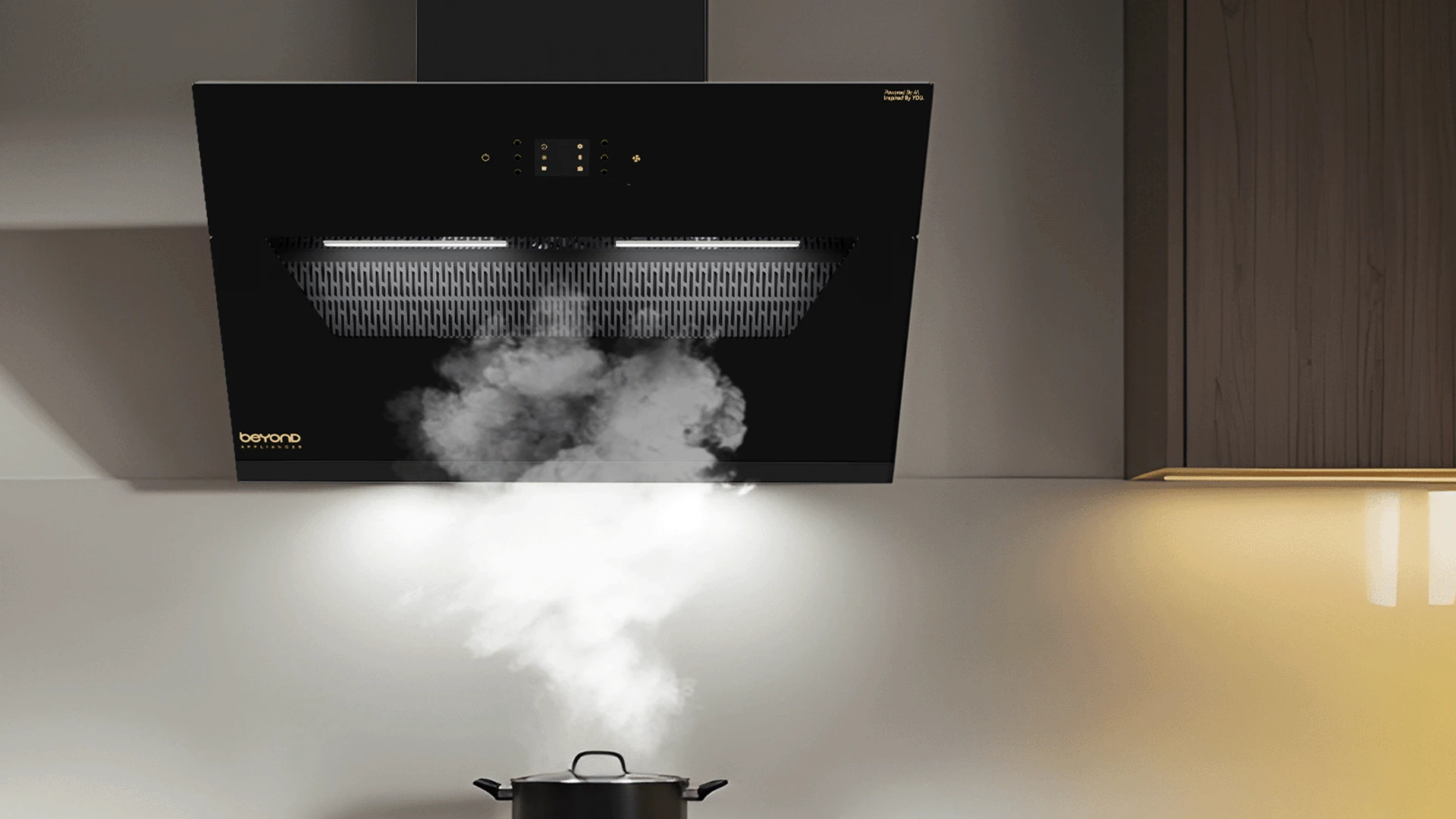
A kitchen exhaust filter captures grease droplets, smoke particles, and cooking odors before they spread throughout your home. Without proper filtration, these contaminants accumulate on kitchen surfaces, create unpleasant odors, and can even pose health risks over time. Quality filters also protect your range hood's internal components from grease buildup, extending the appliance's lifespan and maintaining optimal performance.
The fundamental difference between these filter types lies in their construction and filtration approach. Baffle filters use a series of angled metal plates that create turbulent airflow patterns, while mesh filters employ layered screens to trap particles. Material composition varies significantly—baffle filters typically feature stainless steel construction, whereas mesh filters commonly use aluminum materials. Each design offers unique performance characteristics that suit different cooking environments and user preferences.
Baffle filters represent the premium standard in range hood filtration, commonly found in professional kitchens and high-end residential applications. Their sophisticated design delivers superior grease capture efficiency through an engineered airflow system that maximizes particle separation. Understanding how baffle filters operate helps explain their effectiveness and long-term value proposition.
The baffle filter design creates multiple directional changes in airflow through strategically positioned metal plates. As grease-laden air passes through these baffles, centrifugal force separates heavier particles from the airstream. The captured grease then drains into collection channels, preventing re-entrainment into the filtered air. This multi-stage separation process achieves exceptional filtration efficiency without significantly restricting airflow.
Superior grease capture efficiency stands as the primary benefit of baffle filters, typically achieving 85-95% particle separation rates. The stainless steel construction provides excellent durability and corrosion resistance, ensuring years of reliable performance. Dishwasher-safe cleaning makes maintenance convenient—simply remove the filter and run it through a normal wash cycle. Professional kitchens prefer baffle filters because they maintain consistent performance under heavy-use conditions while requiring minimal replacement over their operational lifetime.
Higher upfront costs represent the main drawback of baffle filters, often costing 2-3 times more than comparable mesh alternatives. The robust stainless steel construction results in heavier units that may require additional mounting support. Compatibility can be limited since baffle filters require specific dimensional requirements and proper CFM ratings to function effectively.
Mesh filters offer an accessible entry point into effective range hood filtration, providing adequate performance for moderate cooking applications. Their layered construction and aluminum materials deliver reasonable grease capture while maintaining affordability and ease of installation. Many homeowners choose mesh filters for their practicality and wide compatibility across different range hood models.
Layered filtration forms the core of mesh filter operation, using multiple screens with varying mesh densities to trap particles of different sizes. The aluminum filter construction provides lightweight durability while maintaining cost-effectiveness. Airflow passes through successive filtration layers, with each stage capturing progressively smaller particles until clean air exits the system.
Lower initial investment makes mesh filters attractive for budget-conscious consumers, typically costing 50-70% less than baffle alternatives. Lightweight installation simplifies DIY replacement and reduces mounting stress on range hood housings. Wide compatibility ensures mesh filters fit most standard range hood configurations without modification. Easy replacement availability means you can find suitable options at most appliance retailers and online stores.
More frequent replacement needs increase long-term costs, with mesh filters typically requiring replacement every 6-12 months under normal use. Lower grease capture rates—usually 60-75%—mean more particles escape into your kitchen environment. Cleaning challenges arise because mesh filters cannot withstand dishwasher cycles and require manual cleaning with specialized degreasers.
Direct comparison between these filter types reveals significant differences in performance, maintenance requirements, and long-term value. Understanding these distinctions helps you choose the option that best matches your specific cooking habits and kitchen requirements. Real-world testing data provides objective insights into each filter's capabilities and limitations.
Baffle filters consistently outperform mesh alternatives in standardized grease capture tests, achieving 85-95% efficiency compared to 60-75% for mesh filters. During heavy cooking scenarios involving frying or grilling, this difference becomes more pronounced. Long-term effectiveness analysis shows baffle filters maintain their capture rates throughout their service life, while mesh filters experience declining performance as they accumulate grease and particles.
Cleaning range hood filters requires different approaches depending on the filter type. Baffle filters benefit from dishwasher cleaning every 2-3 months, using standard detergent and hot water cycles. Mesh filters need manual cleaning every 4-6 weeks using degreasing solutions and careful scrubbing to avoid damaging the delicate mesh structure. Frequency recommendations vary based on cooking volume, but baffle filters generally require less frequent attention.
While baffle filters cost more initially—typically INR 3,000-8,000 compared to INR 1,000-3,000 for mesh filters—their longevity provides better long-term value. Replacement frequency calculations show mesh filters requiring replacement 3-4 times more often than baffle filters. Energy efficiency impact favors baffle filters due to their superior airflow characteristics and reduced system strain. ROI calculations over 5+ years typically favor baffle filters for households with moderate to heavy cooking activity.
Selecting the appropriate range hood filter requires careful consideration of your specific cooking patterns, kitchen setup, and personal preferences. This systematic approach ensures you choose a filter that delivers optimal performance while fitting your budget and maintenance capabilities. Proper assessment prevents costly mistakes and ensures long-term satisfaction with your filtration system.
Heavy cooking patterns involving frequent frying, grilling, or high-heat preparation benefit significantly from baffle filter efficiency. Light cooking focused on steaming, boiling, or occasional sautéing may find mesh filters adequate for their needs. Grease production levels vary dramatically between cooking styles—Indian cooking with its emphasis on tempering and frying typically generates more airborne particles than Western cooking methods.
Range hood model specifications determine which filter types will fit properly and function effectively. Size and mounting considerations become critical for heavier baffle filters that may require reinforced mounting systems. CFM ratings must match filter capacity to ensure proper airflow and filtration performance without overworking your ventilation system.
Upfront budget allocation should consider both initial purchase costs and long-term replacement expenses. Time availability for maintenance affects filter choice since mesh filters require more frequent attention than baffle alternatives. DIY vs professional service preferences influence the practical aspects of filter maintenance and replacement scheduling.
Proper installation and regular maintenance ensure optimal filter performance and extend service life regardless of which type you choose. Following manufacturer guidelines and industry best practices prevents common problems that reduce filtration efficiency. Safety considerations and proper techniques protect both you and your equipment during maintenance procedures.
Safety precautions include disconnecting power to the range hood and ensuring stable ladder placement before beginning installation. Step-by-step installation involves removing old filters, cleaning the filter housing, and properly seating new filters according to directional arrows or markings. Common installation mistakes include incorrect orientation, inadequate seating, and failure to secure locking mechanisms properly.
Baffle filter cleaning methods center on dishwasher cycles using hot water and standard detergent, with occasional soaking for heavily soiled units. Mesh filter maintenance procedures require manual cleaning with degreasing solutions, gentle scrubbing, and thorough rinsing to remove cleaning residues. Cleaning frequency recommendations suggest monthly inspection with cleaning as needed based on visible grease accumulation and reduced airflow performance.
Baffle filters generally last 3-5 years with proper maintenance, while mesh filters require replacement every 6-12 months. The stainless steel construction of baffle filters provides superior durability and resistance to grease-related deterioration.
Upgrading depends on your range hood's design and mounting system. Check dimensional compatibility and weight capacity before purchasing baffle filters, as they may require different mounting hardware or reinforcement.
Poor grease capture often indicates a clogged or saturated filter requiring immediate cleaning or replacement. Incorrect installation, inadequate CFM ratings, or using the wrong filter type for your cooking style can also reduce effectiveness.
Cleaning frequency depends on cooking volume and filter type. Baffle filters need cleaning every 2-3 months, while mesh filters require attention every 4-6 weeks. Heavy cooking may necessitate more frequent maintenance.
Stainless steel filters, typically found in baffle designs, offer superior durability, corrosion resistance, and grease capture efficiency compared to aluminum mesh filters. However, they cost more initially and may be unnecessary for light cooking applications.
Choosing between baffle filter vs mesh filter ultimately depends on your specific cooking habits, budget considerations, and maintenance preferences. Baffle filters excel in high-performance applications with their superior grease capture efficiency and long-term durability, making them ideal for frequent cooks and those prioritizing air quality. Mesh filters provide adequate filtration for light to moderate cooking while maintaining affordability and easy replacement. Consider your cooking volume, kitchen setup, and long-term costs when making this important decision. Remember that proper installation and regular maintenance ensure optimal performance regardless of which filter type you choose for your range hood system.
