

Choosing the Right Chimney: A Step-by-Step Guide
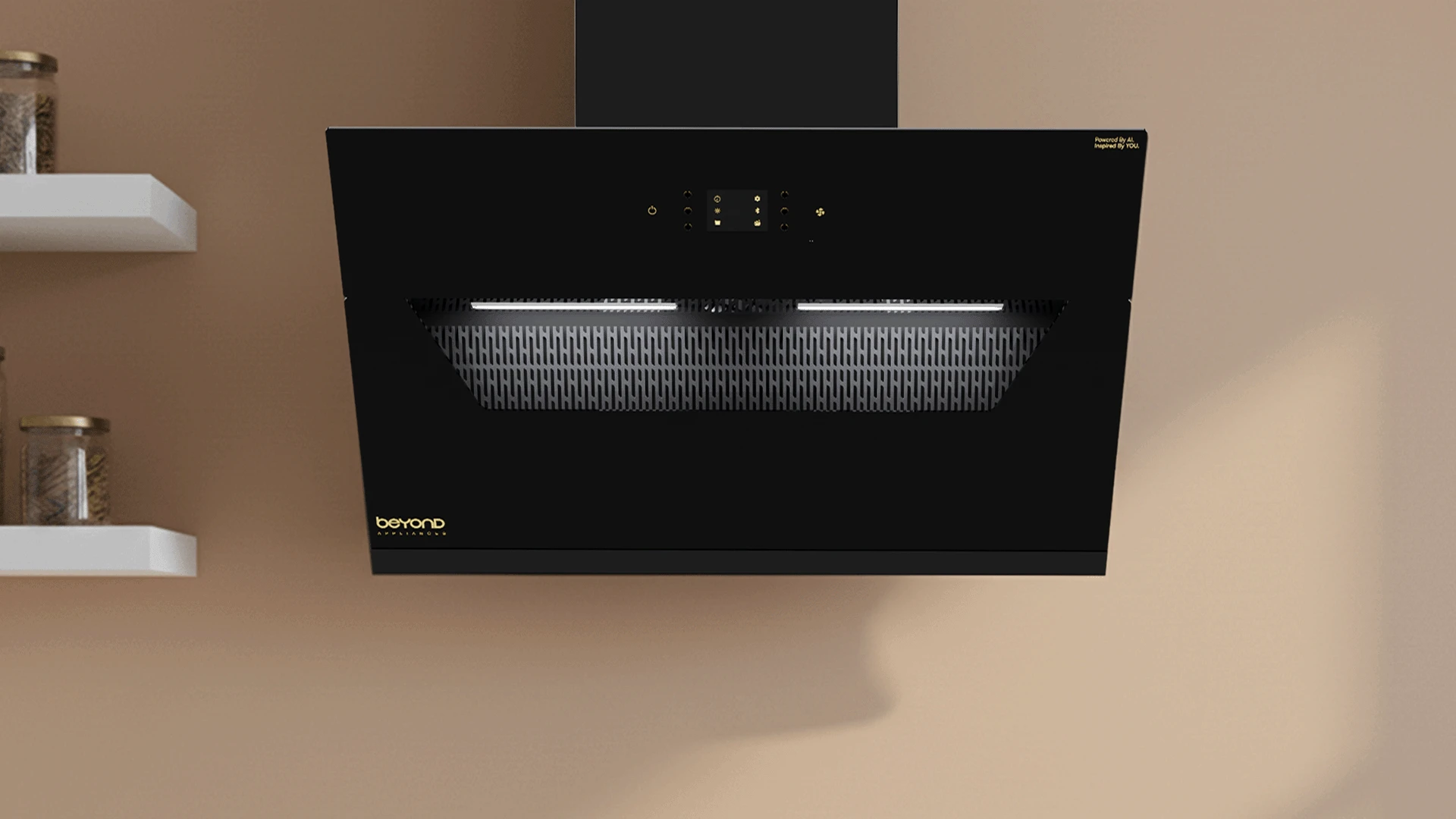
A smoky kitchen is not just uncomfortable. It leaves grease on your walls, odors in your curtains, and fine particles in the air you breathe every day. A kitchen chimney solves all three problems — but only when it is the right one for your kitchen. Choosing the right chimney starts with understanding your kitchen's unique needs: its size, your cooking style, and the layout of your space. Indian cooking is high-heat and oil-heavy, which means the stakes are higher than in most Western kitchens. This guide walks you through every step of the chimney selection process — from chimney types and suction power to installation and maintenance — including how appliances like those in the Beyond Appliances chimney range are engineered specifically around Indian cooking demands.
Match your chimney's width to your cooktop size, and choose suction power based on your kitchen's volume and cooking intensity.
For Indian kitchens, wall-mounted chimneys with filterless or baffle-filter technology and auto-clean functionality offer the best long-term performance.
Installation height, duct routing, and regular maintenance are just as important as the chimney's specs — get these right to protect your investment.
Choosing a chimney is not just about picking a size or a finish that matches your kitchen tiles. It is about matching a specific appliance to a specific set of cooking conditions. A chimney that is too small, too weak, or the wrong type will underperform from day one — and no amount of cleaning will fix a fundamental mismatch.
This chimney selection guide is built around three core matching principles that apply to every kitchen type.
Poor kitchen ventilation allows grease particles, carbon monoxide, and volatile organic compounds (VOCs) to build up indoors. Over time, this affects air quality in ways that are not always visible. Indian cooking — with its high-heat tempering, deep frying, and heavy spice use — generates significantly more smoke and airborne grease than lighter Western cooking styles. A properly matched chimney is the single most effective tool for ventilation in a healthy kitchen.
Every chimney decision comes down to three fundamentals. First, match chimney width to your cooktop width — the chimney should be at least as wide as your hob. Second, match suction power to your cooking intensity — heavier cooking needs higher cubic metres per hour (m³/hr). Third, match chimney type to your kitchen layout — a wall-mounted chimney suits a standard kitchen, while an island chimney suits an open-plan layout.
Understanding chimney types for home kitchens is the first practical step in narrowing your options. Each type is designed for a specific kitchen configuration, and choosing the wrong type — regardless of suction power — will always result in poor smoke capture.
Here is a breakdown of the main chimney types available in India today.
Wall-mounted chimneys are the most common type in Indian homes. They are fixed to the wall directly above the cooktop and come in two design variants: straight (vertical) and slant (angled). Straight chimneys sit flush against the wall and offer higher suction efficiency because the intake is positioned directly above the cooking surface. Slant chimneys angle outward toward the cook, which makes them easier to reach and visually lighter — but they may have a slightly lower capture rate for heavy smoke.
Island chimneys hang from the ceiling above a central cooking island. Because they are surrounded by open air on all sides, they require higher suction power than wall-mounted models to compensate for the lack of a back wall to contain smoke. These are typically found in premium, open-plan modular kitchens.
Built-in chimneys are concealed within overhead cabinetry, making them invisible when not in use. They are a good fit for compact modular kitchens where visual clutter is a concern. Suction capacity is generally moderate, which makes them better suited to light-to-medium cooking loads.
Cassette chimneys are flat and flush-mounted into the ceiling. They work well in kitchens with low ceilings or in contemporary interiors where a wall-mounted unit would feel visually heavy. Suction performance is adequate for medium cooking loads.
Chimney Type |
Best For |
Suction Range |
Price Range |
|---|---|---|---|
Wall-Mounted (Straight) |
Standard kitchens |
800–1500 m³/hr |
Budget–Mid |
Wall-Mounted (Slant) |
Style-focused kitchens |
700–1200 m³/hr |
Budget–Mid |
Island |
Open/modular kitchens |
1000–1800 m³/hr |
Premium |
Built-In |
Compact modular kitchens |
600–1000 m³/hr |
Mid–Premium |
Cassette |
Low-ceiling kitchens |
800–1200 m³/hr |
Mid–Premium |
For most Indian kitchens, a wall-mounted straight chimney is the most practical choice. The vertical intake sits directly above the cooking surface, which maximises smoke capture during high-heat cooking. Slant chimneys are a reasonable option for households that cook lighter meals or prioritise ergonomics and aesthetics over raw suction performance.
Chimney size and capacity are the two most commonly misunderstood specifications. Buying a chimney that is too narrow or too weak for your kitchen is one of the most frequent reasons people end up with greasy walls and lingering odors despite having a chimney installed.
Here is how to get both numbers right before you buy.
The chimney's width should always equal or exceed the width of your cooktop. A chimney that is narrower than the hob will miss smoke rising from the outer burners, especially during simultaneous multi-burner cooking.
2-burner stove — 60 cm chimney
3-burner stove — 75 cm chimney (minimum recommended)
4-burner stove — 90 cm chimney
A 60 cm chimney can technically work above a 3-burner stove if the burners are closely spaced, but a 75 cm unit provides full coverage and is the safer choice for daily Indian cooking.
Suction power is measured in cubic metres per hour (m³/hr) and tells you how much air the chimney can process in 60 minutes. To calculate the minimum suction power for your kitchen, multiply the kitchen's volume (length × width × height in metres) by 10. For Indian cooking, add a 30–40% buffer on top of that figure to account for high-heat and oil-heavy cooking loads.
Small kitchen (up to 100 sq ft): 800–1000 m³/hr
Medium kitchen (100–150 sq ft): 1000–1200 m³/hr
Large kitchen (150+ sq ft): 1200–1500+ m³/hr
Two widely referenced guidelines help with chimney placement and capacity planning. The 3-to-10 rule states that a chimney should be mounted no less than 3 feet (approximately 90 cm) above the cooktop, and the cooktop itself should be no more than 10 feet below the ceiling. Mounting too low creates a fire hazard; mounting too high reduces suction efficiency significantly.
The 7-times rule states that a chimney should be capable of cycling the entire volume of kitchen air at least 7 times per hour. Multiply your kitchen's cubic volume by 7 to find the minimum suction power required in m³/hr. This rule is particularly useful for larger or open-plan kitchens where air disperses quickly.
Ducted chimneys vent air directly outside through a pipe, making them more effective at removing smoke, heat, and odors permanently. They require a duct outlet through an exterior wall or ceiling. Ductless (recirculating) chimneys filter the air and push it back into the kitchen — easier to install but dependent on regular filter replacement to maintain performance.
For apartments without external wall access, a ductless chimney is often the only practical option. Independent houses and ground-floor kitchens almost always benefit from a ducted setup. Beyond Appliances' Plug 'N' Play chimney range is specifically designed for apartments and kitchens where ducting and core cutting are not possible — offering 1400 CMH (standard motor) or 1600 CMH (BLDC motor) suction without any duct installation.
Once you have settled on the type, size, and suction capacity, the next step is evaluating the features that determine day-to-day usability and long-term maintenance effort. Knowing which chimney features to look for can save you significant time and money over the appliance's lifespan.
These are the features that matter most for Indian kitchens.
The filter is the component that does the actual work of separating grease from air. Choosing the wrong filter type for your cooking style is one of the most common mistakes in chimney selection.
Filter Type |
Durability |
Maintenance |
Best For |
|---|---|---|---|
Baffle Filter |
High (5–10 years) |
Dishwasher-safe, monthly wash |
Indian/heavy cooking |
Mesh Filter |
Medium (2–3 years) |
Frequent cleaning needed |
Light cooking |
Charcoal Filter |
Low (3–6 months) |
Replacement only |
Ductless chimneys |
Filterless (3D Suction) |
Very High |
Auto-clean, minimal manual effort |
Heavy Indian cooking |
For Indian kitchens, baffle filters are the most practical choice among traditional filter types. Filterless chimneys — such as those in the Beyond Appliances Orion and Eris range — use 3D suction technology to draw smoke from multiple directions and separate grease without a physical filter, which significantly reduces maintenance effort over time.
Auto-clean chimneys use centrifugal force to spin collected oil into a removable cup at the base of the unit. This reduces the need for manual filter scrubbing and keeps suction performance consistent over time. For households that cook daily — especially with heavy oil use — auto-clean is a feature worth prioritising. Both the Beyond Appliances Orion and Eris chimneys include auto-clean functionality alongside filterless technology, which together make maintenance significantly less demanding.
Chimney noise is measured in decibels (dB). A chimney operating below 58 dB allows for comfortable conversation in the kitchen without raising your voice. Higher suction power does not always mean louder operation — motor quality and blade design play a larger role. The Beyond Appliances Eris chimney, for example, operates at 58 dB despite its 1500 CMH suction capacity, which is a strong balance of power and quiet operation.
BLDC (Brushless Direct Current) motors consume less electricity, run quieter, and last longer than conventional AC motors. If long-term running costs matter to you, a BLDC motor chimney is worth the additional upfront investment. The Beyond Appliances Asteria, for instance, offers both AC and BLDC motor options at an accessible price point, making it a practical mid-range choice for energy-conscious buyers. LED lighting inside the chimney also contributes to energy savings while providing better visibility over the cooktop during cooking.
Touch controls are the most common in mid-range and premium chimneys — they are easy to clean and look sleek. Gesture or motion controls are available in premium models and allow hands-free operation, which is useful when your hands are occupied with cooking. Push-button controls are reliable and budget-friendly. Android-powered chimneys, such as the Beyond Appliances Orion and Asteria, add a smart screen interface that goes beyond basic controls — allowing users to manage chimney settings, set timers, and access other functions from a single display.
Even the best chimney will underperform if it is installed incorrectly or not maintained regularly. The following guidance covers the key installation considerations and a practical maintenance routine to keep your chimney performing at its best over the long term.
The standard recommended mounting height is 65–75 cm above a gas cooktop and 45–60 cm above an electric or induction cooktop. Mounting too low increases the risk of heat damage to the chimney body and reduces its operational lifespan. Mounting too high reduces suction efficiency because smoke disperses before it reaches the intake.
For ducted chimneys, the shortest and most direct duct path always delivers the best performance. Every bend in the ductwork reduces airflow, so aim for no more than two bends between the chimney outlet and the exterior exit point. The minimum recommended duct diameter is 150 mm (6 inches) for adequate airflow volume. Duct exits through an exterior wall are generally more efficient than ceiling exits.
The body material of a chimney affects both its longevity and how easy it is to clean. Key options compared:
Stainless steel: Most durable — heat-resistant, corrosion-resistant, and easy to wipe down.
Tempered glass: Adds visual appeal but requires careful handling to avoid cracking.
Powder-coated steel: Budget-friendly but prone to chipping over time, especially near heat sources.
The inner lining material matters as much as the exterior — look for stainless steel interiors that resist grease buildup.
Professional installation is strongly recommended for wall-mounted and island chimneys, particularly when the unit is positioned near a gas line or requires ceiling mounting. After installation, verify that the suction is working correctly, that all duct joints are sealed, and that the chimney is mounted securely without any wobble. Beyond Appliances' Plug 'N' Play chimney range is an exception — it is designed specifically for self-installation with no core cutting or ducting required, making it a practical option for renters or those in apartments with restricted wall access.
Baffle filters: Clean once a month using hot water and a degreaser, or place in a dishwasher.
Mesh filters: Clean every two weeks for heavy cooking; monthly for light use.
Charcoal filters: Replace every 3–6 months. These cannot be cleaned — only replaced.
Auto-clean oil cup: Empty every 2–3 months, or when the indicator signals it is full.
For filterless chimneys with auto-clean, the maintenance schedule is significantly lighter — the auto-clean cycle handles most of the grease separation automatically.
Some issues go beyond routine cleaning and require professional attention. Watch for these warning signs:
Reduced suction despite recently cleaned or replaced filters
Unusual noise or vibration during operation
Oil dripping from the chimney body or canopy
LED lights flickering or failing to turn on
Once a year, schedule a professional service visit to inspect the ductwork for grease buildup — a known fire hazard that is easy to overlook. The technician should also inspect the motor, lubricate moving parts, and check all seals and gaskets for wear. According to Beyond Appliances, its chimney range is supported by a service network covering approximately 20,000 locations across India, with assistance typically available within 48 hours in major cities and towns.
These are the most commonly asked questions about how to choose a kitchen chimney, answered clearly and directly.
Start by measuring your cooktop width — your chimney should match or exceed it. Then calculate your kitchen's cubic volume and multiply by 7–10 to find the minimum suction power needed. Choose baffle or filterless technology for Indian cooking, and decide between ducted and ductless based on whether your kitchen has external wall access for duct routing.
The 3-to-10 rule states that a chimney should be mounted no less than 3 feet (approximately 90 cm) above the cooktop, and the cooktop itself should be no more than 10 feet below the ceiling. This range ensures optimal smoke capture without creating a fire hazard or reducing suction efficiency. See the installation section above for full details.
The 7-times rule states that a chimney should be capable of cycling the entire volume of kitchen air at least 7 times per hour. To find the minimum suction power required, multiply your kitchen's cubic volume (length × width × height in metres) by 7 to get the figure in m³/hr. This rule is especially useful for larger or open-plan kitchens where air disperses quickly.
A 60 cm chimney can work for a 3-burner stove if the burners are closely spaced, but a 75 cm chimney is the recommended size for full coverage. The wider intake ensures that smoke and grease from the outermost burners — which are most likely to escape a narrower chimney — are captured efficiently during simultaneous cooking.
Wall-mounted chimneys with filterless or baffle-filter technology and a minimum suction capacity of 1000 m³/hr are best suited for Indian kitchens. Indian cooking involves high heat, heavy oil use, and strong spices — conditions that demand powerful suction and low-maintenance filtration. Beyond Appliances' Orion chimney, with 1600 CMH suction and 3D filterless technology, is specifically engineered for these cooking conditions.
Straight chimneys generally offer better suction efficiency and are the preferred choice for heavy Indian cooking. The vertical intake sits directly above the cooking surface, which maximises smoke capture. Slant chimneys are more ergonomic and visually lighter but may have a slightly lower capture rate. For performance-first buyers, straight is the better choice; for design-first buyers with lighter cooking loads, slant works well.
Choosing the right chimney comes down to five decisions made in the right order: chimney type, width, suction power, filter technology, and installation setup. Get these right, and the chimney will protect your kitchen's air quality, keep your walls clean, and require minimal effort to maintain over years of daily use.
For Indian kitchens specifically, the combination of filterless technology, auto-clean functionality, and adequate suction power — ideally above 1200 CMH for medium to large kitchens — delivers the most consistent results. If ducting is not possible, ductless options with activated carbon filtration are a practical and effective alternative. Beyond Appliances offers chimney models across both categories, from the Android-powered Orion and Eris for ducted setups to the Plug 'N' Play range for ductless installations — each designed around the real demands of Indian cooking rather than generic specifications.
Use this guide as a checklist before you finalise your purchase. A chimney is a long-term investment in your kitchen's health and hygiene — and the right one, properly installed and maintained, will serve your household reliably for well over a decade.
