
Install a Ductless Chimney in Your Small Kitchen
Cart
Your cart is empty
Small kitchens present unique challenges when it comes to ventilation, especially in apartments and compact homes where traditional ducted systems aren't feasible. A ductless chimney for small kitchens offers the perfect solution, providing effective smoke and odor removal without the need for external venting. These innovative recirculating range hoods use advanced filtration technology to clean and recirculate air back into your kitchen, making them ideal for rental properties and spaces with limited installation options. Whether you're dealing with a galley kitchen or an open-plan cooking area, understanding how to properly install and maintain a ductless system can transform your cooking experience while maximizing your available space.
A ductless range hood operates on a completely different principle than traditional vented systems. Instead of expelling air outside through ducts, these units capture cooking fumes, grease, and odors through powerful suction, then filter the air through multiple layers before recirculating it back into the kitchen. This compact kitchen ventilation solution uses a combination of grease filters, carbon filters, and sometimes HEPA filters to ensure clean air circulation. The technology behind ductless systems makes them particularly suitable for small kitchens where space is at a premium. Unlike traditional chimneys that require extensive ductwork running through walls or ceilings, ductless units can be installed virtually anywhere above your cooking surface. This flexibility is crucial in compact spaces where every inch matters and structural modifications might not be possible. Small kitchens often lack the infrastructure for external venting, especially in apartments or older homes. A ventless kitchen hood eliminates this constraint entirely, providing effective ventilation without requiring holes in exterior walls or complex ductwork installation. This makes them perfect for renters who cannot make permanent modifications to their living space.
The advantages of choosing a ductless system for your compact kitchen extend far beyond simple space savings. These units offer remarkable installation flexibility since they don't require external ducting, allowing you to position them optimally for both function and aesthetics. This freedom means you can install your small kitchen exhaust system exactly where it will be most effective, regardless of your home's exterior wall configuration. Cost-effectiveness represents another significant advantage. Traditional ducted systems often require professional installation involving wall modifications, ductwork, and exterior venting, which can cost thousands of rupees in labor alone. Ductless units typically cost 30-50% less to install and maintain over time, making them an attractive option for budget-conscious homeowners.
Modern compact chimney design options include ultra-slim profiles, telescopic extensions, and even under-cabinet models that virtually disappear into your kitchen layout. These designs maximize your available workspace while providing powerful ventilation.
Since ductless systems require no permanent modifications to your home's structure, they're perfect for rental properties. You can enjoy professional-grade ventilation without risking your security deposit or violating lease agreements.
Understanding the filtration process helps you appreciate why ductless systems are so effective for small space ventilation. The process begins when cooking vapors, smoke, and grease particles are drawn into the unit through powerful suction fans. Modern units typically feature variable speed controls, allowing you to adjust suction power based on your cooking intensity. The captured air then passes through a multi-stage filtration system. The first stage involves aluminum or stainless steel grease filters that capture oil particles and larger debris. These washable filters are easily removable for regular cleaning. The second stage features activated carbon filters that absorb odors and chemical compounds, acting essentially as a kitchen air purifier. Some premium models include additional HEPA filtration for ultra-fine particle removal. After passing through all filtration stages, the cleaned air is recirculated back into your kitchen through strategically placed vents. This entire process typically takes just seconds, ensuring continuous air quality improvement during cooking.
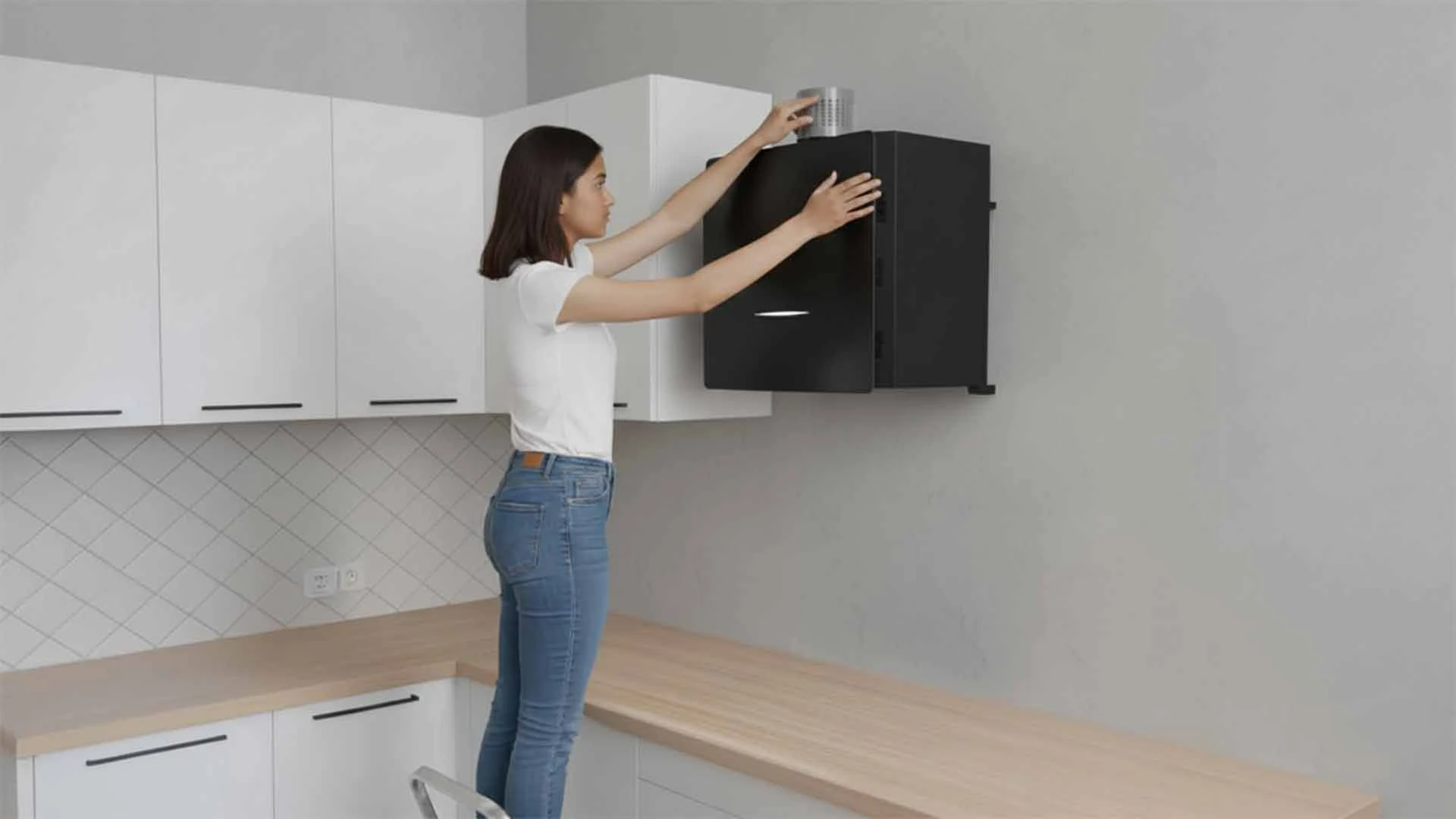
Proper installation of your ductless chimney for small kitchens begins with careful planning and measurement. Start by measuring your available wall space, ensuring you have at least 65-75 cm of clearance above your cooktop for optimal performance. Check that your electrical supply can handle the unit's power requirements, typically 150-250 watts for most residential models. Choose your mounting location carefully, considering both functionality and aesthetics. The chimney should be centered over your cooking surface for maximum efficiency. Mark the mounting points using the provided template, ensuring the unit will be level and securely supported.
Drill pilot holes for the mounting brackets, using appropriate wall anchors for your wall type. Concrete walls require masonry bits and heavy-duty anchors, while drywall installations need toggle bolts or wall studs for secure mounting.
Connect the electrical supply according to local codes, preferably through a dedicated circuit breaker. Most units come with standard plugs, but hardwired installations offer a cleaner appearance in small kitchens.
Install all filters according to manufacturer specifications, ensuring proper seating and airflow direction. Test all functions including lights, fan speeds, and any smart features before considering the installation complete.
Selecting the appropriate size for your compact kitchen ventilation system requires balancing power with space constraints. For most small kitchens, a 60cm width unit provides adequate coverage while maintaining proportional aesthetics. However, if you have a larger cooktop or do extensive cooking, consider a 75cm model for better capture efficiency. Suction capacity, measured in cubic meters per hour (CMH), should match your cooking habits and kitchen size. For typical Indian cooking, which involves significant oil and spice use, aim for 800-1200 CMH in a small kitchen. This ensures effective removal of strong odors and grease-laden air.
Touch controls and LED lighting enhance functionality while maintaining a sleek appearance. Auto-clean functions reduce maintenance burden, particularly important in small kitchens where access might be limited.
In small spaces, noise levels become more noticeable. Look for units with noise ratings below 58 decibels at maximum speed to maintain a comfortable cooking environment.
Regular maintenance ensures your ductless range hood continues operating at peak efficiency. Clean grease filters monthly or after every 30-40 hours of cooking, depending on your usage patterns. These aluminum filters can be washed with warm soapy water or placed in the dishwasher for convenient cleaning. Carbon filters require replacement every 3-6 months, depending on cooking frequency and types of food prepared. Heavy use of spices and oil may necessitate more frequent replacement. Monitor filter saturation indicators if your model includes them, or establish a replacement schedule based on manufacturer recommendations.
Reduced suction power often indicates clogged filters or accumulated grease in the motor housing. Clean or replace filters first, then check for obstructions in the air intake areas.
While most maintenance can be performed by homeowners, annual professional cleaning of internal components ensures optimal performance and extends unit lifespan.
Yes, ductless chimneys are particularly effective for small kitchens because they provide concentrated filtration in a compact space. The recirculating design ensures multiple air changes per hour, maintaining air quality even in confined areas.
Many ductless models are designed for DIY installation, especially wall-mounted units. However, electrical connections should be handled by qualified electricians to ensure safety and code compliance.
Ductless chimneys for small kitchens typically range from INR 8,000 to INR 25,000, depending on features, brand, and suction capacity. Installation costs are generally lower than ducted systems, adding INR 1,500 to INR 3,000.
Modern ductless chimneys are specifically designed to handle the high heat, oil, and spice content typical of Indian cooking. Multi-stage filtration effectively captures grease and neutralizes strong odors.
Grease filters should be cleaned monthly, while carbon filters typically need replacement every 3-6 months. Heavy cooking may require more frequent maintenance.
Ductless systems offer easier installation, lower costs, and greater flexibility in small kitchens. While ducted systems may have slightly better odor removal, ductless units provide excellent performance for most cooking needs.
Installing a ductless chimney for small kitchens provides an excellent ventilation solution that combines effectiveness with practicality. These systems offer the flexibility to enhance your cooking environment without the constraints and costs associated with traditional ducted installations. With proper selection, installation, and maintenance, a ductless system will provide years of reliable service while maximizing your small kitchen's functionality and comfort. The key lies in choosing the right size and features for your specific needs, following proper installation procedures, and maintaining regular cleaning schedules to ensure optimal performance.
