
How to Choose: Auto Clean Chimney vs Manual Cleaning
Cart
Your cart is empty
Choosing the right kitchen chimney can transform your cooking experience and keep your kitchen fresh and clean. With modern technology advancing rapidly, homeowners now face a crucial decision between auto clean chimney vs manual cleaning systems. Both options offer distinct advantages, but understanding their differences helps you make an informed choice that suits your cooking habits, budget, and lifestyle needs.
The debate between automatic and manual chimney systems goes beyond simple preference. It involves considering factors like maintenance requirements, long-term costs, performance efficiency, and your household's specific cooking patterns. Whether you're renovating your kitchen or installing a new chimney system, this comprehensive guide will help you navigate the key differences and make the best decision for your home.
Modern kitchen chimneys come in two primary categories based on their cleaning mechanisms. Each system operates differently and caters to specific user preferences and cooking requirements. Understanding how these systems work forms the foundation for making an informed purchasing decision.
The fundamental difference lies in how each system handles grease, oil, and cooking residues that accumulate during regular kitchen use. This distinction affects everything from daily operation to long-term maintenance costs.
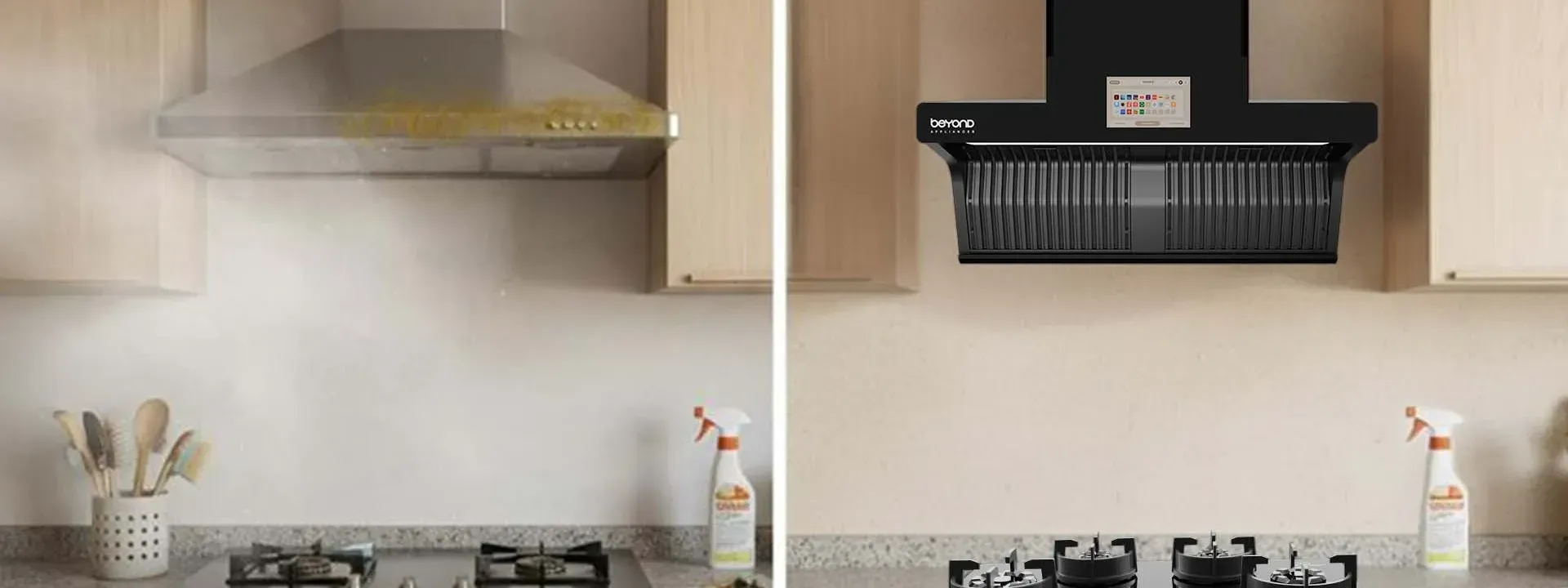
An automatic chimney cleaner uses advanced heat technology to separate oil and grease particles from cooking vapors. The system operates through a specialized heating element that liquefies accumulated grease, allowing it to flow into a removable oil collector tray. This process typically activates automatically during cooking or can be manually triggered through a dedicated cleaning cycle.
The heat auto clean technology reaches temperatures between 200-250 degrees Celsius, effectively breaking down stubborn grease deposits. Modern compact chimney designs incorporate this technology seamlessly, making it ideal for contemporary kitchen layouts where space optimization matters.
Manual chimney systems rely on traditional filtration methods using baffle filters or cassette filters to trap grease and cooking particles. These filters require regular removal and cleaning by hand, typically involving soaking in warm soapy water or specialized cleaning solutions.
The manual chimney sweep process involves dismantling filter components, scrubbing away accumulated residue, and reassembling the system. While this approach requires more hands-on involvement, it gives users complete control over the cleaning process and timing.
The performance gap between auto clean and manual systems becomes evident in daily usage scenarios. Understanding these differences helps determine which system aligns better with your cooking frequency and household requirements.
Both systems aim to maintain clean kitchen air, but their approaches to achieving this goal vary significantly in terms of user involvement and maintenance demands.
Auto clean chimneys typically maintain consistent suction efficiency over time because the automated cleaning process prevents excessive grease buildup. The heat technology ensures that internal components remain relatively clean, preserving optimal airflow and suction power.
Manual systems can experience gradual performance decline if filters aren't cleaned regularly. However, when properly maintained, high-quality manual chimneys with baffle filters can match or exceed auto clean performance levels, especially in heavy-duty cooking environments.
Chimney maintenance schedules differ dramatically between the two systems. Auto clean chimneys require emptying the oil collector monthly and running cleaning cycles weekly for optimal performance. The automated process reduces hands-on cleaning time by approximately 80-90%.
Manual systems demand bi-weekly filter cleaning for moderate cooking households, with quarterly deep cleaning sessions. Professional chimney cleaning methods may be required annually for thorough internal cleaning and performance optimization.
Financial considerations play a crucial role in chimney selection. The cost comparison extends beyond initial purchase price to include long-term operational expenses and maintenance requirements.
Understanding the total cost of ownership over a five-year period provides a clearer picture of the actual investment required for each system type.
Auto clean chimneys typically cost between INR 15,000 to INR 45,000, depending on brand, features, and design complexity. The higher price reflects the advanced technology and automated components integrated into these systems.
Manual chimneys range from INR 8,000 to INR 25,000, making them more accessible for budget-conscious buyers. The lower initial cost makes manual systems attractive for first-time chimney buyers or those with limited cooking requirements.
Auto clean systems consume additional electricity for heating elements, adding approximately INR 200-400 annually to power bills. However, reduced professional cleaning requirements can offset this expense over time.
Manual systems have minimal electricity consumption but require regular filter replacements and professional cleaning services. Annual maintenance costs can range from INR 1,500 to INR 3,000, depending on usage frequency and local service rates.
Every chimney system comes with distinct benefits and limitations. Evaluating these factors against your specific needs ensures you select the most suitable option for your kitchen environment.
The decision often involves balancing convenience against cost, and automation against user control over the cleaning process.
The primary advantage lies in convenience and time savings. Busy households appreciate the reduced maintenance burden, allowing more time for cooking and family activities. The automated cleaning process ensures consistent performance without requiring manual intervention.
Modern chimney design features in auto clean models often include touch controls, LED lighting, and sleek aesthetics that complement contemporary kitchen themes. The technology particularly benefits households with heavy cooking routines involving oil-rich Indian cuisine.
Higher initial costs can strain budgets, especially for first-time homeowners. The complex technology requires specialized repair services, potentially increasing long-term maintenance expenses if components fail outside warranty periods.
Electricity dependency means the cleaning function becomes unavailable during power outages. Some users prefer having direct control over cleaning timing and methods, which automated systems limit.
Cost-effectiveness remains the strongest advantage, making quality kitchen ventilation accessible to broader audiences. Users maintain complete control over cleaning schedules and methods, allowing customization based on cooking patterns and personal preferences.
The main disadvantage involves increased time investment for regular maintenance. Inconsistent cleaning can lead to performance degradation and potential hygiene issues if filters aren't maintained properly.
The optimal choice depends on individual circumstances rather than universal superiority of either system. Analyzing your cooking habits, available time for maintenance, and budget constraints guides the decision-making process.
Consider your household's long-term needs and lifestyle changes that might affect chimney usage patterns over the coming years.
Households with frequent cooking, especially oil-rich preparations, benefit significantly from auto clean technology. Busy professionals who value convenience over cost savings find these systems ideal for maintaining clean kitchen environments without time investment.
Compact chimney solutions with auto clean features work exceptionally well in modern apartments where space optimization and aesthetic appeal matter. Tech-savvy users who appreciate automated home appliances typically prefer these advanced systems.
Budget-conscious buyers who prioritize value for money often find manual systems more appealing. Light to moderate cooking households can maintain manual chimneys effectively without excessive time investment.
Users who enjoy hands-on maintenance and prefer understanding their appliances' inner workings often gravitate toward manual systems. Traditional kitchen setups may benefit from the simplicity and reliability of manual chimney designs.
Proper maintenance ensures optimal performance regardless of the chosen system type. Following manufacturer guidelines and establishing regular cleaning routines maximizes chimney lifespan and efficiency.
Understanding specific maintenance requirements for your chosen system prevents common issues and maintains warranty coverage throughout the product's life.
Run cleaning cycles weekly during heavy cooking periods and bi-weekly during lighter usage. Empty oil collector trays monthly or when they reach 70% capacity to prevent overflow and maintain optimal function.
Monitor performance indicators like suction strength and unusual noises that might signal maintenance needs. Schedule annual professional inspections to ensure internal components remain in good condition.
Clean filters every two weeks for moderate cooking households, increasing frequency during heavy usage periods. Use warm soapy water or specialized degreasers for thorough cleaning, ensuring complete drying before reinstallation.
Perform quarterly deep cleaning sessions that include internal surfaces and motor housing. Watch for signs like reduced suction, unusual vibrations, or persistent odors that indicate immediate attention requirements.
Yes, auto clean chimneys effectively use heat technology to separate oil and grease particles into a collector, reducing manual cleaning by 80-90% compared to traditional systems. The thermal process liquefies accumulated residue, making removal much easier and more thorough than manual scrubbing.
Auto clean chimneys are better for heavy cooking and busy households due to convenience, while manual chimneys suit budget-conscious users with light cooking needs. The choice depends on your cooking frequency, available maintenance time, and budget considerations.
Heat auto clean uses thermal technology to liquefy grease for easy collection, while basic auto clean may use other mechanisms like centrifugal force or specialized coatings. Heat-based systems generally provide more thorough cleaning results.
Auto clean chimneys cost 30-50% more initially but save on long-term maintenance costs, while manual chimneys have lower upfront costs but higher ongoing maintenance expenses. Total cost of ownership over five years often favors auto clean systems for heavy users.
Auto clean: Run cleaning cycle weekly, empty oil collector monthly. Manual: Clean filters every 2 weeks, deep clean quarterly, professional service annually. Both types benefit from regular inspection and prompt attention to performance issues.
The choice between auto clean chimney vs manual systems ultimately depends on your specific household needs, cooking patterns, and budget considerations. Auto clean chimneys offer superior convenience for busy households with heavy cooking requirements, while manual systems provide cost-effective solutions for light to moderate cooking needs.
Consider factors like initial investment capacity, long-term maintenance preferences, and your comfort level with technology when making this decision. Both systems can provide excellent kitchen ventilation when properly selected and maintained according to manufacturer guidelines and best chimney cleaning practices.
