

Hob Benefits for Modern Homes: A Step-by-Step Guide
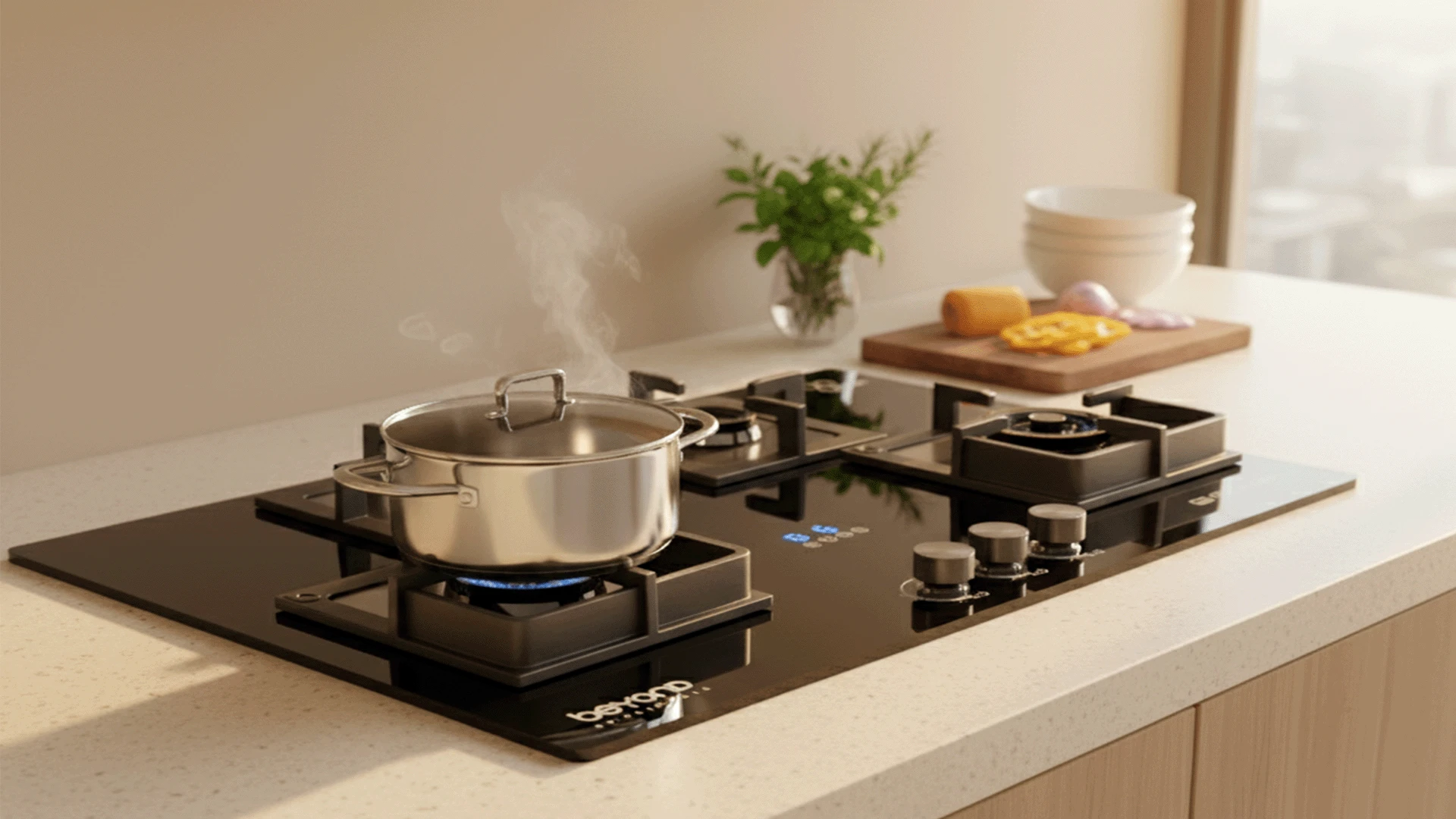
A cluttered countertop, uneven heat distribution, and an outdated stove aesthetic can make even a modern kitchen feel incomplete. Modern hobs solve these problems by integrating seamlessly into your countertop, offering precise heat control, and delivering the sleek look that contemporary homes demand. A hob is a built-in cooking surface installed directly into a kitchen countertop. Hob benefits for modern homes include space efficiency, precise heat control, enhanced safety, and seamless contemporary aesthetics that elevate your entire kitchen design.
Modern hobs maximize countertop space, offer advanced safety features like auto flame failure devices and child locks, and deliver sleek aesthetics that complement modular kitchen designs.
Gas hobs provide instant heat control ideal for Indian cooking — Beyond Appliances' Dorado and Altair models are purpose-built for high-heat, multi-dish preparation with full brass burners and smart safety features.
Professional installation, proper utility connections, and choosing the right hob type based on your cooking style and kitchen infrastructure are essential for long-term performance and durability.
Modern homeowners are increasingly choosing built-in hobs over traditional freestanding stoves because they maximize kitchen space, offer superior safety features, and create a seamless, premium aesthetic. The shift toward modular kitchen design has made hobs the standard choice for new homes and renovations across urban India. Unlike traditional gas stoves that occupy floor space and create visual clutter, hobs integrate flush into your countertop, reclaiming valuable real estate and creating a unified kitchen appearance.
Understanding the differences between a traditional gas stove, a cooktop, and a modern hob helps you make an informed decision. A traditional gas stove is freestanding and occupies floor space, making it bulky and dated in appearance. A cooktop is surface-mounted but not fully integrated, offering a middle-ground solution. A modern hob, by contrast, is fully built-in, maximizing counter space, offering advanced safety mechanisms, and delivering the sleek aesthetics that define contemporary kitchen design.
The following comparison highlights why hobs have become the preferred choice for modern homes:
Feature |
Traditional Gas Stove |
Cooktop |
Modern Hob |
|---|---|---|---|
Installation |
Freestanding |
Surface-mounted |
Fully integrated |
Countertop Space |
Occupies floor space |
Partial integration |
Maximizes counter space |
Aesthetics |
Bulky, dated |
Moderate |
Sleek, seamless |
Safety Features |
Basic |
Moderate |
Advanced (auto-shutoff, child lock) |
Cleaning Ease |
Difficult |
Moderate |
Easy (flat surface) |
Best For |
Budget kitchens |
Rental homes |
Modern/modular kitchens |
Modern hobs deliver seven core benefits that make them the ideal choice for contemporary kitchens. These advantages address real cooking challenges, enhance safety, and create a kitchen that looks and performs beautifully for years to come.
Flush installation reclaims valuable countertop real estate that traditional stoves consume. In compact modular kitchens common in urban apartments and studios, this space-saving benefit is transformative. A built-in hob eliminates the footprint of a freestanding stove, allowing you to maximize storage, prep space, or even add a kitchen island. For homes in Bengaluru, Mumbai, and Delhi NCR where kitchen square footage is premium, hobs are essential for efficient kitchen design.
Glass and stainless-steel hob finishes complement modern cabinetry and countertop materials like quartz and granite. The seamless integration creates a unified, premium appearance that elevates your entire kitchen aesthetic. Matching your hob finish to your countertop material and cabinet hardware ensures a cohesive, designer-quality look that increases home resale value.
Gas hobs offer instant flame adjustment, allowing you to respond immediately to cooking needs. This precision is especially valuable for Indian cooking, where tempering spices, managing oil heat, and coordinating multiple dishes simultaneously demand responsive temperature control. Multi-burner gas hobs like the Dorado and Altair models from Beyond Appliances provide 3 to 4 burners with full brass construction, delivering consistent heat output across all zones.
Modern hobs include safety mechanisms that traditional stoves lack. Auto flame failure devices (FFD) automatically cut gas supply if a flame extinguishes unexpectedly, preventing gas leaks. Child lock controls prevent accidental burner activation. Smart timers alert you when cooking time expires, reducing the risk of overcooked food or kitchen fires. These features are especially important in households with children or elderly family members.
Induction hobs — available from other market providers — transfer 85–90% of energy directly to cookware, making them highly efficient by comparison. Traditional gas stoves operate at an estimated 30–50% efficiency, depending on burner design and cookware type. Gas hobs, while operating within this range, remain cost-effective for high-frequency cooking households because fuel costs are lower than electricity in most Indian cities. Matching your hob type to your cooking frequency maximizes long-term savings.
Flat glass surfaces on modern hobs eliminate the crevices and grates that trap grease and spices on traditional stoves. Spill containment design prevents liquids from seeping beneath the cooking surface. Weekly cleaning with a damp cloth keeps your hob looking new, saving hours of maintenance compared to scrubbing burner rings and grates. This low-maintenance benefit is invaluable for busy working professionals.
Built-in hobs are designed to work with modular kitchen systems, where every component fits together seamlessly. Professional installation ensures proper utility connections, secure mounting, and alignment with surrounding cabinetry. This integration also increases home resale value because modern buyers expect integrated appliances as standard in contemporary kitchens.
Selecting the right hob type depends on your cooking style, kitchen infrastructure, and safety priorities. Each hob type offers distinct advantages, and understanding these differences helps you make a choice aligned with your household needs.
Gas hobs deliver instant heat response and work with all cookware types, including heavy-bottomed vessels and traditional tawas essential for Indian cooking. The visible flame provides intuitive heat control, and the high heat output handles the demands of tempering, deep frying, and simultaneous multi-dish preparation. For example, the Dorado (3–4 burners, 6.5–8 kW) and Altair (4 burners, 10.4 kW) from Beyond Appliances combine full brass burners with smart timers and flame failure devices, delivering both performance and safety. Gas hobs require a gas line connection but offer the lowest operating cost for frequent cooks.
Induction hobs, available from various market providers, use electromagnetic technology to heat cookware directly and achieve 85–90% energy efficiency — making them a strong option for safety-first and energy-conscious households. Electric hobs offer straightforward operation with only a standard electrical connection required, making them a practical choice for rental properties or low-frequency cooks. Beyond Appliances currently specialises in gas hobs; if your kitchen infrastructure or cooking priorities align with gas, the Dorado and Altair models are the recommended starting point.
Proper installation is critical for safety, performance, and longevity. Follow these five steps to ensure your hob is installed correctly and functions reliably for years to come.
Standard hob sizes are 60 cm, 75 cm, and 90 cm widths. Measure your countertop carefully to determine which size fits your kitchen layout. Ensure at least 15 cm clearance on each side of the hob for safe operation and maintenance access. Measure the depth of your countertop to confirm adequate space below for gas lines, electrical connections, or ventilation ducting. Accurate measurements prevent costly installation errors and ensure a flush, seamless fit.
Check whether your kitchen has an existing gas line or if you need to install one. If you are considering an induction or electric hob from another provider, verify that your electrical panel has sufficient circuit capacity. Confirm that your kitchen ventilation system (chimney or hood) is compatible with your chosen hob type. Gas hobs require ducting to an external vent, while ductless chimneys with carbon filtration work with any hob type. Planning these infrastructure requirements before purchase prevents installation delays.
The countertop material (granite, quartz, or laminate) determines cutting difficulty and cost. Granite and quartz require professional cutting with specialized equipment to prevent cracking. Laminate can be cut with a circular saw but requires careful edge sealing to prevent moisture damage. Always hire a professional for countertop cutting, especially for natural stone. Improper cutting can compromise structural integrity and void your hob warranty.
Gas connections must be completed by a licensed technician. Improper gas connections are a leading cause of kitchen safety incidents. For electric or induction hobs, verify that the circuit breaker and wiring meet local electrical codes. Install mounting clips and apply food-grade sealant around the hob perimeter to create a watertight seal. This prevents spills from seeping beneath the cooking surface and damaging cabinetry.
For gas hobs, perform a leak test using soapy water on all connections. Bubbles indicate a gas leak that must be repaired immediately. Test all burners to ensure even ignition and flame distribution. For induction hobs, verify that all cooking zones respond to cookware placement. Activate child lock and timer functions to confirm they operate correctly. Document all warranty information and keep installation receipts for future service claims.
Pro Tip: Always hire a certified technician for gas hob installation. Improper connections are a leading cause of kitchen gas incidents. Beyond Appliances offers installation support through its service network, with assistance typically available within 48 hours in major cities.
While hobs offer significant advantages, understanding potential drawbacks helps you make a fully informed decision. The following table outlines common concerns and practical solutions:
Drawback |
Reality Check |
Solution |
|---|---|---|
Higher upfront cost |
Long-term energy savings offset cost |
Calculate 3-year ROI before deciding |
Permanent installation |
Difficult to relocate |
Plan kitchen layout carefully before purchase |
Requires compatible cookware (induction) |
One-time cookware investment |
Check cookware compatibility before buying |
Professional installation needed |
Adds to initial cost |
Factor into total budget from the start |
Limited portability |
Not suitable for renters |
Consider freestanding hob alternatives |
Built-in hobs are not ideal for rental properties or temporary living situations because removal and reinstallation are costly and time-consuming. If you rent, a freestanding gas stove or portable induction cooktop may be more practical. For permanent homes, the long-term benefits of integrated design, safety features, and energy efficiency justify the higher upfront investment.
Contemporary kitchen design is evolving toward seamless integration, smart connectivity, and minimalist aesthetics. Understanding these trends helps you choose a hob that will remain stylish and functional for years to come.
Zero-gap installation creates a truly seamless countertop appearance with no visible frame or border around the hob. This design is popular in Scandinavian and minimalist kitchen styles, where clean lines and uncluttered surfaces define the aesthetic. Frameless hobs integrate so completely that they appear as part of the countertop itself.
Full-surface induction hobs with flexible cooking zones allow you to combine smaller zones into larger cooking areas for oversized cookware. This flexibility is ideal for entertaining and large-batch cooking, making multi-zone induction increasingly popular in modern homes.
Haptic touch panels and slider controls eliminate physical knobs that trap grease and spices. These controls are more hygienic, easier to clean, and deliver a premium, contemporary appearance. Touch controls also enable programmable cooking sequences and recipe-guided modes.
Hobs with built-in ventilation eliminate the need for overhead hoods, saving space and creating an uncluttered kitchen aesthetic. Downdraft systems pull smoke and steam downward through the hob, making them ideal for open-plan kitchens and kitchen islands where overhead hoods are not practical.
Wi-Fi and Bluetooth-enabled hobs allow remote timer control, cooking progress monitoring, and recipe-guided cooking modes through smartphone apps. Smart hobs can integrate with voice assistants for hands-free operation. This connectivity transforms the hob from a passive cooking tool into an active kitchen hub that enhances convenience and precision.
Hobs offer space-saving integrated installation that maximizes countertop real estate, precise heat control for responsive cooking, advanced safety features including auto flame failure devices and child locks, easy flat-surface cleaning, and sleek aesthetics that complement modern kitchen design. The hob benefits for modern homes extend to increased resale value and seamless integration into modular kitchen systems, creating a premium, contemporary appearance that traditional stoves cannot match.
Built-in hobs have a higher upfront cost than freestanding stoves and require professional installation, especially for gas models. Once installed, they are difficult to relocate, making them unsuitable for rental properties or temporary living situations. However, long-term energy savings, durability, and increased home value often offset these initial costs within 3–5 years.
Gas hobs are exceptionally well-suited for Indian cooking due to their high heat output, instant flame control, and compatibility with all cookware types including heavy-bottomed vessels and traditional tawas. Multi-burner gas hobs (3–4 burners) allow simultaneous cooking of multiple dishes, which is essential for traditional Indian meal preparation. Models like the Dorado and Altair from Beyond Appliances feature full brass burners and smart timers, delivering the performance and reliability that Indian cooking demands.
A built-in hob is generally the better choice for modern, permanent kitchens because it offers fully integrated installation, superior aesthetics, and advanced safety features that cooktops cannot match. Cooktops are surface-mounted but not fully built-in, making them a middle-ground option that occupies more visual space. For permanent modular kitchens, a built-in hob offers better long-term value, cleaner design, and higher resale appeal. Cooktops may be more practical for rental properties where permanent installation is not feasible.
The right hob size depends on your countertop dimensions and the number of burners you need. Standard hob widths are 60 cm, 75 cm, and 90 cm. A 60 cm hob with 3 burners suits compact kitchens and smaller households, while a 75–90 cm hob with 4 burners is ideal for larger families or those who regularly cook multiple dishes simultaneously. Beyond Appliances' Dorado (3–4 burners) and Altair (4 burners) cover both needs, with full brass burners and flame failure devices built in as standard. Always measure your countertop cutout carefully and allow at least 15 cm clearance on each side before selecting a size.
The hob benefits for modern homes extend well beyond aesthetics — combining space efficiency, advanced safety, precise heat control, and seamless integration into a single built-in appliance. For households that prioritise cooking power and versatility, gas hobs remain the strongest choice, and Beyond Appliances' Dorado and Altair models are purpose-built for exactly that. The Dorado carries a 2-year comprehensive warranty and a 5-year glass warranty, while the Altair offers a 5-year glass and burner warranty — backed by a service network spanning 20,000 locations, with assistance typically available within 48 hours in major cities. Before purchasing, ask yourself three critical questions: What is your primary cooking style? Does your kitchen have the necessary gas infrastructure? Is this a permanent home or a rental property? Answering these questions ensures you select a hob that will serve your household reliably for years to come. Professional installation, proper maintenance, and choosing a reputable brand with strong after-sales support are essential for long-term performance and peace of mind. Modern hobs represent an investment in your kitchen's functionality, aesthetics, and resale value — making them an ideal choice for homeowners committed to creating contemporary, efficient, and beautiful cooking spaces.
