
Essential Checklist: Compact Kitchen Ventilation Guide
Cart
Your cart is empty
Small kitchens present unique challenges when it comes to proper ventilation. Whether you're dealing with a studio apartment, compact home, or simply want to maximize your cooking space, finding the best compact kitchen ventilation solution requires careful planning. Poor ventilation in small spaces can quickly lead to smoke buildup, lingering odors, and grease accumulation on surfaces. The right ventilation system not only keeps your kitchen fresh but also protects your health and maintains air quality throughout your home.
Proper small kitchen ventilation starts with understanding your space's specific needs. The key is calculating the right airflow capacity while working within physical constraints.
For kitchens under 75 square feet, you need at least 100 CFM (cubic feet per minute) of ventilation capacity. This ensures adequate air exchange to remove cooking fumes effectively. Multiply your kitchen's square footage by 2 to get the minimum CFM requirement. For example, a 50 square foot kitchen needs at least 100 CFM capacity.
Gas cooking produces more heat and combustion byproducts than electric cooking. If you use gas burners, increase your CFM requirements by 25-30%. High-heat cooking methods like stir-frying or grilling require even more powerful ventilation to handle the increased smoke and steam production.
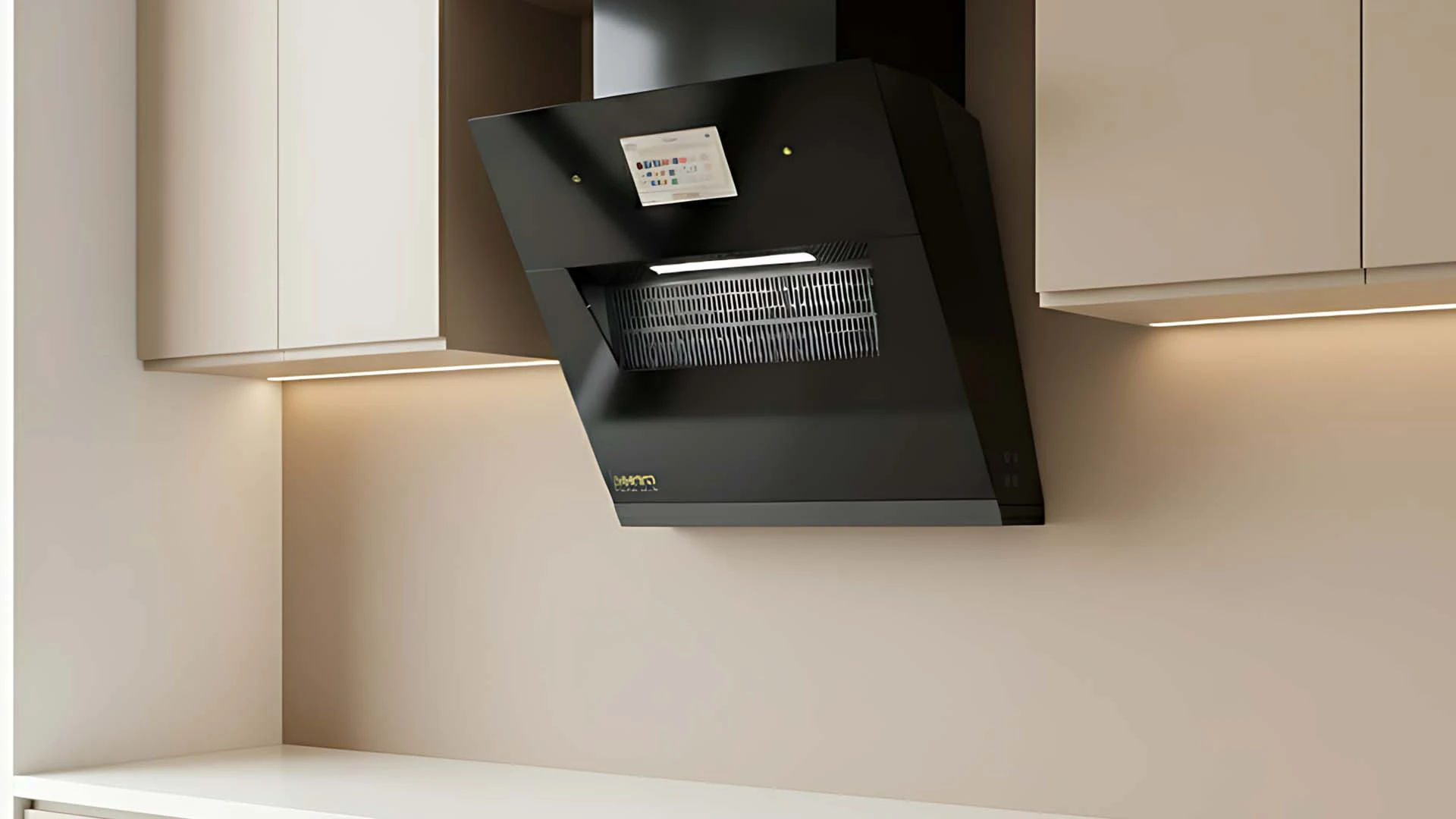
A well-chosen compact range hood can transform your small kitchen's air quality without overwhelming the space. Modern designs offer powerful performance in sleek, space-saving packages.
An under cabinet range hood maximizes your kitchen's vertical space while providing excellent ventilation. These units mount directly beneath your cabinets, keeping countertops clear and maintaining clean sight lines. Most models come in 24-inch, 30-inch, and 36-inch widths to fit standard cabinet configurations.
Ducted systems vent air outside your home, providing superior odor and moisture removal. However, ductless range hood systems work well when exterior venting isn't possible. These units use carbon filters to clean air before recirculating it back into your kitchen.
Space saving ventilation goes beyond traditional range hoods. Multiple options exist for kitchens with unique layouts or extreme space constraints.
A dedicated kitchen extractor fan can be mounted in windows, walls, or ceilings. Window-mounted units are ideal for kitchens with exterior walls, while ceiling fans work well in apartments where wall mounting isn't feasible. Choose fans with 150-300 CFM capacity for small kitchens.
The PlugnPlay Cube Chimney represents a breakthrough in ductless range hood technology. This innovative system installs directly on the wall without the need to break walls or install ducting pipes. With 10-minute installation using just 2 screws, it's perfect for renters or anyone wanting hassle-free setup. The Cube's 4-year filter life and 1250 CMH suction capacity make it ideal for Indian cooking, while its 3-sided vents ensure smoke doesn't escape.
Portable kitchen vent solutions offer flexibility for temporary setups or supplemental ventilation. Countertop air purifiers can help during heavy cooking sessions, while mobile extraction units can be positioned wherever needed most.
Choosing the right mini kitchen exhaust system requires evaluating several key factors to ensure optimal performance in your compact space.
Motor power determines suction effectiveness. Look for units offering 150-400 CFM for small kitchens. Noise levels matter in compact living spaces - choose models operating below 50 decibels for comfortable use. Energy efficiency ratings help control operating costs over time.
Many compact ventilation systems offer DIY installation options. The PlugnPlay Cube Chimney exemplifies this trend with its tool-free setup and easily portable design that uninstalls in 10 minutes when you move. Consider electrical requirements and ensure adequate power supply for your chosen unit.
Entry-level compact solutions start around INR 3,000-5,000, offering basic ventilation for light cooking. Mid-range options (INR 8,000-15,000) include auto-clean features and better build quality. Premium models (INR 20,000+) offer smart controls, superior materials, and advanced filtration systems.
Ventilation for small spaces requires strategic thinking about airflow patterns and equipment placement to maximize effectiveness.
Create cross-ventilation by combining mechanical ventilation with natural airflow. Position exhaust fans opposite windows or doors to create air circulation paths. This approach reduces the workload on your primary ventilation system while improving overall air quality.
Modern kitchen ventilation often includes integrated features like LED lighting, reducing the need for separate fixtures. The PlugnPlay Cube Chimney includes 2 x 3W LED lights and operates with one-button control for all functions, simplifying operation while saving space.
Measure your kitchen's square footage and multiply by 2 for minimum CFM requirements. For kitchens under 75 square feet, 150-200 CFM typically provides adequate ventilation. Consider your cooking style - heavy frying or grilling requires higher capacity.
Yes, ductless systems like the PlugnPlay Cube Chimney work without exterior venting. These units use carbon filters to clean air before recirculating it. The Cube's active carbon filter lasts 4 years and comes with a 4-year warranty.
CFM (cubic feet per minute) and CMH (cubic meters per hour) both measure airflow volume. To convert CMH to CFM, divide by 1.7. For example, 1250 CMH equals approximately 735 CFM.
Metal grease filters need cleaning every 2-4 weeks with heavy use. Carbon filters in ductless systems typically last 6 months to 4 years depending on usage and filter quality. The PlugnPlay Cube Chimney's filters last 4 years with normal use.
Selecting the best compact kitchen ventilation system transforms your small cooking space into a comfortable, healthy environment. Whether you choose a traditional under-cabinet range hood, an innovative ductless system like the PlugnPlay Cube Chimney, or a combination of ventilation solutions, proper planning ensures optimal results. Focus on your specific cooking needs, space constraints, and installation requirements to find the perfect ventilation solution. Remember that effective ventilation in small kitchens often requires creative approaches and multi-functional equipment to maximize both performance and space efficiency.
