

11 Different Kitchen Chimney Styles for Modern Kitchen Ventilation
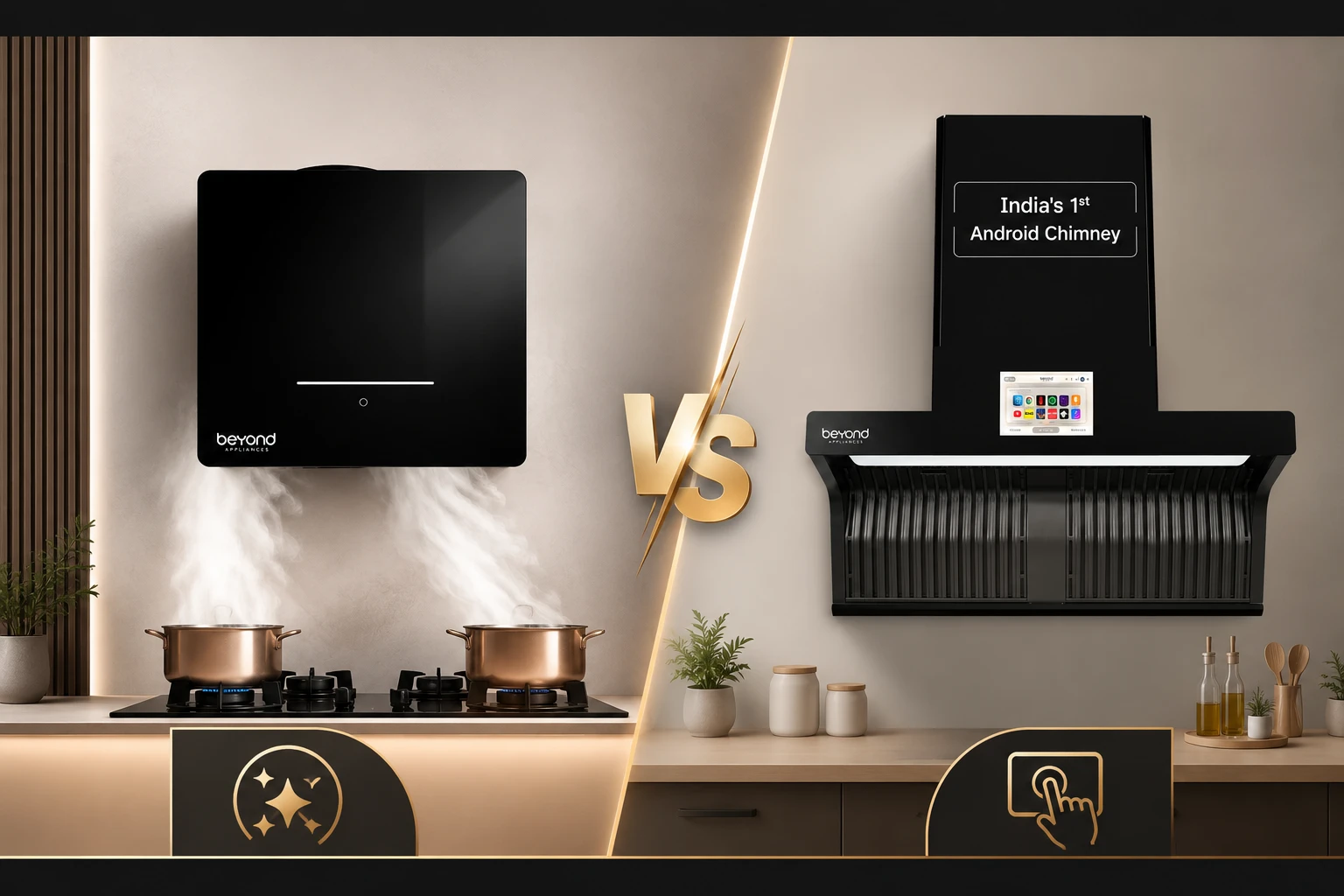
Modern kitchens demand more than basic ventilation. Today's cooking spaces require sophisticated chimney systems that handle everything from daily meal prep to elaborate Indian cooking sessions. With oil-heavy tempering, spice-laden gravies, and high-heat cooking becoming standard, choosing the right kitchen chimney style can make the difference between a fresh, comfortable cooking environment and one plagued by lingering smoke and odors. The variety of different kitchen chimney styles available today means every kitchen layout, from compact apartments to sprawling open-plan homes, can find an ideal ventilation solution that combines performance with aesthetic appeal.
Eleven distinct kitchen chimney styles cater to different kitchen layouts, from wall-mounted designs for traditional setups to island configurations for open-plan spaces
Modern kitchen ventilation options include smart features like Android screens, auto-clean technology, and ductless installation for apartments without external ducting
Choosing between ducted and ductless systems depends on your kitchen's infrastructure, with powerful motors like those in Beyond Appliances' range delivering 1400-1600 CMH suction regardless of configuration
Wall mounted chimneys remain the most popular choice for Indian kitchens, offering reliable performance and straightforward installation. These kitchen hood designs attach directly to the wall above your cooktop, providing focused suction exactly where cooking happens.
The classic rectangular design offers maximum internal space for powerful motors and filtration systems. These chimneys typically feature stainless steel construction with easy-to-clean surfaces. Box-type designs work particularly well for heavy Indian cooking, where consistent suction power matters more than sleek aesthetics.
Curved glass designs bring contemporary elegance to modern kitchen ventilation while maintaining excellent functionality. The smooth curves reduce sharp edges and create visual flow in your kitchen design. These designer kitchen hoods often incorporate LED lighting that enhances both task visibility and ambient kitchen lighting.
Sharp, geometric lines define angular wall mounted designs, perfect for minimalist and ultra-modern kitchens. These chimneys maximize internal volume while presenting a bold architectural statement. The angular design often allows for better integration with contemporary cabinetry and clean-lined kitchen layouts.
Island chimneys serve as both functional ventilation and striking design elements in open-plan kitchens. These ceiling-mounted units must provide 360-degree coverage while complementing your kitchen's overall aesthetic.
The classic pyramid shape offers excellent smoke capture with its wide base tapering to a narrow exhaust point. This design provides natural airflow patterns that efficiently draw cooking vapors upward. Pyramid island chimneys work exceptionally well in kitchens with high ceilings, creating dramatic focal points.
Cylindrical designs provide uniform suction from all angles, making them ideal for large cooking islands where pots and pans might be positioned anywhere on the surface. The smooth, rounded form integrates well with contemporary design themes while offering practical 360-degree ventilation coverage.
T-shaped configurations extend coverage area without requiring oversized ceiling mounting. These designs work particularly well for rectangular cooking islands or when you need focused suction over specific cooking zones. The extended arms provide targeted ventilation for multiple cooking surfaces simultaneously.
Integrated designs prioritize seamless kitchen aesthetics while maintaining powerful ventilation performance. These solutions work particularly well in compact spaces where every design element must serve multiple purposes.
Cabinet-integrated systems hide completely within your kitchen cabinetry, revealing only the suction inlet. These designs work exceptionally well in small kitchens where visual clutter must be minimized. The hidden installation requires careful planning during kitchen design but delivers unmatched aesthetic integration.
Downdraft systems pull cooking vapors downward through vents built into your cooktop or adjacent counter surface. These systems work well for kitchen islands where overhead installation isn't practical. However, downdraft systems typically require more powerful motors to overcome natural upward airflow patterns. For instance, achieving effective ventilation with downdraft systems often necessitates motors capable of high CMH (Cubic Meters per Hour) ratings, such as those found in premium models designed for demanding cooking environments.
Unique kitchen layouts often require specialized chimney solutions that address specific spatial or functional challenges. These designs solve particular problems while maintaining effective ventilation performance.
Corner installations maximize space efficiency in L-shaped or galley kitchens where wall space is limited. These chimneys typically feature angled designs that fit snugly into corner spaces while providing adequate suction coverage. Corner mounting requires careful measurement to ensure proper clearance and optimal performance.
Telescopic designs extend when needed and retract when not in use, perfect for kitchens where overhead clearance varies. These space-saving solutions work well under low ceilings or in areas where the chimney might interfere with cabinet doors or other kitchen elements.
Flush ceiling installation creates the ultimate minimalist look, with only the suction inlet visible from below. These high-end installations require significant ceiling modification but deliver unparalleled aesthetic integration. The motor and filtration systems mount above the ceiling, requiring adequate access for maintenance.
The choice between ducted and ductless systems significantly impacts both installation requirements and ongoing performance. Understanding these differences helps you select the most appropriate system for your specific situation.
Ducted chimneys exhaust air directly outside through dedicated ductwork, providing the most effective removal of cooking vapors, smoke, and odors. These systems require external wall access and proper ductwork installation but deliver superior performance for heavy cooking loads.
Ductless chimneys recirculate filtered air back into the kitchen, making them ideal for apartments or homes without external ducting options. Modern ductless systems like Beyond Appliances' Plug 'N' Play models eliminate the need for core cutting or complex ducting while still delivering powerful 1400-1600 CMH suction. What is CMH? CMH stands for Cubic Meters per Hour, a measure of airflow. A rating of 1400-1600 CMH is significant for Indian cooking because it indicates a high volume of air processed per hour, effectively removing smoke and grease from intense cooking sessions. The activated carbon filter technology effectively removes odors and grease particles, making ductless installation practical even for Indian cooking styles.
Ducted Chimneys: Exhaust air directly outside via ductwork. Most effective for smoke and odor removal. Requires external wall access and proper installation. Ideal for heavy cooking loads.
Ductless Chimneys: Recirculate filtered air back into the kitchen. Suitable for apartments or homes without external ducting. Modern systems offer powerful suction (e.g., 1400-1600 CMH) using advanced filters.
Different kitchen configurations require specific chimney approaches to maximize both performance and aesthetic integration. Understanding your kitchen's unique requirements helps narrow down the most suitable options. This guide covers various types of kitchen chimneys to help you make an informed decision.
Compact kitchens benefit from space-efficient designs that don't overwhelm the visual space. Wall-mounted curved glass models or cabinet-integrated systems work particularly well. The Beyond Appliances Plug 'N' Play series, available in 60cm width, provides powerful suction without requiring ducting or core cutting, making it ideal for small kitchen installations where structural modifications are impractical.
Basic kitchen exhaust fan styles cost less initially but provide limited suction power and no filtration. Traditional chimneys offer superior performance, especially for Indian cooking with heavy oil and spice loads. Modern smart chimneys like the Orion or Eris models from Beyond Appliances combine powerful 1500-1600 CMH suction with features like Android screens and auto-clean technology, justifying the higher investment through enhanced functionality and convenience.
High-end kitchens can accommodate premium features like smart screens, voice control, and advanced filtration systems. The Beyond Appliances Orion chimney exemplifies luxury kitchen ventilation with its Android 11 interface, 7-inch smart screen, and 3D suction technology that provides comprehensive cooktop coverage from multiple directions.
Proper installation and regular maintenance ensure optimal performance regardless of which kitchen chimney style you choose. Different designs have varying installation complexity and maintenance requirements.
Wall-mounted installations typically require secure wall anchoring and proper electrical connections. Island chimneys need robust ceiling mounting and careful measurement to ensure adequate clearance. Integrated systems require coordination with cabinetry installation and may need custom modifications.
Maintenance varies significantly between filterless and filtered systems. Filterless designs like those in Beyond Appliances' premium range use auto-clean technology that melts grease and oil for easy collection, reducing manual cleaning requirements. Filtered systems require regular filter replacement, though long-life options like the 4-year activated carbon filters reduce maintenance frequency.
Kitchen chimneys fall into three main categories: wall-mounted (box, curved, angular), island-mounted (pyramid, cylindrical, T-shaped), and integrated designs (cabinet-built, downdraft, ceiling-flush). Each type suits different kitchen layouts and aesthetic preferences.
Indian cooking requires powerful suction to handle oil-heavy tempering and spice-laden preparations. Filterless designs with auto-clean technology, like Beyond Appliances' Orion and Eris models, handle these demands effectively with 1500-1600 CMH suction and 3D technology that captures smoke from multiple directions.
Yes, modern ductless systems provide excellent performance without external ducting. Beyond Appliances' Plug 'N' Play chimneys deliver 1400-1600 CMH suction using advanced filtration, making them ideal for apartments or homes where ducting installation isn't feasible.
Kitchen chimneys come in various shapes to suit different kitchen aesthetics and functionalities. Common shapes include traditional box-type, modern curved glass, and angular designs for wall-mounted units. For island kitchens, pyramid, cylindrical, and T-shaped hoods are popular. Integrated systems can be hidden within cabinets, while downdraft systems are built into the countertop. Flush ceiling-mounted chimneys offer a minimalist look. The choice of shape often depends on the overall kitchen design and the desired ventilation coverage.
Wall-mounted chimneys attach to the wall above your cooktop and work well for traditional kitchen layouts. Island chimneys suspend from the ceiling above cooking islands, providing 360-degree coverage for open-plan kitchens. Island designs typically require more powerful motors due to increased air circulation.
Chimney width should match or exceed your cooktop width. 60cm chimneys suit most home kitchens, while 90cm models provide better coverage for large cooktops or heavy cooking loads. Consider your cooking style, kitchen size, and available installation space when selecting dimensions.
Selecting the right kitchen chimney style depends on your kitchen layout, cooking habits, and aesthetic preferences. Wall-mounted designs suit traditional kitchens, while island configurations work best for open-plan spaces. Modern features like smart screens, auto-clean technology, and ductless installation expand your options regardless of kitchen constraints.
Consider both immediate needs and long-term convenience when choosing between different kitchen chimney styles. Powerful suction, effective filtration, and easy maintenance prove more valuable than basic aesthetics alone. Whether you choose a traditional wall-mounted design or an advanced smart chimney with Android integration, prioritize performance features that match your actual cooking requirements and kitchen infrastructure.
