
Burner Spacing 101: Your Complete Kitchen Guide
Cart
Your cart is empty
Modern kitchens demand smart design choices, and burner spacing stands as one of the most crucial yet overlooked factors in cooktop selection. Whether you're renovating your kitchen or choosing your first gas stove, understanding how different burner arrangements affect your cooking experience can transform your culinary space. The distance between burners impacts everything from safety to cooking efficiency, making it essential to compare spacing options before making your investment. With the right knowledge, you can select a cooktop that maximizes both functionality and convenience in your kitchen.
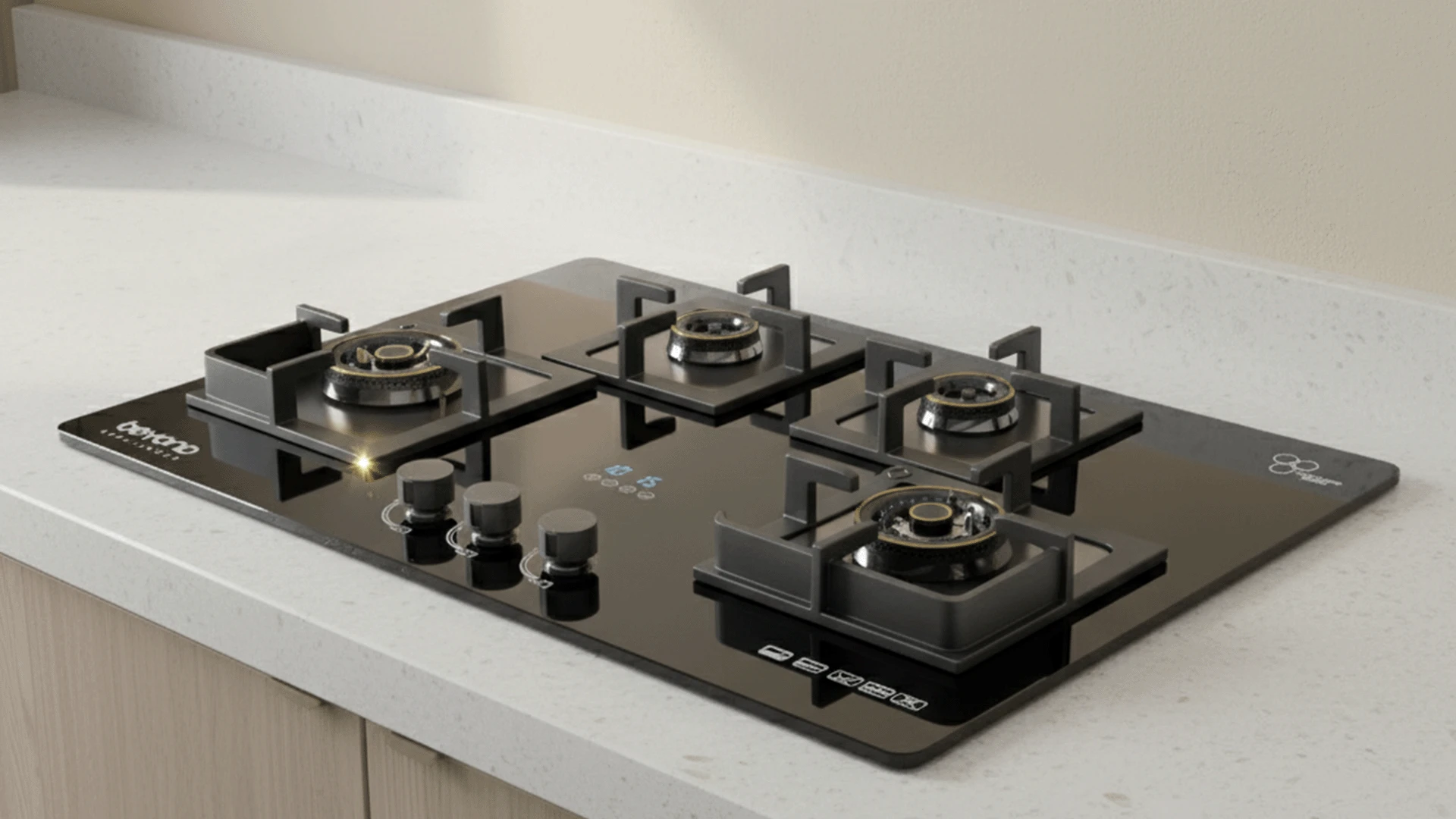
Burner spacing refers to the distance between cooking zones on your cooktop, typically measured from center to center. Industry standards usually range from 6 to 9 inches, but this measurement significantly impacts your cooking experience. Proper spacing ensures you can use multiple burners simultaneously without cookware collision, while inadequate spacing limits your cooking flexibility. The spacing between burners directly affects heat distribution and safety. When burners sit too close together, heat from adjacent flames can create hot spots on neighboring cookware, leading to uneven cooking. Additionally, insufficient spacing increases the risk of accidental burns when reaching across active burners. Modern designs like the Vessel Collision-Free Design address these concerns by providing ample space for convenient multi-burner cooking. Standard measurements vary based on cooktop size and intended use. Compact models often feature 6-7 inch spacing to maximize burner count in limited space, while full-size ranges typically offer 8-9 inches for optimal versatility. Understanding these fundamentals helps you make informed comparisons when evaluating different models.
Several critical factors influence the ideal burner spacing for your kitchen needs. Cookware compatibility tops the list, as your pot and pan sizes determine the minimum spacing requirements. Large cookware demands generous clearances, while smaller vessels offer more flexibility in compact arrangements.
Large pots and pans require adequate clearance to prevent interference with adjacent burners. A Jumbo Burner designed for oversized cookware needs extra spacing to accommodate family-size meals safely. Consider your largest cookware pieces when evaluating spacing options, ensuring comfortable clearance for handles and lids.
Available counter space dictates your cooktop dimensions and, consequently, burner spacing options. Measure your installation area carefully, considering both width and depth requirements. Compact kitchens may benefit from closer spacing that maximizes burner count, while spacious kitchens can accommodate generous spacing for enhanced convenience.
Safety regulations and practical considerations establish minimum spacing requirements. Heat distribution zones around each burner need adequate clearance to prevent overheating adjacent surfaces. Features like Flame Failure Device enhance safety regardless of spacing, but proper clearances remain essential for safe operation.
Different kitchen configurations benefit from specific spacing arrangements. Understanding these variations helps you select the most suitable option for your cooking space and habits.
Full-size kitchens typically accommodate 30-36 inch ranges with 8-9 inch burner spacing. This generous arrangement supports simultaneous use of multiple large pots while maintaining safe clearances. The spacious design allows comfortable access to all burners without awkward reaching or potential burns.
Space-conscious kitchens often require closer 6-7 inch spacing to fit adequate burner count within limited dimensions. While this reduces individual burner clearance, modern designs incorporate smart features to maintain functionality. Convertible models offer flexibility, functioning as built-in units or freestanding tabletops to maximize space efficiency.
Burner arrangement patterns significantly impact cooking workflow and space utilization. Different layouts offer distinct advantages depending on your cooking style and kitchen design.
Straight-line configurations place all burners in a single row, creating a streamlined appearance ideal for narrow counter spaces. This layout maximizes front-to-back access while minimizing side-to-side reach requirements. However, linear arrangements may limit simultaneous use of multiple large pots.
Traditional 2x2 configurations offer balanced access to all burners while supporting diverse cookware combinations. This arrangement typically features varied burner sizes, with larger zones positioned strategically for optimal workflow. The Full Brass Burners in these layouts provide consistent performance across all positions while saving gas through efficient combustion.
Accurate measurement techniques ensure proper spacing evaluation when comparing different models. Understanding measurement standards helps you make meaningful comparisons across brands and styles.
Burner sizes typically range from 6-inch compact zones to 12-inch power burners. Small burners (6-7 inches) handle delicate tasks and simmering, while medium burners (8-9 inches) serve general cooking needs. Large burners (10-12 inches) accommodate oversized cookware and high-heat applications. The Dum flame feature enables slow-cooking applications regardless of burner size.
Most cooktops combine different burner sizes to maximize versatility within available space. Balancing large and small burners requires careful spacing consideration to prevent interference. Strategic placement ensures each burner type receives adequate clearance while maintaining overall compact dimensions.
Modern safety features work alongside proper spacing to create secure cooking environments. Understanding how these elements interact helps you evaluate complete safety packages rather than spacing alone. The Auto Ignition system eliminates manual lighting risks, while Cast Iron Supports provide stable cookware positioning regardless of spacing constraints. 100% Spill Proof designs prevent liquid damage to internal components, maintaining safety even in compact arrangements. The 8mm Toughened Glass surface handles high heat while providing easy cleaning around closely spaced burners. Smart Timer functionality adds another safety layer by automatically shutting off gas supply when cooking time expires. This feature proves especially valuable in compact spacing arrangements where monitoring multiple burners simultaneously becomes challenging.
Industry standards recommend minimum 6-inch center-to-center spacing for safe operation. However, 8-9 inches provides optimal clearance for most cooking scenarios and cookware sizes.
Large pots typically require 9-10 inches of spacing to prevent interference with adjacent burners. Consider your largest cookware when evaluating spacing requirements.
Yes, inadequate spacing can cause heat interference between burners, leading to uneven cooking temperatures and reduced efficiency. Proper spacing ensures optimal performance from each burner.
Gas burners typically require slightly more spacing due to open flame heat distribution, while electric elements can operate with closer spacing. Both types benefit from generous clearances for safety and convenience.
Measure from the center of one burner to the center of adjacent burners using a tape measure. This center-to-center measurement provides the most accurate spacing comparison between different models.
Local building codes may specify minimum clearances from walls and other surfaces, but burner-to-burner spacing typically follows manufacturer standards rather than specific regulations.
Selecting the right burner spacing requires balancing your cooking needs, kitchen space, and safety requirements. Generous spacing offers maximum flexibility and safety, while compact arrangements maximize burner count in limited spaces. Modern features like collision-free designs and advanced safety systems help optimize performance regardless of spacing constraints. Consider your largest cookware, cooking habits, and available space when comparing different spacing options. Remember that quality construction and smart features can enhance functionality even in compact arrangements, making the choice more about finding the right balance for your specific kitchen needs.
